


Protocol for Prokaryotic Expression Experiments
- 2026-07-09
- 191
1. What Is Prokaryotic Expression
Prokaryotic expression is a method that uses gene cloning technology to introduce an exogenous target gene into a host cell via an expression vector, enabling its stable expression within a prokaryotic organism.
2. Principles of Prokaryotic Expression
2.1 Basic Components of Prokaryotic Expression
A prokaryotic expression system consists of two parts: the expression vector and the host cell.
An expression vector is a segment of recombinant DNA, whose main components include a promoter, a selection tag, a multicloning site, a replicon, a replication origin, and a fusion tag. Promoters vary in strength; not all genes are suitable for strong promoters. Some genes, when driven by strong promoters, are expressed rapidly and in large quantities, which often results in their translation products failing to fold correctly and forming inactive inclusions. Fusion tags facilitate protein expression and purification; common fusion tags include His, GST, HA, and FLAG.
A host cell is an organism capable of transcribing, translating, and synthesizing the target protein. Common prokaryotic expression hosts include Escherichia coli and Bacillus subtilis.
2.2 Experimental Workflow for Prokaryotic Expression
(1) Construction of Expression Vectors
The selection of an expression vector is typically based on the intended use of the protein, available information, and cloning and purification strategies (KMD Bioscience can provide expression vectors containing various fusion tags to enhance protein solubility and simplify the purification process). Once a vector is selected, the target gene can be cloned into the expression vector via homologous recombination or seamless cloning.
(2) Transformation of Host Cells
The selection of host bacteria depends on the host strain and the expression product of the exogenous gene. Commonly used host bacteria for prokaryotic expression include Escherichia coli (Gram-negative) and Bacillus subtilis (Gram-positive). The following factors are typically considered: 1. Whether the host bacterium’s endogenous enzymes will affect the stability of the expressed protein. E. coli typically produces endotoxins, whereas Bacillus subtilis does not; the common BL21 series consists of strains deficient in the lon and ompT proteases. 2. Codon preferences of the host strain. Codon preferences differ between eukaryotic and prokaryotic cells; the Rosetta series is a suitable choice for expressing eukaryotic genes. 3. Whether the expressed protein requires folding: The Origami 2 series, derived from E. coli K-12, promotes the formation of disulfide bonds, aids in proper protein folding, and enhances protein solubility and activity. After selecting a suitable host strain, transform the recombinant plasmid containing the target gene into the host cells and perform cell-based panning to identify positive clones.
KMD Bioscience has collected and established a variety of strains, including those for low-temperature-induced expression. For further information, please visit our company website.
(3) Induced Expression of the Target Protein
IPTG induction is a common method. Low concentrations of IPTG (0.2–0.5 mM) do not reduce expression levels but can actually increase protein solubility. Excessively high IPTG concentrations accelerate protein expression, preventing translation products from folding correctly and leading to the formation of inclusions. During the experiment, the optimal IPTG concentration must be continuously optimized to achieve the best activity and solubility of the target protein. Additionally, the culture temperature has a certain impact on protein solubility; the optimal temperature and culture duration must also be determined through experimentation.
(4) Isolation and Purification of the Target Protein
The isolation and purification of the target protein consist of three steps: pretreatment, crude isolation, and fine isolation.
Pretreatment: This is the process of preliminarily treating the sample to release the protein from the sample while maintaining its original state.
Crude Isolation: The purpose of this step is to purify the target protein and separate it from other contaminating proteins using methods such as salt precipitation, isoelectric focusing, and organic solvent fractionation.
Fine Purification: Generally, the appropriate purification method is selected based on the tag to further purify the target protein.
(5) Detection of the Target Protein
The target protein can be detected using methods such as SDS-PAGE, Western blot, and ELISA. It is important to note that all operations should be performed on ice to prevent protein denaturation.
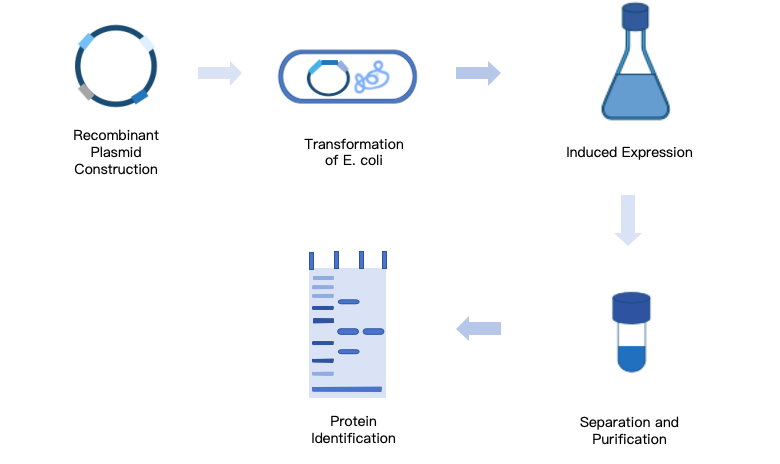
Figure 1: Flowchart of prokaryotic expression
3. Fusion Tags and Host Type Indicators
Table 1: Key Characteristics of Protein Tags
Peptide Label | Residue/MW(kDa) | Ligand/Matrix | Purification Conditions |
| Poly-Arg | ~5/0.80 | Cation Exchange Resin | Linear elution with NaCl (0–400 mM) |
| Poly-His | ~6/0.84 | Ni²⁺ Agar Column | 20–250 mM imidazole/low pH |
| FLAG | 8/1.01 | FLAG Antibody Affinity Agarose Columns | 2–5 mM EDTA |
| Strep-tag II | 8/1.06 | Chain Affinity Protein | 2–25 mM desulfurized biotin |
| c-myc | 11/1.20 | myc Antibody Affinity Agarose Column | low pH |
| S-tag | 15/1.75 | S-protein agarose columns | 3 M isothiocyanate; 0.2 M potassium citrate, pH 2, or 3 M MgCl₂ |
Fusion Partner Protein | Ca. (calculated molecular weight) | Ligand/Matrix | Purification Conditions |
| Fh8 | 69/8.0 | Ca2+-Dependent Phenylagarose Gel | 10 mM EDTA |
| Trx | 109/11.7 | 4-Amino-oxo-phenylarsine Agar Gel Column | 5–1000mM 2- Mercaptoethanol |
| SUMO | ca. 100/12.0 | Affinity Tag Purification (His) | |
| BRT17 (β roll tag) | 153/14.7 | 25–75 mM Ca2+ Precipitation from Solution | |
| GST | 211/26.0 | Glutathione Agar Column | 10–20 mM Reduced Glutathione |
| HaloTag7 | ca. 300/34.0 | Chloralkane Ligand Agarose Columns | Labeled column-based protease digestion |
| MBP | 396/ca. 42.5 | Cross-linked branched starch | 10 mM Maltose |
| ELPs | 550/ca.47.0 | High concentrations of NaCl (>1.5 M) or temperature-shock methods | |
| NusA | 495/54.8 | Affinity Tag Purification (His) |
Table 2: Selection of Host Systems
Project | E. coli expression host | Bacillus subtilis expression host |
Advantages | Widely used, easy to operate, and inexpensive to produce on a large scale | Low production costs, endotoxin-free, and capable of secreting and expressing proteins |
Disadvantages | Poor secretory function | Relatively low output |
Common Hosts | Rosetta (DE3),Rosetta(DE3)pLysS,Rosetta 2(DE3)pLysS,Origami 2(DE3),Rosetta-gami 2(DE3)pLysS | WB600,WB800N,Bacillus Subtilis 168 |
4. Advantages and Disadvantages of Prokaryotic Expression Technology
Advantages:
(1) Clear genetic background.
(2) High efficiency: high expression levels of the target gene and short culture cycles.
(3) Simple to operate, with easy cultivation and control.
(4) Low cost, suitable for large-scale production.
(5) A wide variety of bacterial strains and compatible vectors are available.
Disadvantages:
(1) The expressed protein may not be active if it is unmodified.
(2) Translation products are often expressed in the form of inclusions.
(3) Endotoxins may be produced.
5. Applications
Prokaryotic expression is widely used in the research, development, and production of antibodies, vaccines, drugs, plant and animal growth regulators, and insecticidal proteins. Additionally, due to its high efficiency and low cost, prokaryotic expression is utilized in the production of industrial enzymes, bio-dyes, and other products.
6. What Prokaryotic Expression Services Can KMD Bioscience Provide?
KMD Bioscience possesses a comprehensive prokaryotic expression and purification system. We can provide clients with a variety of expression vectors and host strains, as well as a high-quality expression strategy. Furthermore, we offer a wide range of purification methods to ensure a high-quality purification solution. Clients need only provide us with a protein sequence, CDS, or protein name, and we can complete the expression and purification of the target protein in a short period of time, offering you a one-stop service.
- Prokaryotic expression
- prokaryotic expression of recombinant proteins
- protein expression
- protein purification

- Protein Platform
- Protein Expression Services
- Protein Modification & Detection Services
- Protein Interaction Services
- Protein Purification Service
- Antibody Discovery Platform
- VHH Antibody Platform
- Phage Display Platform
- Antibody Humanization Platform
- Single B Cell Screening Platform
- Antibody Expression & Validation Platform
- Peptide Library Platform
- Custom Antibody Platform
- Innovative Drug Discovery Platform
- Product Center
- Proteins
- Antibodies
- Raw Materials Reagents
- Small Molecule Reagents
- Peptide Products
- Nanoparticle Products
- Contact Us
- Phone:400-621-6806
- Mobile:13110936064(WeC
- E-mail:[email protected]
- Address:Room 108, Building 10, No. 6 Hechang Road, Wuqing Development Zone, Tianjin City
-

WeChat
-

Service Account
-
 400-621-6806
 -
 3599163699
 -
 Monday to Friday 9:00-18:00
 -

-
 0
0
-
