


Analysis of the four expression systems for recombinant proteins (prokaryotic, mammalian, yeast, insect)
- 2026-07-10
- 327
I. Introduction to the Four Common Expression Systems
Based on the type of host cells, gene expression systems can be classified into prokaryotic expression systems, yeast expression systems, mammalian expression systems, and insect expression systems.
(1) Prokaryotic Expression System
Prokaryotic expression systems include E. coli expression systems, Bacillus expression systems, and Streptomyces expression systems. Among these, the E. coli expression system is the most widely used.With extensive technical expertise accumulated from over 400 prokaryotic protein production projects annually, KMD Bioscience has developed a complete protein expression and purification workflow, ensuring high-quality services for clients. The process of prokaryotic recombinant protein expression is illustrated below:
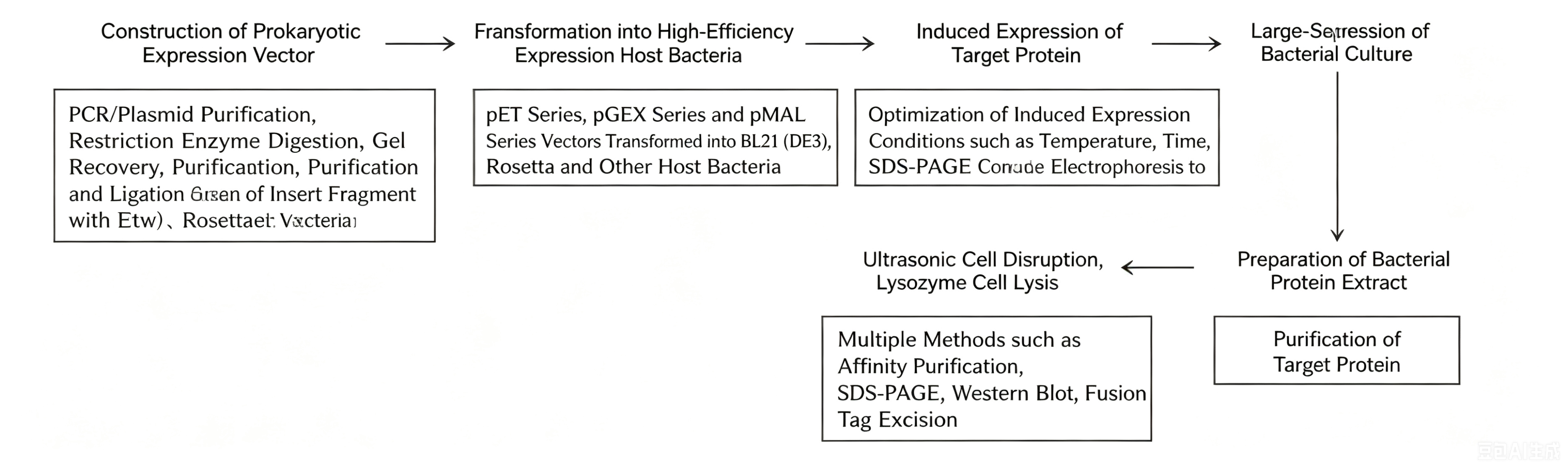
Fig.1 Prokaryotic expression process of recombinant protein
(2) Yeast Expression System
Yeast, a eukaryotic microorganism, possesses the capability to express heterologous proteins and can achieve high cell density. It enables post-translational modifications such as phosphorylation and glycosylation of expressed proteins. Combining the advantageous features of both bacterial and higher eukaryotic expression systems, yeast serves as an excellent alternative when heterologous protein expression fails in E. coli. Commonly used yeast strains for recombinant protein expression include Saccharomyces cerevisiae, Schizosaccharomyces pombe, Pichia pastoris, and Kluyveromyces lactis.With extensive expertise in yeast recombinant protein expression, fermentation, and purification, KMD Bioscience can rapidly develop customized yeast expression strategies tailored to diverse client needs.
(3) Insect Cell Expression System
Proteins that are difficult to express in bacterial expression systems, such as membrane proteins, high-molecular-weight proteins, and protein kinases, have been successfully expressed in insect cells like Sf9 or High-5. In most insect cell expression systems, foreign genes are transfected into host cells via baculovirus vectors, and the target gene cassette is integrated into the host genome through homologous recombination. KMD Bioscience can provide custom full-length membrane proteins with purity as high as 95%. We offer free sequence analysis of customer-provided genes and perform codon optimization at no cost based on the codon preferences of Sf9, Sf21, Hi-5, and S2 insect cells, thereby effectively enhancing recombinant protein expression levels.
(4) Mammalian Cell Expression System
When target proteins with complex disulfide bonds or post-translational modifications cannot be expressed using other expression systems, mammalian cells can be employed for exogenous protein production. Commonly used mammalian cell lines for recombinant protein expression include HeLa cells, human embryonic kidney cells (HEK293), and Chinese hamster ovary cells (CHO).KMD Bioscience has established a well-developed mammalian expression system, utilizing cell lines such as FreeStyle™ 293-F and ExpiCHO-S™, among others. Combined with KMD-designed high-expression vectors (featuring a full-length CMV promoter and optimized secretion signal peptide sequences), we provide clients with high-yield recombinant protein expression and preparation in mammalian cells.
II. Differences Among Heterologous Protein Expression Systems
| Escherichia coli | Yeast cells | Insect cells | Mammalian cells | |
| Gene transformation | Thermal shock Electroporation | Thermal shock Electroporation | Viral infection | Lipofection (Lipid-mediated transfection);Electroporation;Retrovirus;Lentivirus;Adenovirus |
| Host cell doubling time | 10~30 min | 1~3 h | 16~24h | No |
| Experimental time | 3~7 days | 1~2 weeks | 2~4 weeks | 1~2 days |
| Expression level | 0.1~1.0 g | 0.1~1.0 g | 0.1~100 mg | 0.01~10 mg |
| Total cost | Low | Low | In the | High |
| Phosphorylation | No | Serine;Threonine;Tyrosine | Serine;Threonine;Tyrosine | Serine;Threonine;Tyrosine |
| Glycosylation | No | Mannan | High-mannose | Complex |
III. Comparison of Advantages and Disadvantages Among the Four Expression Systems
(1) E. coli Expression System
Advantages:Well-understood genetic background, rapid reproduction, low cost, high expression levels, stable 2H/13C/15N isotope labeling techniques, and broad applicability.
Disadvantages:1.Lacks transcriptional and post-translational modification functions, unable to perform glycosylation or phosphorylation, and struggles to form correct spatial conformational folding.2.Expressed proteins are often insoluble, forming inclusion bodies.
(2) Yeast Expression System
Advantages:1.Does not produce toxins, ensuring safety and reliability.2.Capable of processing expressed products, maintaining their activity and stability.3.Expressed products are secreted extracellularly, facilitating purification.4.Well-understood genetic background.5.elatively完善的 expression control system.6.Rapid growth and reproduction.
Disadvantages:1.Heterologously expressed proteins are susceptible to degradation by endogenous proteases.2.Fermentation周期 is relatively long and prone to contamination.3.Although capable of glycosylating products, the process involves mannan-type glycosylation, which differs from that in mammalian cells.
(3) Insect Expression System
Advantages:1.High safety profile, posing no harm to humans or risk of environmental pollution.2.Shorter vector construction周期 compared to mammalian cell expression systems.3.Capable of accommodating large foreign DNA insertions, making it an ideal system for expressing large DNA fragments.4.Enables high-level expression of recombinant proteins.5.Supports simultaneous expression of multiple genes within a single cell.
Disadvantages:A common issue in the Baculovirus Expression Vector System (BEVS) is the susceptibility of recombinant proteins to degradation.
(4) Mammalian Expression System
Advantages:Proteins expressed in mammalian cells exhibit nearly identical structural glycosylation patterns and processing as natural proteins, and can correctly assemble into multi-subunit complexes. The system allows for high-density growth in suspension cultures or serum-free media, with fermentation volumes scalable beyond 1,000 liters.
Disadvantages:Compared to E. coli, mammalian cells have lower expression levels, require extended timelines to develop high-expression cell lines, and incur significantly higher costs for large-scale cultivation.
IV. Applications of the Four Expression Systems
E. coli Expression System:(1) Production of human insulin.(2) Research on exosome-based vaccines.(3) Applications in agriculture.
Yeast Expression System:(1) Production of heterologous gene expression products.(2) Used in the preparation of genetically engineered vaccines, biopharmaceuticals (e.g., antibody drugs, protein therapeutics), and functional protein studies.
Insect Expression System:(1) Expression of human bone morphogenetic proteins (BMPs) in the baculovirus expression system.(2) Expression of proteins requiring N-glycosylation modifications.
Mammalian Cell Expression System:(1) The expression of certain proteins has progressed from laboratory research to pilot or industrial-scale production.(2) Many critical proteins and glycoproteins have been successfully expressed and mass-produced using mammalian cell systems.
KMD Biosciences has established a comprehensive recombinant protein expression platform, including but not limited to prokaryotic expression systems, mammalian expression systems, yeast expression systems, and insect expression systems, enabling us to provide clients with high-yield recombinant protein expression and production services.
- Recombinant protein expression systems
- Prokaryotic expression system for recombinant proteins
- Mammalian expression system for recombinant proteins
- Yeast expression system for recombinant proteins

- Protein Platform
- Protein Expression Services
- Protein Modification & Detection Services
- Protein Interaction Services
- Protein Purification Service
- Antibody Discovery Platform
- VHH Antibody Platform
- Phage Display Platform
- Antibody Humanization Platform
- Single B Cell Screening Platform
- Antibody Expression & Validation Platform
- Peptide Library Platform
- Custom Antibody Platform
- Innovative Drug Discovery Platform
- Product Center
- Proteins
- Antibodies
- Raw Materials Reagents
- Small Molecule Reagents
- Peptide Products
- Nanoparticle Products
- Contact Us
- Phone:400-621-6806
- Mobile:13110936064(WeC
- E-mail:[email protected]
- Address:Room 108, Building 10, No. 6 Hechang Road, Wuqing Development Zone, Tianjin City
-

WeChat
-

Service Account
-
 400-621-6806
 -
 3599163699
 -
 Monday to Friday 9:00-18:00
 -

-
 0
0
-
