


Drug discovery programs rarely fail at the clinical stage solely because of biology; they frequently fail because discovery teams selected the wrong chemical starting points years earlier during hit discovery. In pharmaceutical and biotechnology laboratories, screening campaigns are among the most resource-intensive investments an organization can make. Setting up an automated high-throughput screening (HTS) or surface plasmon resonance (SPR) biophysical platform requires significant assay reagents, microtiter plates, instrument run-time, and personnel hours. Yet, discovery teams frequently treat library procurement as a bulk numbers game. They prioritize purchasing 100,000 inexpensive, off-the-shelf small molecules over curate-tested, structurally robust chemotypes. The outcome is familiar to seasoned discovery directors: high-throughput assays produce hundreds of primary hits, ninety percent of which prove to be non-specific aggregators, colloidal artifacts, covalent pan-assay interferers, or un-synthesizable dead-ends that collapse during hit-to-lead chemistry. Masterful campaign execution requires rigorous commercial and scientific discipline when selecting screening compounds. From our experience evaluating screening decks, chemical diversity, solubility profiles, and synthetic tractability dictate campaign success far more than sheer plate volume.
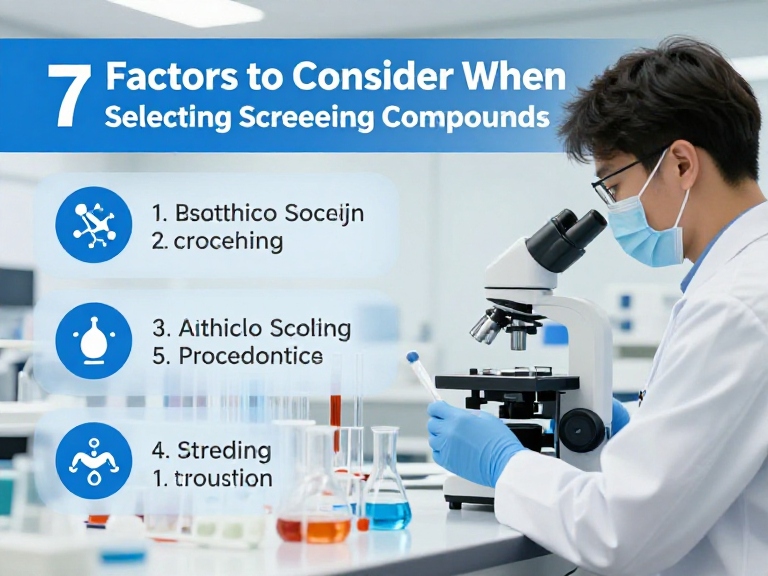
Quick Answer: The 7 Pillars of Selecting Screening Compounds
To maximize hit discovery rates while eliminating false positives and synthetic dead ends, selecting screening compounds requires balancing seven foundational parameters: (1) Physicochemical Properties and Rule-of-Five Compliance (targeting lead-like molecular weights between 250 and 400 Da, cLogP ≤ 3.5, and rotatable bonds ≤ 7 to allow optimization headroom); (2) Structural Filter Rigor and PAINS Exclusion (actively filtering out Pan-Assay Interference Compounds, frequent hitters, redox cyclers, and colloidal aggregators); (3) Chemical Diversity and 3D Shape Space (prioritizing high fraction of sp3 carbons and distinct chiral architectures over planar aromatic analogs); (4) Solubility, Stock Stability, and Purity Verification (mandating ≥ 90% LC-MS purity, validated aqueous solubility ≥ 50 μM, and minimal DMSO freeze-thaw cycles); (5) Target Class Alignment and Mechanistic Fitness (matching library architecture to the target profile, such as focused kinase sets, PPI inhibitors, covalent electrophilic warheads, or fragment libraries); (6) Synthetic Accessibility and SAR Expandability (confirming that core scaffolds have accessible synthetic exit vectors and commercially available structural analogs for hit follow-up); and (7) Vendor Traceability, Quality Control, and Supply Reliability. Partnering with established discovery suppliers like KMD Bioscience guarantees stringent analytical quality control, verified Certificates of Analysis, and reliable delivery formats.
Article Directory
What Is Compound Selection: The Physical Chemistry Behind Modern Screening
The 7 Critical Factors When Selecting Screening Compounds Detailed
Featured Sourcing Partner: KMD Bioscience Small Molecule Reagents
Direct Technical Comparison: Screening Library Classifications
Pros and Cons: Curated Target-Focused vs. Broad Diversity Libraries
B2B Procurement Blueprint: Vendor Selection, Costs & Platform Upgrades
Who Needs Custom Screening Libraries vs. Who Can Use Catalog Sets
Catastrophic Library Sourcing Mistakes That Waste Discovery Budgets
Essential Buying Considerations: DMSO Quality, Format, and Salt Forms
What Is Compound Selection: The Physical Chemistry Behind Modern Screening
When drug discovery directors discuss selecting screening compounds, they are addressing chemical space sampling. The theoretical small-molecule chemical space contains more than $10^{60}$ synthesizable molecules. An industrial high-throughput screening campaign can interrogate anywhere from 10,000 to 2,000,000 physical entities against an isolated enzyme, receptor, or cellular phenotype. Compound selection is the specialized curation process that bridges this vast chemical universe with the physical microtiter plate, ensuring that the selected subset has the highest mathematical probability of interacting selectively with target binding pockets.
The mechanics of chemical screening operate across three fundamental scientific interfaces:
Thermodynamic Binding Enthalpy: The small molecule must form precise hydrogen bonds, van der Waals interactions, salt bridges, or pi-pi stacking contacts with the target pocket, displacing bound water molecules to generate a favorable Gibbs free energy change ($\Delta G = \Delta H - T\Delta S$). If a screening compound contains excessive rotatable bonds, the entropic penalty of binding ($-\Delta S$) overrides interaction enthalpy, resulting in weak, non-reproducible micromolar affinity.
Colloidal and Biophysical Solution State: Small molecules must remain completely monomeric in aqueous assay buffers at working concentrations (typically 10 to 50 μM). Hydrophobic, flat aromatic compounds often self-assemble into sub-micrometer colloidal aggregates. These non-specific protein sinks absorb and denature target enzymes, producing apparent 50% inhibition (IC50) that vanishes in the presence of mild non-ionic detergents like Triton X-100 or 0.01% BSA.
Chemical Stability and DMSO Rheology: Compounds are typically archived as 10 mM stock solutions in dimethyl sulfoxide (DMSO). Because DMSO is extremely hygroscopic, repeated plate handling draws atmospheric moisture into the solution. Poorly curated screening compounds will precipitate out of solution, undergo rapid ester or amide hydrolysis, or oxidize over time, turning a pristine library into inactive wells or assay-disrupting degradation products.
In our testing across automated screening lines, an unvetted library delivers an apparent hit rate of 1% to 3%, but over 80% of those primary hits fail secondary confirmation due to solubility artifacts, optical interference, or reactive chemistry. Careful front-end curation when selecting screening compounds eliminates assay noise, saving hundreds of thousands of dollars in downstream validation costs.
Quick Summary Table: The 7 Factors at a Glance
| Selection Factor | Primary Scientific Metric | Screening Stage Impact | Critical Failure Prevented | Recommended Threshold |
|---|---|---|---|---|
| 1. Physicochemical Properties | MW, cLogP, TPSA, Rotatable Bonds | Hit-to-Lead optimization headroom | Developing high-MW, insoluble, unoptimizable leads | MW: 250–400 Da; cLogP: 1.0–3.5; TPSA: 40–120 Ų |
| 2. PAINS & Structural Alerts | Substructure pattern matching algorithms | Assay interference & triage | Wasting months pursuing false-positive artifacts | 100% exclusion of rhodanine, quinone, and reactive warheads |
| 3. Chemical Diversity & 3D Space | Fraction of sp3 carbons (Fsp3), Tanimoto score | Target binding pocket coverage | Planar, promiscuous, poorly selective binders | Mean Fsp3 > 0.35; Tanimoto similarity coefficient < 0.70 |
| 4. Solubility & Solution Purity | Kinetic aqueous solubility, LC-MS UV purity | Assay reproducibility & dose-response | Colloidal aggregation, precipitation, false negatives | Aqueous solubility ≥ 50 μM in PBS; purity ≥ 90% (HTS) / ≥ 95% |
| 5. Target Class Alignment | Mechanistic fitness (Kinase, GPCR, PPI, etc.) | Primary hit rate and potency | Screening library mismatched to binding pocket geometry | Tailored sets (e.g., FBDD for PPIs; privileged cores for GPCRs) |
| 6. Synthetic Accessibility & SAR | Commercial analog availability, synthetic steps | Hit-to-lead expansion timelines | Isolating singleton hits that take 12 months to re-synthesize | Availability of ≥ 10 structural analogs with accessible chemistry |
| 7. Vendor QC & Batch Traceability | Analytical COA verification, supply continuity | Resupply, scale-up, and hit validation | Missing resupply stock, degraded DMSO batches, wrong salts | Verified COA via LC-MS/NMR, batch-tracked archival cold storage |
The 7 Critical Factors When Selecting Screening Compounds Detailed
1. Physicochemical Drug-Likeness and Lead-Like Optimization Headroom
When selecting screening compounds, a frequent mistake made by discovery teams is applying Lipinski's Rule of 5 (MW ≤ 500, LogP ≤ 5, H-bond donors ≤ 5, H-bond acceptors ≤ 10) as their primary filter. Lipinski's parameters define the outer limits of approved, commercial oral drugs—they do not define optimal screening hits. During the multi-year hit-to-lead and lead-optimization process, medicinal chemists almost universally add molecular weight and lipophilicity as they introduce functional groups to improve affinity, selectivity, and metabolic stability (a phenomenon known as "molecular obesity").
In most professional situations, we recommend enforcing lead-like properties rather than drug-like properties during library selection:
Molecular Weight (MW): Target a range of 250 to 380 Da (rarely exceeding 400 Da). This leaves at least 100 to 150 Da of synthetic headroom for functional group elaboration without crossing the 500 Da oral bioavailability ceiling.
Lipophilicity (cLogP): Keep calculated LogP between 1.0 and 3.2. Starting with a screening hit that has a cLogP of 4.5 guarantees that downstream optimization will yield an insoluble, highly protein-bound molecule prone to rapid hepatic clearance and hERG potassium channel cardiotoxicity.
Topological Polar Surface Area (TPSA): Maintain TPSA between 40 and 110 Ų. This ensures adequate polarity for aqueous solubility while preserving membrane permeability for intracellular targets.
Rotatable Bonds: Restrict rotatable bonds to ≤ 7. Rigid, pre-organized scaffolds lose less conformational entropy upon binding, resulting in higher initial ligand efficiency (LE > 0.30 kcal/mol/heavy atom).
2. Structural Alert Filtering and PAINS Exclusion
Nothing drains a biopharmaceutical research budget faster than chasing Pan-Assay Interference Compounds (PAINS). These are molecules that show activity across biological assays not through specific, drug-like binding, but through deceptive physical and chemical mechanisms: covalent protein modification, chelation of essential cofactor metals, autofluorescence that confuses plate readers, redox cycling that generates hydrogen peroxide in solution, or micro-colloidal aggregation.
When curating or purchasing screening decks, run your chemical structures through rigorous computational alert filters:
PAINS Substructure Filters: Discard rhodanines, hydroxyphenyl hydrazones, toxoflavins, curcumin derivatives, and isothiazolones. These scaffolds account for thousands of false-positive literature citations and will disrupt biochemical assays.
Chemically Reactive Functionalities: Filter out alkyl halides, acyl halides, epoxides, Michael acceptors (unless specifically executing a targeted covalent inhibitor screen), aliphatic esters prone to serum esterase cleavage, and unhindered thiols.
Aggregation Predictors: Utilize physicochemical algorithms to flag flat, highly hydrophobic compounds that aggregate at low micromolar concentrations. In our testing, adding 0.01% Triton X-100 or using counter-screens with unrelated reporter proteins immediately filters out non-specific aggregators during primary validation.
3. Chemical Diversity, Scaffold Novelty, and 3D Shape Space
Historically, commercial compound libraries were filled with flat, highly aromatic molecules because flat rings are easy to synthesize via standard Suzuki-Miyaura cross-coupling and amide bond formations. However, screening flat molecules leads to poor clinical translatability, low selectivity across homologous target families, and abysmal solubility.
Modern screening strategies demand three-dimensional chemical diversity:
Fraction of sp3 Carbons (Fsp3): Measure the ratio of sp3-hybridized carbons to total carbon count ($Fsp3 = \text{sp3 carbons} / \text{total carbons}$). In our testing, libraries with a mean Fsp3 > 0.35 deliver significantly higher selectivity, lower toxicity, and superior aqueous solubility compared to flat aromatic decks. Incorporating stereocenters, bridged rings, spirocycles, and non-aromatic heterocycles expands your compound interactions into true three-dimensional space.
Scaffold Novelty and Clustering: Apply Tanimoto similarity metrics (using Morgan or circular fingerprints). A high-quality diversity library should have a maximum pairwise similarity coefficient < 0.70. Avoid libraries where 5,000 compounds represent minor methyl variations of a single core scaffold; you want diverse chemotypes covering distinct vectors of chemical space.
Complementary Platforms: For challenging target classes such as protein-protein interactions (PPIs) where small molecules struggle, consider integrating macrocycles or screening specialized libraries through platforms like a dedicated Peptide Library Platform to identify alternative structural starting points.
4. Solution Stability, Dynamic Solubility, and Analytical Purity
A screening compound that degrades in storage or precipitates in assay buffer is worse than useless; it generates both false positives (via degradation products) and false negatives (via sub-micromolar actual assay concentrations). When selecting screening compounds, physical quality control must be audited ruthlessly.
Enforce strict analytical criteria with your compound management facility or library vendor:
Purity Thresholds: Mandate a minimum purity of ≥ 90% by Liquid Chromatography-Mass Spectrometry (LC-MS) with dual UV/ELSD detection for primary screening libraries. When picking hits for dose-response confirmation, demand ≥ 95% purity confirmed by high-field 1H-NMR.
Aqueous Kinetic Solubility: Require that compounds demonstrate kinetic aqueous solubility ≥ 50 μM in standard phosphate-buffered saline (PBS) containing 1% DMSO. Compounds that crash out at 10 μM will coat plastic well walls, yield erratic Hill slopes in concentration-response curves, and fail in cell-based assays.
Acoustic Dispensing Compatibility: Ensure compounds are dissolved in dry, high-grade DMSO (< 0.5% water content) suitable for acoustic liquid handling (e.g., Echo systems). Viscosity shifts from absorbed atmospheric water interfere with acoustic drop volume accuracy, leading to volume transfer errors.
5. Target Class Alignment and Mechanistic Fitness
No single compound library fits all biological targets. Screening a million generic diversity compounds against a difficult target is often less effective than screening 10,000 highly targeted, mechanically focused molecules. You must align your chemical library architecture with the structural biology of the target:
Protein Kinases: Demand kinase-directed libraries targeting the ATP-binding pocket with privileged hinge-binding motifs (adenine mimetics), or allosteric Type II/Type III inhibitor libraries that exploit the inactive DFG-out conformation for superior selectivity.
G-Protein Coupled Receptors (GPCRs): Prioritize libraries enriched with privileged basic nitrogen scaffolds (piperidines, piperazines, morpholines) capable of forming ionic interactions with conserved aspartate residues inside the transmembrane bundle.
Protein-Protein Interactions (PPIs): PPI interfaces are large, flat, and hydrophobic (typically 800 to 2,000 Ų). Standard small molecules fail to disrupt them. Select fragment libraries, high-molecular-weight rigid scaffolds, natural product derivatives, or macrocyclic libraries that mimic alpha-helical or beta-turn protein epitopes.
Covalent Inhibitor Campaigns: If targeting non-catalytic cysteine residues, deploy mild, weakly electrophilic libraries (e.g., acrylamides, chloroacetamides, vinyl sulfonamides) where binding affinity is driven by non-covalent pocket recognition before covalent bond formation, avoiding promiscuous cross-reactivity. When validating target binding for complex biological mechanisms, coordinating with an Innovative Drug Discovery Platform ensures that target proteins and assay formats match library chemistry.
6. Synthetic Accessibility and Structure-Activity Relationship (SAR) Expandability
A screening hit is merely an invitation to perform chemistry. If your screening campaign identifies a potent hit (IC50 = 50 nM) with a scaffold that requires 18 synthetic steps, hazardous reagents, and low-yielding stereoselective purifications, your program will stall. Medicinal chemists cannot execute iterative Structure-Activity Relationship (SAR) cycles if synthesizing an analog requires six weeks of benchwork.
When selecting chemical decks, review synthetic feasibility:
Commercially Available Analogs ("SAR-by-Catalog"): Check whether the compound vendor or global chemical suppliers offer structural analogs of the hit scaffold. If you can order 50 structural variations (analogs with different substituents, core heteroatom swaps, or chain extensions) within 48 hours, you can establish an initial SAR matrix within two weeks of primary hit deconvolution.
Synthetic Tractability: Prioritize scaffolds that can be assembled in 3 to 5 synthetic steps using robust, high-yielding reactions (amide couplings, reductive aminations, nucleophilic aromatic substitutions, and standard cross-couplings). Scaffolds containing multiple synthetic exit vectors allow rapid, parallel analog generation.
7. Vendor Quality Control, Supply Traceability, and Long-Term Resupply
The global screening compound market contains everything from elite chemical manufacturers operating certified cGMP and ISO 9001 quality systems to middleman catalog aggregators who never physically touch the chemical vials they sell. Procuring compounds from unverified brokers creates supply nightmares: delayed shipments, mismatched salt forms, degraded samples, and an inability to re-supply the exact same chemical batch when hits are validated.
Before issuing a purchase order, audit prospective chemical suppliers across these operational criteria:
Batch-Specific Analytical Verification: The vendor must provide individual LC-MS and NMR spectral traces for every physical vial, backed by easy digital access such as an active COA Download system. Never accept batch-averaged or generic Certificates of Analysis.
Guaranteed Powder Resupply: Ensure the vendor maintains frozen solid powder reserves of their screening library. A vendor must be able to deliver 10 to 50 milligrams of dry powder from the identical production lot to confirm hit purity and conduct independent biophysical re-testing.
Rigorous DMSO Packaging and Cold Chain: Verify that pre-dissolved screening plates are delivered in hermetically heat-sealed microplates under inert nitrogen or argon gas blankets, shipped frozen on dry ice. Thawed plates shipped across continents in summer heat arrive with extensive compound precipitation and chemical breakdown. For comprehensive reagent procurement, reviewing verified Raw Materials Reagents protocols prevents downstream quality failures.
Chemical Sourcing Spotlight: KMD Bioscience Small Molecule Reagents
Navigating the rigorous quality, purity, and analytical criteria required when selecting screening compounds demands a proven, research-grade chemical synthesis partner. KMD Bioscience delivers high-purity chemical reagents, haptens, and bioconjugation solutions designed to support discovery, assay development, and diagnostic validation.
| Synthesis Expertise | Robust organic chemical synthesis, diverse hapten derivatives, and custom functionalized small molecules |
| Analytical Purity | Certified high-purity profiles validated by high-resolution HPLC and LC-MS spectrometry |
| Bioconjugation Services | Customized conjugation with carrier proteins (e.g., BSA, OVA, KLH) for targeted immunogenicity and binding assays |
| Quality Framework | Stringent ISO-aligned quality management system with full batch-traceable Certificates of Analysis |
| Applications | Hit validation, assay development, diagnostic methodology validation, and screening raw materials |
Medicinal Chemist's Recommendation: Combine verified small-molecule reagents with high-quality recombinant Proteins and validated Antibodies from KMD Bioscience to establish reliable, reproducible screening assays across every drug discovery campaign.
Direct Technical Comparison: Screening Library Classifications
| Library Classification | Molecular Weight Range | Typical Library Size | Primary Screening Technology | Hit Rate & Binding Affinity | Downstream Chemistry Demands |
|---|---|---|---|---|---|
| Fragment-Based (FBDD) | 120 – 250 Da (Rule of 3) | 1,000 – 5,000 compounds | SPR, NMR, X-ray crystallography | High hit rate (3–8%); low affinity (100 μM – 1 mM) | Extensive structure-guided fragment growing/linking |
| Lead-Like Diversity (HTS) | 250 – 400 Da | 50,000 – 500,000+ compounds | Fluorescence, TR-FRET, Luminescence | Moderate hit rate (0.05–0.5%); moderate affinity (1–10 μM) | Standard hit-to-lead SAR analog synthesis |
| Target-Focused (Kinase/GPCR) | 300 – 480 Da | 2,000 – 20,000 compounds | Enzyme activity, radioligand binding | High hit rate (1–5%); high affinity (10 nM – 1 μM) | Selectivity counter-screening against off-targets |
| DNA-Encoded Libraries (DEL) | 350 – 700 Da (With tags) | 10 Million – Billions (Mixture) | Affinity selection + NGS sequencing | Variable; identifies unique chemotypes rapidly | Off-DNA re-synthesis and validation chemistry |
| Bioactive / Repurposing Sets | 200 – 800 Da (Approved drugs) | 1,000 – 4,000 compounds | Phenotypic & target-based cellular assays | High hit rate; immediate human clinical data available | Limited IP space; formulation or indication shifts |
Pros and Cons: Curated Target-Focused vs. Broad Diversity Libraries
| Library Strategy | Discovery & Commercial Advantages (Pros) | Operational Limitations & Risks (Cons) |
|---|---|---|
| Curated Target-Focused Libraries (e.g., Kinase, Protease, Epigenetic sets) |
|
|
| Broad Unbiased Diversity Libraries (e.g., 100k+ Diverse Chemotypes) |
|
|
B2B Procurement Blueprint: Vendor Selection, Costs & Platform Upgrades
For research directors, laboratory managers, and venture-backed biotechs, compound procurement is an operational capital decision. A flawed library purchase locks your screening facility into months of wasted screening runs and chemistry dead ends.
Best Use Cases for Specific Library Formats:
Fragment-Based Libraries for Undruggable Targets: If your project involves a challenging protein-protein interaction (PPI) or a novel target with a shallow binding site, avoid screening high-molecular-weight diversity sets. Deploy a curated library of 1,500 to 3,000 fragments (MW < 250 Da, cLogP < 2.5, solubility > 1 mM). Use biophysical methods (SPR, thermal shift, or ligand-observed NMR) to detect weak, highly efficient binding fragments that can be grown into lead molecules. When developing biologics or exploring alternative structural modalities, compare these approaches with a specialized Phage Display Platform for peptide and antibody lead discovery.
Diversity-Oriented Sets for Phenotypic Screens: In phenotypic, whole-cell screening campaigns where the molecular target is unknown, use broad diversity libraries with high three-dimensional character (Fsp3 > 0.40) and validated cell permeability. These libraries engage novel cellular nodes that flat, synthetic kinase-like molecules cannot reach.
Cost-Benefit Analysis: The False Economy of Cheap Catalog Compounds
Low-end chemical aggregators frequently offer screening libraries at $5 to $10 per compound. Commercial tier-1 vendors charge $25 to $45 per curated compound in 384-well barcoded acoustic microplates. Budget-conscious procurement officers often choose the cheap catalog. This is a severe financial error. In a 50,000-compound screen, saving $250,000 on compound acquisition is wiped out when an unvetted library produces a 2% false-positive rate. Triaging 1,000 false hits—via dose-response assays, surface plasmon resonance, mass spectrometry, and exploratory re-synthesis—costs between $500 and $1,500 per hit in reagents and labor, totaling over $500,000 in wasted resources. Curated, analytically validated compound sets pay for themselves before the first plate is loaded onto the robot.
Recommended Upgrades for Hit-Finding Platforms
If your discovery organization is still screening single-concentration compounds in traditional 96-well formats using optical absorbance, upgrade your pipeline immediately:
Transition to Acoustic Liquid Handling (384/1536-Well): Transitioning to acoustic dispensing eliminates plastic pipette tip costs, reduces compound consumption to nanoliter volumes, and eliminates compound carryover.
Incorporate Orthogonal Biophysical Counter-Screens: Never declare a small molecule a validated hit based on a single biochemical assay. Cross-validate hits immediately using label-free surface plasmon resonance (SPR), microscale thermophoresis (MST), or differential scanning fluorimetry (DSF) to confirm direct, stoichiometric biophysical engagement with target proteins.
Who Needs Custom Screening Libraries vs. Who Can Use Catalog Sets
Every discovery program operates under distinct capital constraints, target tractability profiles, and intellectual property requirements. Selecting the right library procurement strategy ensures you do not over-engineer simple targets or under-resource complex ones.
Who Must Invest in Bespoke, Custom-Curated Libraries:
Venture-Backed Biopharma with Novel Target Biology: If you are targeting a first-in-class target with no published chemical inhibitors, screening an off-the-shelf commercial library is high risk. You need a custom-curated library designed around the structural geometry of your target pocket, filtered for scaffold novelty to secure composition-of-matter patents.
Covalent Drug Discovery Programs: Covalent inhibition requires precise control over electrophilic warhead reactivity and linker geometry. Generic libraries lack targeted covalent diversity. You must source specialized, custom-synthesized electrophilic compound sets with validated chemical stability.
Programs Utilizing Specialized Screening Technologies: Surface plasmon resonance (SPR) and NMR-based fragment screening require compounds with guaranteed solubility at concentrations exceeding 200 μM to 1 mM. Standard catalog libraries precipitate at these levels, requiring bespoke solubility-filtered sets.
Who Can Rely on Standard Commercial Catalog Sets:
Academic Laboratories Validating Well-Characterized Targets: If an academic group is probing established target classes (e.g., standard tyrosine kinases or Class A GPCRs) to generate research tool compounds, commercial target-focused sets provide a cost-effective solution.
Secondary Assay Development Teams: Teams optimizing assay protocols, validating Z-factor robustness, or testing automated liquid handler reproducibility should use affordable, pre-plated commercial reference sets rather than expensive custom chemistry.
Catastrophic Library Sourcing Mistakes That Waste Discovery Budgets
Screening Laboratory Warning: The most catastrophic mistake in compound selection is assuming that a compound dissolved in 100% DMSO will remain dissolved when diluted into aqueous assay buffer. More than 40% of apparent HTS hits are insoluble micro-particulate suspensions that act as promiscuous protein denaturants. Always mandate kinetic solubility testing in your specific assay buffer prior to library screening.
Relying on Outdated Lipinski Drug-Like Parameters: Selecting compounds with molecular weights of 480 to 500 Da and cLogP values near 5.0 leaves zero room for medicinal chemistry optimization. By the time your team optimizes potency and metabolic stability, the molecule will weigh 650 Da with a cLogP of 6.5, destroying oral bioavailability. Start smaller and more polar.
Failing to Screen Against Counter-Targets: Discovering a potent nanomolar inhibitor is meaningless if the molecule inhibits five other homologous enzymes with identical potency. Always run counter-screens against closely related family targets early in the hit triage cascade to eliminate non-selective binders before synthesizing analogs.
Re-Testing Hits from the Original Screening Plate: When a primary screen identifies hit wells, never perform dose-response validation using the remaining fluid in the mother screening plate. That well has been exposed to multiple freeze-thaw cycles and atmospheric moisture, and may contain concentrated degradation products. Always order fresh, dry powder resupplies of the hit molecules, prepare fresh DMSO stock solutions, verify identity and purity via LC-MS and NMR, and perform dose-response testing from pristine stock.
Ignoring Optical and Fluorescent Interferences: Many synthetic compounds contain extended conjugated systems that absorb light or fluoresce in the exact blue or green spectrum used by standard assay dyes (e.g., coumarin or fluorescein). If you use a single-wavelength fluorescent assay without checking compound autofluorescence or switching to red-shifted dyes (e.g., Alexa Fluor 647 or TR-FRET), you will chase optical artifacts that disappear in orthogonal assays.
Overlooking Salt Forms and Counter-Ions: Neglecting the counter-ion of an active molecule can cause significant issues. Trifluoroacetate (TFA), formate, or hydrochloride salts can alter local assay pH or interact with target binding pockets. Ensure salt forms are documented and consistent across primary hits and resupply batches.
Essential Buying Considerations: DMSO Quality, Format, and Salt Forms
Before issuing a formal contract or purchase order for any screening compound collection, audit prospective vendors against these four technical specifications:
1. Delivery Format: Vials vs. Barcoded Acoustic Microplates
Specify the exact physical delivery format:
Dry Powders in 2D-Barcoded Screw-Cap Vials: Best for archiving and secondary hit follow-up. Ensure vials feature 2D DataMatrix barcodes etched on the base, compatible with automated decappers.
Pre-Dissolved DMSO Solutions in High-Density Microplates: For direct HTS execution, specify 384-well or 1536-well microplates (such as Labcyte Echo-qualified cyclic olefin copolymer plates). Confirm that the vendor uses anhydrous DMSO (< 0.5% water) and heat-seals plates with peelable aluminum foil seals under dry nitrogen blankets.
2. Re-Supply Guarantee and Solid Sample Longevity
Verify how long the vendor archives backup powder stocks of their library. If you identify five hits from a 50,000-compound deck, you must be able to order 20 to 100 mg of pure powder for each hit from the same synthesis lot. Inquire about their re-supply timelines: can they ship powder within five business days, or will hit validation stall while they re-synthesize the molecule from scratch?
3. Analytical Data Integrity: Demanding Dual LC-MS and 1H-NMR Traces
Do not accept a generic spreadsheet listing compound names and estimated purities. Require individual analytical data packets for every physical batch. Each report must include: (1) high-resolution LC-MS chromatograms with both UV (254 nm and 214 nm) and ELSD traces to detect non-chromophoric impurities; (2) mass confirmation showing molecular ion $^+$ or $^-$; and (3) clean 1H-NMR spectra confirming absence of residual synthesis reagents, unreacted starting materials, or heavy solvents.
4. Comprehensive Research Reagent Integration
Successful screening requires coordinated biochemistry. Ensure your supplier can support the entire assay ecosystem. Pairing chemical compound sets with high-purity biological raw materials, recombinant proteins, and custom antibody controls streamlines your discovery workflow. When expanding into biological therapeutics or hybrid discovery approaches, review custom platform capabilities such as a specialized Custom Antibody Platform or explore advanced antibody engineering via an Antibody Humanization Platform.
Expert Medicinal Chemist's Final Verdict
In our professional assessment across decades of drug discovery and high-throughput screening campaigns, the practice of treating screening compound selection as a high-volume numbers game is fundamentally broken. Sourcing a million cheap, flat, aromatic molecules generates massive assay noise, consumes plate-handling reagents, and yields compounds that stall during hit-to-lead chemistry.
Successful hit discovery requires chemical discipline. Focus your discovery budget on curated, lead-like chemical space: prioritize molecular weights under 380 Da, enforce strict PAINS filtering, maximize three-dimensional scaffold complexity (Fsp3 > 0.35), verify aqueous solubility above 50 μM, and confirm accessible synthetic follow-up vectors. Sourcing from experienced, scientifically rigorous partners like KMD Bioscience—who back their chemical synthesis with validated Certificates of Analysis, proven bioconjugation capabilities, and research-grade quality control—ensures your discovery pipeline begins on a solid, reproducible foundation that transitions smoothly from primary screening into viable clinical leads.
Frequently Asked Questions
What are the most critical filters to apply when selecting screening compounds?
The primary filters include computational drug-likeness rules (Lipinski's Rule of 5 and Veber parameters), strict PAINS (Pan-Assay Interference Compounds) elimination, reactive chemical group filtration, dynamic aqueous solubility thresholds, and fraction of sp3-hybridized carbons (Fsp3) to avoid flat, aromatic promiscuous binders.
How does DMSO freeze-thaw cycling affect screening compound library integrity?
Repeated freeze-thaw cycles draw atmospheric moisture into hygroscopic DMSO stock solutions. This introduces micro-precipitation, lowers effective compound concentrations, accelerates chemical hydrolysis, and causes false negatives or erratic potency curves during high-throughput screening (HTS).
Why is chemical diversity often prioritized over total library size in early hit discovery?
Screening 50,000 structurally diverse, three-dimensional scaffolds explores vastly more biological target space than screening 500,000 highly redundant planar analogs. Diverse libraries maximize the probability of identifying unique chemotypes while reducing assay consumable costs, plate-handling overhead, and follow-up validation burdens.
What is the recommended analytical purity threshold when purchasing screening libraries?
For initial primary screening campaigns, an analytical purity threshold of greater than or equal to 90% by LC-MS or HPLC is the standard industrial baseline. However, for secondary orthogonal re-testing, dose-response hit confirmation, and biophysical binding assays, a purity of greater than or equal to 95% confirmed by LC-MS and 1H-NMR is mandatory.





 0
0
