


10 Applications of Peptide Libraries in Drug Discovery: The 2026 Commercial Guide
- 2026-09-27
- 65
The pharmaceutical industry is currently facing a harsh reality: traditional small-molecule high-throughput screening is yielding diminishing returns. As disease targets become increasingly complex, particularly those involving expansive, flat protein-protein interaction interfaces, small molecules simply lack the footprint to inhibit them effectively. From our experience at KMD Bioscience, engineering biological solutions requires a fundamental shift in strategy. The solution is not more random chemical synthesis; the solution is harnessing the biological precision of peptides.
In most professional situations, relying on outdated screening methodologies guarantees commercial failure. You must pivot to advanced screening ecosystems. The Applications of Peptide Libraries have completely revolutionized how we approach target validation, lead discovery, and epitope mapping. By leveraging vast pools of distinct peptide sequences, commercial researchers can isolate highly specific ligands with nanomolar affinities in a fraction of the time it takes to develop a small molecule. In this definitive guide, we take a clear, uncompromising look at the exact Applications of Peptide Libraries, explaining not only what this technology is, but whether it is actually worth the investment for your specific drug development pipeline.
Quick Answer: What Are the Key Applications of Peptide Libraries?
The Applications of Peptide Libraries represent the most efficient method for discovering novel biological ligands. If you are evaluating this technology, here are its most critical uses:
Epitope Mapping: Identifying the precise binding site of an antibody for intellectual property protection.
PPI Modulation: Discovering inhibitors for complex Protein-Protein Interactions that small molecules cannot target.
Receptor Agonism/Antagonism: Isolating peptides that mimic natural ligands to activate or block cellular receptors.
Biomarker Discovery: Identifying disease-specific binding motifs for diagnostic assay development.
Vaccine Development: Screening for immunodominant epitopes to formulate synthetic peptide vaccines.
We recommend commercial biopharma companies aggressively integrate phage display peptide libraries into their early-stage discovery pipelines to drastically reduce lead-generation timelines.
Table of Contents
What It Is: Defining Peptide Libraries
A peptide library is a massive, systematic collection of peptides (short chains of amino acids) with varying sequences. Depending on the construction method, a single library can contain anywhere from hundreds of specific overlapping synthetic peptides to billions of random sequences displayed on the surface of bacteriophages. The primary function of a Peptide Library Platform is to serve as a vast molecular net. You cast this net over a biological target (like an orphan receptor or an uncharacterized enzyme) to see which specific sequence binds tightly to it.
How It Works: The Screening Mechanism
How it works depends on the presentation format. In a synthetic array, overlapping peptides derived from a known protein sequence are immobilized on a solid support. You pass your target over the array and identify which peptide sequence triggers a positive signal.
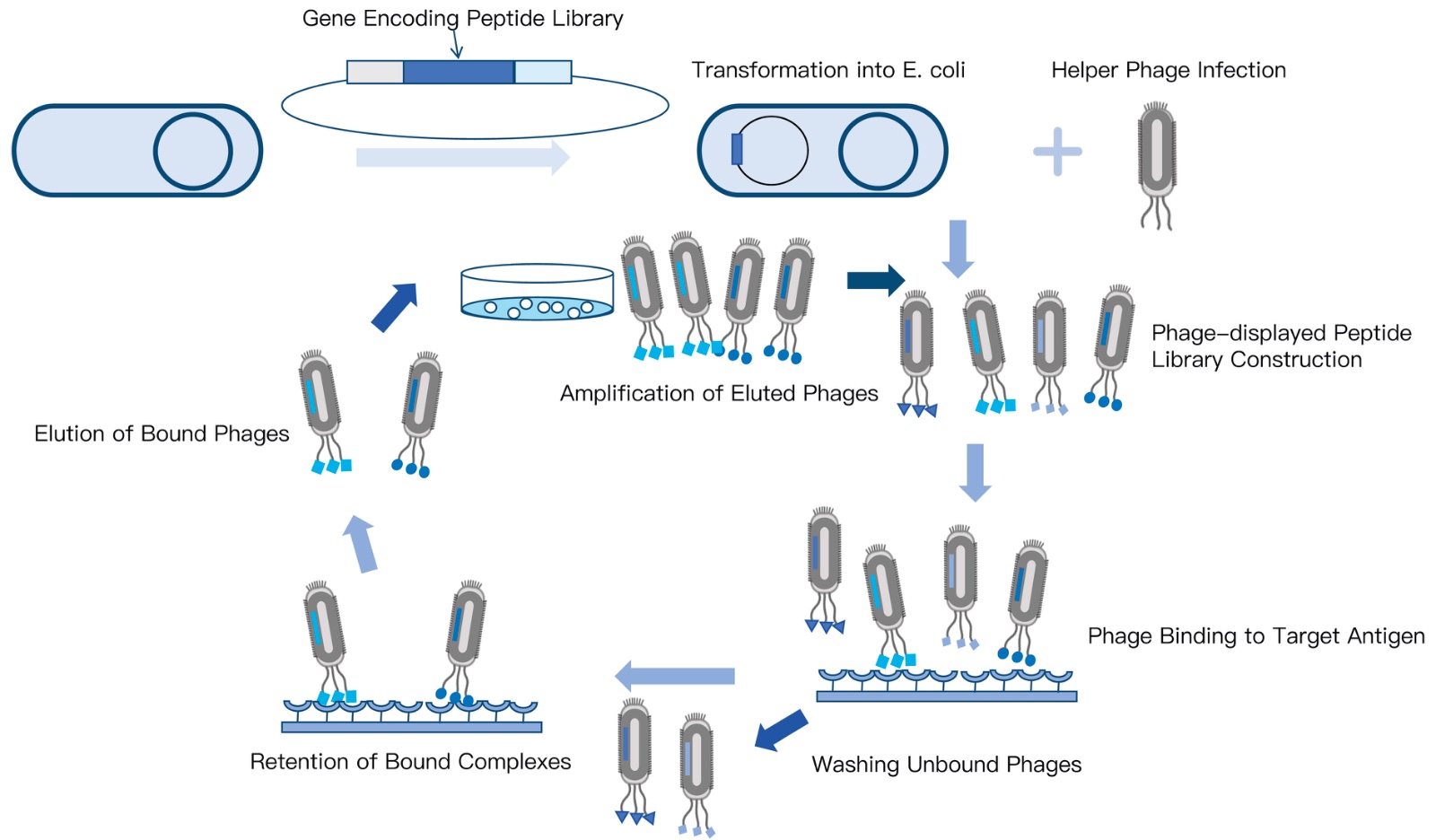
However, for heavy-duty applications demanding de novo discovery, phage display is the undisputed king. In phage display, the DNA encoding millions of random peptides is spliced into the genome of a bacteriophage. The phage then "displays" the peptide on its outer coat. You expose a vast pool of these phages (up to 10^10 independent clones) to your immobilized target protein. The phages that do not bind are washed away. The phages that bind tightly are eluted, amplified in bacteria, and subjected to another round of screening (biopanning). After three to four rounds, you sequence the DNA of the remaining phages to reveal the exact amino acid sequence of the winning peptide. This is the cornerstone of an Innovative Drug Discovery Platform.
The 10 Applications of Peptide Libraries
In our testing and execution of large-scale commercial contracts, these are the ten most critical Applications of Peptide Libraries that actively generate revenue and intellectual property in modern biotechnology.
1. High-Resolution Epitope Mapping
When you develop a monoclonal antibody, you must know exactly where it binds on the antigen. This is critical for filing patents and understanding the mechanism of action. By screening the antibody against an overlapping peptide library of the antigen, you can identify the exact 5-to-8 amino acid sequence (the epitope) the antibody recognizes. This is a mandatory step when utilizing a Custom Antibody Platform for therapeutic development.
2. Modulating Protein-Protein Interactions (PPIs)
PPIs are notoriously difficult to target because their binding interfaces are large and flat. Small molecules fail here. However, peptide libraries can generate highly specific, medium-sized ligands that perfectly match the topology of a PPI interface, blocking the interaction. This makes them invaluable tools for our Protein Interaction Services.
3. Discovery of Receptor Agonists and Antagonists
Orphan G-protein coupled receptors (GPCRs) and other cellular receptors often lack known ligands. By screening random peptide libraries against these purified receptors, researchers can identify novel peptides that either activate (agonize) or block (antagonize) the receptor signaling pathway, creating instant lead compounds for therapeutic development.
4. Enzyme Substrate Profiling
If you have discovered a novel kinase or protease, you need to know what it cuts or phosphorylates. By incubating the enzyme with a library of peptides and analyzing which peptides are modified, you can determine the exact consensus sequence the enzyme requires. This is crucial for developing targeted enzyme inhibitors.
5. Vaccine Development and Neoantigen Discovery
In modern oncology and virology, vaccines are moving away from whole-killed pathogens toward synthetic peptides. Peptide libraries are used to screen patient sera to identify highly immunogenic epitopes. These specific peptides can then be synthesized and formulated into potent, highly targeted synthetic vaccines with minimal side effects.
6. Identification of Antimicrobial Peptides (AMPs)
With global antibiotic resistance reaching crisis levels, the industry is pivoting to AMPs. Random peptide libraries are screened against multidrug-resistant bacteria to isolate novel peptide sequences that disrupt bacterial cell membranes, providing a new class of antibiotics.
7. Cell-Penetrating Peptide (CPP) Discovery
Getting large therapeutic molecules (like siRNA or proteins) inside a cell is a massive hurdle. Peptide libraries are utilized to discover novel CPPs—short peptide sequences that can carry a heavy molecular cargo across the lipid bilayer into the cytoplasm without destroying the cell.
8. Targeted Drug Delivery (Homing Peptides)
Chemotherapy is highly toxic because it is systemic. By screening peptide libraries in vivo (in animal models), researchers isolate "homing peptides" that bind exclusively to tumor vasculature. Attaching a chemotherapy drug to these peptides ensures the toxin is delivered directly to the tumor, sparing healthy tissue.
9. Biomarker Discovery for Diagnostics
Early disease detection relies on identifying specific antibodies in patient blood. By screening peptide libraries against the sera of patients with autoimmune diseases or specific cancers, you can isolate novel biomarkers. These peptides are then integrated into a Detection Platform for rapid diagnostic testing.
10. Lead Compound Optimization
Once a basic binding peptide is discovered, an "alanine scanning" library or a focused substitution library is created. By systematically mutating the peptide one amino acid at a time, researchers optimize the sequence to increase binding affinity (Kd) from micromolar to picomolar ranges, stabilizing the drug candidate.
Commercial Benefits
The commercial benefits of executing these Applications of Peptide Libraries are staggering. The cost and timeline of screening a billion peptide permutations via phage display are a fraction of the cost required to synthesize and test a massive chemical library. Furthermore, peptides boast exceptionally high specificity and very low inherent toxicity, meaning fewer drug candidates fail in Phase 1 clinical trials due to off-target liver toxicity.
Limitations and Realistic Expectations
We must use commercial and practical judgment: peptides are not perfect drugs. The primary limitation of any peptide discovered in a library is its in vivo stability. Natural peptides are rapidly degraded by blood proteases and generally possess terrible oral bioavailability (they must be injected). Therefore, once a peptide lead is discovered, it almost always requires heavy chemical modification (such as cyclization, unnatural amino acid substitution, or PEGylation) to survive inside the human body.
Who Should Use This Technology
For Commercial Users and Biopharma: Contract Research Organizations (CROs), pharmaceutical companies, and academic labs seeking novel intellectual property must utilize this technology. If your goal is generating highly specific therapeutic ligands or diagnostic capture reagents, the Protein Expression Platform combined with peptide screening is your primary tool.
Who Does Not Need It
For Beginners and Basic Phenotypic Screens: If you are simply looking for a generic chemical tool to kill cells in a dish without caring about the specific molecular target, setting up a complex phage display biopanning campaign is severe overkill. Stick to commercially available small-molecule compound libraries.
Common Procurement Mistakes
From our experience, the most catastrophic mistake researchers make during biopanning is ignoring the stringency of the washing steps. If your wash buffer lacks sufficient detergents, you will elute thousands of weak, non-specific "sticky" peptides that bind to the plastic well rather than your target protein. You will waste weeks sequencing junk data. Always increase wash stringency in consecutive rounds.
Expert Buying Considerations
When selecting a vendor to execute peptide library screening, you must evaluate the library diversity. A library size of 10^7 is inadequate for novel drug discovery; you must demand libraries containing 10^9 to 10^10 independent clones. Furthermore, ensure the vendor provides complete downstream sequencing and affinity validation, supported by extensive Technical Resources to guarantee the data is actionable.
Summary and Comparison Tables
Comparison Table: Phage Display vs. Synthetic Peptide Libraries
| Metric | Phage Display Library | Synthetic Peptide Array |
|---|---|---|
| Library Size (Diversity) | Massive (up to 10^10 clones) | Small (100 to 10,000 peptides) |
| Best Application | De novo discovery, Homing peptides, PPIs | Epitope mapping, Lead optimization |
| Time Required | 3 to 6 weeks | 1 to 2 weeks |
| Cost per Sequence | Extremely Low | High (Requires physical synthesis) |
Pros and Cons of Peptide Therapeutics
| Pros | Cons |
|---|---|
| Exceptionally high target specificity and binding affinity. | Poor oral bioavailability; generally requires injection. |
| Low accumulation in tissues, resulting in low systemic toxicity. | Short half-life in plasma due to rapid protease degradation. |
| Can target flat, expansive protein-protein interaction interfaces. | Higher manufacturing costs compared to small molecules. |
Expert Recommendation & Integrated Solutions
Are the Applications of Peptide Libraries actually worth the investment for your drug discovery program? Yes. The era of blind, shotgun chemical screening is ending. We recommend that commercial entities immediately integrate directed evolution and high-throughput peptide screening into their workflows. If you want to identify novel targets without burning millions in venture capital on dead-end small molecules, you need a precise biological net.
KMD Bioscience Peptide Library Screening Service
KMD Bioscience has dedicated years to research in protein expression, production, and related fields. Our scientists provide comprehensive solutions for protein-related challenges. In the study of Protein Interactions, there is an urgent need for high-throughput screening services to meet the needs of a large number of researchers looking for protein or enzyme ligands.
The Phage Display Peptide Library Screening Platform provided by KMD is a high-throughput peptide screening method. Through this technology platform, up to 10^13/ml peptide or antibody clones that have been displayed by phage can be constructed, and the average number of independent clones can be achieved to 10^9-10^10/ml. After multiple rounds of Peptide Library Screening, up to 10^5 effective peptide or antibody sequences can be found, which can provide a solid research foundation for the subsequent search for enzyme substrates, protein ligands, and highly specific antibody research.
Explore Our Screening Services
To fully capitalize on the ligands discovered, ensure you seamlessly transition your data into a robust production phase by utilizing a certified partner capable of downstream commercial synthesis.
Frequently Asked Questions
What are the primary Applications of Peptide Libraries?
The primary Applications of Peptide Libraries include high-resolution epitope mapping, discovering protein-protein interaction (PPI) inhibitors, identifying receptor agonists/antagonists, vaccine development, and isolating novel antimicrobial and cell-penetrating peptides.
Why choose phage display over synthetic peptide libraries?
In most professional situations requiring de novo discovery, phage display is vastly superior because it allows for the screening of billions of distinct sequences simultaneously. Synthetic libraries are typically limited to thousands of sequences and are much more expensive to physically synthesize on a large scale.
What is epitope mapping in peptide library screening?
Epitope mapping uses an overlapping synthetic peptide library to identify the exact amino acid binding site (epitope) of a monoclonal antibody on its target antigen. This is critical for patenting therapeutic antibodies and proving their exact mechanism of action to regulatory bodies.
Are peptides discovered in libraries ready to be used as drugs?
No. Peptides pulled directly from a library screen are considered "hit" or "lead" compounds. Because natural peptides degrade rapidly in the bloodstream, they must undergo extensive medicinal chemistry optimization (such as cyclization or the inclusion of D-amino acids) to improve their half-life and stability before clinical use.
Industry References & Authoritative Guidelines
To ensure our drug discovery methodologies adhere to global scientific standards, KMD Bioscience aligns with the protocols established by the following authoritative organizations:
National Institutes of Health (NIH) / NCBI: Peer-reviewed academic literature detailing the fundamental mechanics, library diversity requirements, and successful clinical translations of phage display technology. Review NIH Phage Display Research
U.S. Food and Drug Administration (FDA): Regulatory guidelines and approvals regarding peptide-based therapeutics, demonstrating the safety profiles and clinical endpoint requirements for synthetic peptide drugs. Review FDA Drug Development Guidelines
Nature Reviews Drug Discovery: Premier scientific journal providing comprehensive analysis on the commercial landscape, market share, and future trajectory of peptide therapeutics in modern oncology and infectious disease. Review Nature Drug Discovery Data

- Protein Platform
- Protein Expression Services
- Protein Modification & Detection Services
- Protein Interaction Services
- Protein Purification Service
- Antibody Discovery Platform
- VHH Antibody Platform
- Phage Display Platform
- Antibody Humanization Platform
- Single B Cell Screening Platform
- Antibody Expression & Validation Platform
- Peptide Library Platform
- Custom Antibody Platform
- Innovative Drug Discovery Platform
- Product Center
- Proteins
- Antibodies
- Raw Materials Reagents
- Small Molecule Reagents
- Peptide Products
- Nanoparticle Products
- Contact Us
- Phone:400-621-6806
- Mobile:13110936064(WeC
- E-mail:[email protected]
- Address:Room 108, Building 10, No. 6 Hechang Road, Wuqing Development Zone, Tianjin City
-

WeChat
-

Service Account
-
 400-621-6806
 -
 3599163699
 -
 Monday to Friday 9:00-18:00
 -

-
 0
0
-
