


8 Steps in a Plant Genetic Transformation Workflow: A Commercial & Scientific Guide
- 2026-09-22
- 9
Developing transgenic crops or engineering plants for pharmaceutical protein expression is an unforgiving endeavor. The biological barriers presented by plant cell walls, combined with the extreme genotype dependency of tissue culture, mean that a poorly designed protocol will inevitably result in months of wasted funding and dead explants. Many emerging AgTech companies and academic researchers underestimate the sheer complexity of integrating exogenous DNA into a stable, heritable plant genome. You cannot simply pipette DNA onto a leaf and expect drought resistance.
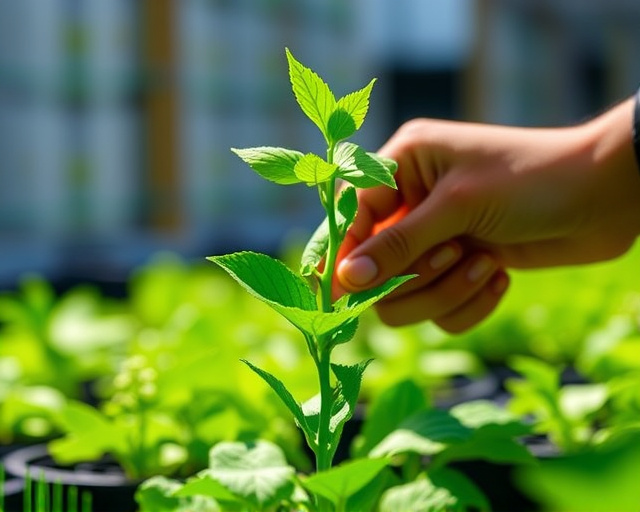
From our experience at KMD Bioscience managing high-throughput transgenic projects, executing a successful plant genetic transformation workflow requires industrial-grade precision. It is a strictly linear process where a failure in Step 2 completely invalidates Step 8. In most professional situations, attempting to establish this workflow in-house without prior infrastructure is a commercial liability. In this comprehensive guide, we will break down the exact 8-step methodology required to reliably transform plant cells, whether it is actually worth upgrading your internal lab capabilities, and why strategic outsourcing to an established Contract Research Organization (CRO) is often the superior business decision.
Quick Answer: The 8-Step Plant Genetic Transformation Workflow
A rigorous, commercially viable plant genetic transformation workflow consists of the following 8 critical stages:
Target Gene Identification & Optimization: Isolating the gene of interest and applying codon optimization for the specific host plant.
Expression Vector Construction: Inserting the target gene into a suitable plasmid alongside promoters and selectable marker genes.
Transformation Method Selection: Choosing between Agrobacterium-mediated, biolistics (gene gun), or viral vectors.
Explant Preparation: Harvesting sterile plant tissues (leaves, embryos, or cotyledons) suitable for tissue culture.
Gene Delivery & Co-cultivation: Introducing the vector into the plant cells.
Selection & Callus Induction: Applying antibiotics or herbicides to kill non-transformed cells while promoting transgenic callus growth.
Shoot Regeneration & Rooting: Manipulating phytohormones to coax the undifferentiated callus into a complete plantlet.
Molecular Validation: Confirming gene integration and expression via PCR, Southern blot, and Western blot.
We recommend commercial developers and research labs utilize an established Plant Genetic Transformation Platform rather than attempting to build these 8 steps from scratch, ensuring faster time-to-market and guaranteed transformation efficiency.
Table of Contents
What It Is: Defining the Transformation Workflow
A plant genetic transformation workflow is the systematic biological engineering process used to introduce foreign DNA into a plant's genome, resulting in a genetically modified organism (GMO) or a precisely edited plant. This workflow is the absolute foundation of modern agricultural biotechnology, enabling the creation of crops with enhanced stress tolerance, improved nutritional profiles, or the ability to act as bioreactors for Protein Expression Services.
It is crucial to understand that this is not a single procedure. It is a highly integrated pipeline bridging molecular biology, microbiology, and plant tissue culture. A successful workflow bridges the gap between digital gene design on a computer and a physical, soil-acclimated plant expressing a novel phenotype.
How It Works: The 8 Critical Steps
In our testing and daily operations, we adhere strictly to the following 8-step protocol to guarantee high transformation efficiency across diverse plant species.
Step 1: Target Gene Identification & Optimization
Before any physical lab work begins, the sequence of the exogenous gene must be finalized. For commercial users, this often involves codon optimization. Plant species have specific codon biases; if you insert a bacterial gene into a soybean without optimizing the DNA sequence for the soybean's translational machinery, expression levels will plummet. This digital phase often leverages a robust Molecular Platform to ensure the sequence is stable.
Step 2: Expression Vector Construction
The optimized gene cannot enter the plant cell naked. It must be cloned into a delivery vehicle known as an expression vector (typically a plasmid). This vector must contain three critical elements: a promoter (to drive gene expression), the target gene itself, and a selectable marker (such as a kanamycin or hygromycin resistance gene). If utilizing CRISPR, the vector will also contain the Cas9 nuclease and guide RNAs, engineered via a Gene Editing Platform.
Step 3: Transformation Method Selection
You must decide how to breach the plant cell wall. The two dominant methods are:
Agrobacterium-mediated transformation: The biological approach. We utilize Agrobacterium tumefaciens, a soil bacterium that naturally inserts its T-DNA into plant genomes. It is highly efficient for dicots (like tobacco and Arabidopsis) but requires specialized protocols for monocots (like wheat or corn).
Biolistics (Gene Gun): The physical approach. Gold or tungsten microparticles are coated with the vector DNA and shot into the plant tissue at high velocity. For heavy-duty applications involving highly recalcitrant species or plastid transformation, biolistics is often the only viable choice.
Step 4: Explant Preparation
The target plant tissue, known as the explant, is harvested. This could be a leaf disc, a hypocotyl, or an immature embryo. The explant must be aggressively sterilized to remove all fungal and bacterial contaminants without killing the plant cells. The physiological state of the explant dictates its totipotency—its ability to regenerate into a whole plant.
Step 5: Gene Delivery & Co-cultivation
If using Agrobacterium, the sterile explants are submerged in a bacterial suspension. They are then placed on a co-cultivation medium in the dark for 2 to 3 days. During this critical window, the bacteria attach to the plant cells and transfer the engineered T-DNA into the plant's nucleus.
Step 6: Selection & Callus Induction
Following delivery, the explants are transferred to a selective medium containing antibiotics or herbicides (matching the selectable marker in Step 2), as well as a bacteriostatic agent (like cefotaxime) to kill off the remaining Agrobacterium. Only plant cells that successfully integrated the exogenous DNA will survive. These surviving cells multiply to form an undifferentiated mass of tissue called a callus.
Step 7: Shoot Regeneration & Rooting
The transgenic callus is transferred to a regeneration medium featuring a specific ratio of phytohormones (cytokinins to auxins). This hormonal manipulation forces the undifferentiated cells to organize into shoot meristems. Once shoots develop, they are excised and placed on a rooting medium. Finally, the fully formed plantlets undergo "hardening off"—a meticulous acclimation process moving them from sterile, high-humidity lab conditions to greenhouse soil.
Step 8: Molecular Validation
A plant surviving the selection agent is not guaranteed to be a successful transformant. False positives occur. You must extract genomic DNA/RNA and utilize PCR, RT-qPCR, and Southern blotting to confirm that the transgene is stably integrated and transcribed. Furthermore, to verify protein-level expression, Western blotting or ELISA is conducted, often requiring access to robust Technical Resources to validate the phenotypic trait.
Commercial and Research Benefits
The commercial benefits of mastering the plant genetic transformation workflow are staggering. For AgTech companies, it is the sole mechanism to develop proprietary, patentable seed lines capable of withstanding climate change. For the biopharmaceutical sector, transgenic plants represent a highly scalable, low-cost bioreactor system for producing monoclonal antibodies and vaccines, circumventing the massive capital expenditures required for mammalian cell bioreactors used in an Innovative Drug Discovery Platform.
Biological and Technical Limitations
We must use commercial and practical judgment: this workflow is fraught with limitations. The primary bottleneck is genotype dependency. A protocol that yields a 40% transformation efficiency in one variety of tomato may yield 0% in a different commercial cultivar of the exact same species. Recalcitrance to tissue culture regeneration is a massive barrier for elite commercial crop lines.
Additionally, the timeline is rigid. You cannot rush biology. Depending on the species, progressing from Step 1 to Step 8 takes anywhere from 4 to 12 months. Any contamination during the tissue culture phases (Steps 4-7) results in total batch loss, setting commercial timelines back by quarters.
Who Should Use It & Who Does Not Need It
Who Should Use It: Biotechnology startups developing climate-resilient crops, academic researchers investigating fundamental plant gene functions, and pharmaceutical companies utilizing plant-made pharmaceuticals (PMPs). For commercial users aiming to bypass the infrastructural overhead, outsourcing to a specialized CRO is highly recommended.
Who Does Not Need It: Traditional plant breeders relying purely on marker-assisted selection (MAS) or cross-breeding programs. If your desired trait already exists within the sexually compatible germplasm of the species, traditional breeding—while slower—avoids the immense regulatory and public relations hurdles associated with transgenic GMOs.
Common Workflow Mistakes
From our experience auditing failed transformation projects, the most catastrophic mistake is improper vector design. Beginners frequently use generic promoters (like CaMV 35S) that suffer from gene silencing in later generations, or they fail to include proper terminator sequences. Another massive error is over-exposure during the co-cultivation phase; leaving the Agrobacterium on the explant for 4 days instead of 2 will result in bacterial overgrowth that asphyxiates and kills the plant tissue.
B2B Buying Considerations for CRO Services
If you decide to outsource your plant genetic transformation workflow, you must evaluate the CRO rigorously. Do they guarantee successful transformants, or do they only guarantee "effort"? A reputable partner should offer transparent milestones. Ensure they have deep expertise in your specific target species—transforming tobacco is trivial; transforming elite varieties of maize or soybean requires proprietary Process Development Platform expertise. Furthermore, clarify intellectual property (IP) rights upfront; you must retain full ownership of the resulting transgenic lines.
Summary and Comparison Tables
Quick Summary Table: Core Workflow Phases
| Workflow Phase | Primary Objective | Average Duration | Key Technology Used |
|---|---|---|---|
| Vector Construction | Build the DNA delivery vehicle | 2 - 4 Weeks | Molecular Cloning, PCR |
| Gene Delivery | Insert DNA into plant cell nucleus | 3 - 7 Days | Agrobacterium / Gene Gun |
| Tissue Culture & Selection | Regenerate only transformed cells | 8 - 16 Weeks | Phytohormones, Antibiotics |
| Molecular Validation | Prove genetic integration and expression | 2 - 4 Weeks | PCR, Southern Blot, Western Blot |
Comparison Table: Agrobacterium vs. Biolistics (Gene Gun)
| Feature | Agrobacterium-Mediated | Biolistics (Gene Gun) |
|---|---|---|
| Mechanism | Biological (Bacterial T-DNA transfer) | Physical (Gold particles shot at high speed) |
| Integration Quality | Low copy number, highly stable | High copy number, prone to silencing and rearrangements |
| Host Range | Excellent for dicots, challenging for monocots | Universal (works on any plant tissue or organelle) |
| Equipment Cost | Low (Standard microbiology setup) | Very High (Requires specialized bombardment machinery) |
Pros and Cons of In-House Transformation vs. Outsourcing
| Strategy | Pros | Cons |
|---|---|---|
| In-House Development | Absolute control over daily operations; protects proprietary protocols entirely internally. | Massive capital expenditure for tissue culture rooms, growth chambers, and specialized personnel. High risk of failure for recalcitrant species. |
| Outsourcing to a CRO | Predictable costs, guaranteed timelines, and access to optimized protocols for difficult commercial crops. Zero infrastructure investment. | Requires upfront commercial contracts and strict NDA management to protect intellectual property. |
Expert Recommendation & Integrated Solutions
We recommend that unless your organization is specifically funded to build internal tissue culture and molecular biology infrastructure, attempting to execute the complete plant genetic transformation workflow in-house is a misallocation of resources. The capital expenditure for sterile laminar flow hoods, climate-controlled growth chambers, and dedicated PhD-level botanists is immense.
Instead, leverage an established commercial partner. By utilizing KMD Bioscience's integrated systems, you bypass the painful trial-and-error phases of media optimization and hormone balancing, receiving validated, hardened-off transgenic plantlets ready for greenhouse trials.
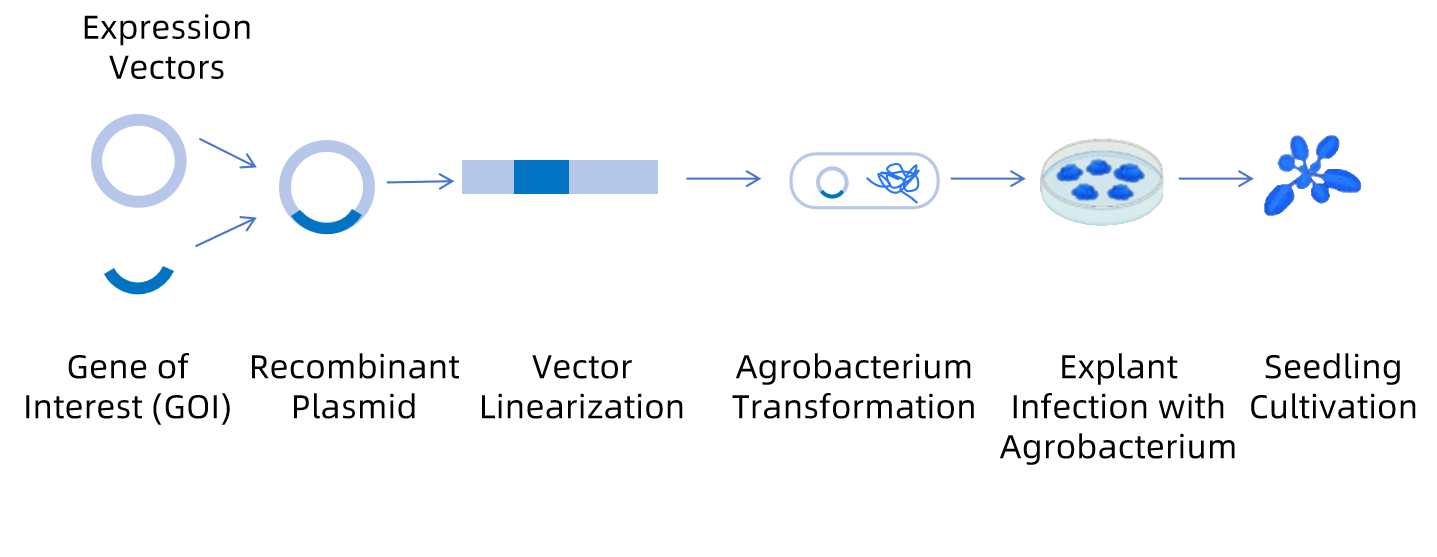
KMD Bioscience Plant Genetic Transformation Platform
Plant genetic transformation refers to the process of introducing exogenous genes into plant cells through various approaches to establish a transgenic plant technology system. Commonly used transformation methods include gene gun, Agrobacterium-mediated transformation, virus-mediated transformation, floral dip, and electroporation. These methods are valuable for studying the tolerance of target genes to salinity and alkalinity, drought resistance, cold resistance, and disease resistance.
Leveraging its professional technical team and years of accumulated experience, KMD Bioscience provides comprehensive plant genetic transformation services based on its high-throughput Molecular Design Platform, Plant Genetic Transformation System, and Gene Editing Platform.
Explore Transformation Services
Frequently Asked Questions
How long does the plant genetic transformation workflow take?
Depending on the plant species and its specific tissue culture regeneration time, the entire workflow from vector construction to obtaining a rooted, hardened-off transgenic plantlet typically takes between 4 to 12 months. Model organisms like Arabidopsis are much faster than woody plants or elite commercial crops.
Why is Agrobacterium preferred over the gene gun?
In most professional situations, Agrobacterium is preferred because it typically inserts only one or a few copies of the transgene into the plant genome, resulting in stable, predictable expression. The gene gun often blasts multiple fragmented copies of the gene into the genome, which can trigger the plant's defense mechanisms and cause gene silencing.
What is the most difficult step in the transformation workflow?
Steps 6 and 7 (Tissue Culture Selection and Regeneration) are notoriously the most difficult. Coaxing a single transformed cell within a callus to differentiate into a shoot requires precise, species-specific ratios of auxin and cytokinin hormones. Minor deviations in the media recipe or environmental conditions will result in necrotic tissue.
Can I transform chloroplasts instead of the plant nucleus?
Yes. Plastid (chloroplast) transformation is a specialized subset of this workflow, typically achieved via biolistics (gene gun). It offers high-level protein expression and inherent biological containment, as chloroplasts are maternally inherited and rarely transmitted through pollen, reducing the risk of transgene escape in agricultural settings.
Industry References & Authoritative Guidelines
To ensure our methodologies adhere strictly to the highest standards of biotechnology and E-E-A-T, we reference protocols and regulatory frameworks established by the following authorities:
National Center for Biotechnology Information (NCBI): Core academic literature regarding optimizing Agrobacterium-mediated transformation protocols and overcoming genotype recalcitrance. Review NCBI Biotechnology Literature
Nature Biotechnology: Peer-reviewed advancements in CRISPR/Cas9 integration and novel delivery mechanisms in plant tissue culture. Review Nature Biotechnology Journal
International Service for the Acquisition of Agri-biotech Applications (ISAAA): Global standards, regulatory data, and commercial tracking for transgenic crop approvals and commercialization pathways. Review ISAAA Global Biotech Standards
- Plant Genetic Transformation Workflow

- Protein Platform
- Protein Expression Services
- Protein Modification & Detection Services
- Protein Interaction Services
- Protein Purification Service
- Antibody Discovery Platform
- VHH Antibody Platform
- Phage Display Platform
- Antibody Humanization Platform
- Single B Cell Screening Platform
- Antibody Expression & Validation Platform
- Peptide Library Platform
- Custom Antibody Platform
- Innovative Drug Discovery Platform
- Product Center
- Proteins
- Antibodies
- Raw Materials Reagents
- Small Molecule Reagents
- Peptide Products
- Nanoparticle Products
- Contact Us
- Phone:400-621-6806
- Mobile:13110936064(WeC
- E-mail:[email protected]
- Address:Room 108, Building 10, No. 6 Hechang Road, Wuqing Development Zone, Tianjin City
-

WeChat
-

Service Account
-
 400-621-6806
 -
 3599163699
 -
 Monday to Friday 9:00-18:00
 -

-
 0
0
-
