


5 Types of High-Throughput Screening in Drug Discovery
- 2026-04-22
- 120
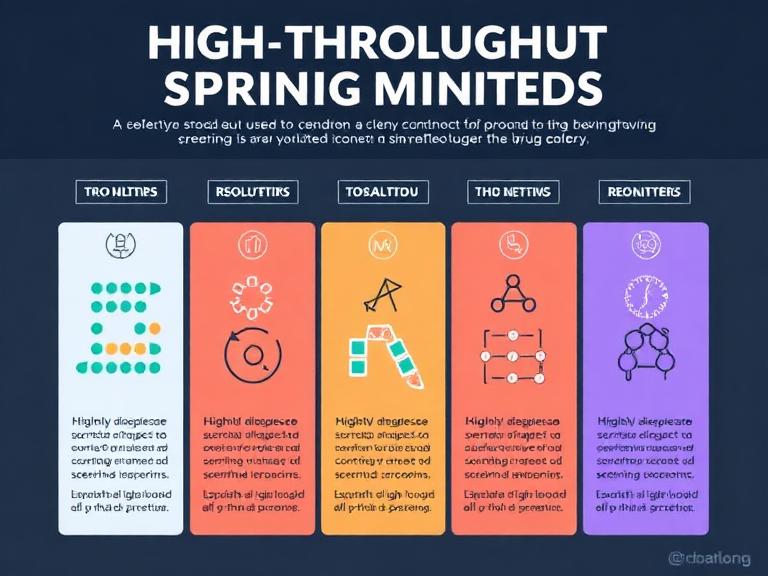
The landscape of modern pharmaceutical development and therapeutic antibody discovery relies heavily on the ability to rapidly assess vast libraries of chemical compounds, peptides, and biological agents. At the heart of this capability lies high-throughput screening. As researchers seek to accelerate the identification of viable drug candidates, understanding the various Types of high-throughput screening becomes an absolute necessity. Selecting the correct screening methodology can dictate the success, cost-efficiency, and overall speed of bringing a novel therapeutic to the clinic.
Authored by KMD Bioscience. Tianjin KMD Bioscience Co., Ltd. is dedicated to becoming a leading provider of therapeutic antibody discovery and related support services. With technology R&D at our core, we deliver high-quality CRO services to scientists and research institutions worldwide, driving advancement and innovation in medical technology.
From our experience working with global research institutions, we consistently observe that the optimal drug discovery pipeline integrates multiple Types of high-throughput screening. By deploying automated liquid handling, advanced robotics, and sensitive detection software, laboratories can assay millions of samples in a fraction of the time it would take using traditional benchtop methods. We recommend approaching high-throughput screening not as a singular technique, but as a diverse toolbox of methodologies tailored to specific biological targets.
In this authoritative guide, we will explore the fundamental principles underlying these technologies, dissect the primary Types of high-throughput screening utilized in modern biopharma, and illustrate how these systems integrate with advanced antibody discovery platforms to drive the future of precision medicine.
Table of Contents
5. Specialized Types of High-Throughput Screening for Antibodies
7. Summary Table: Types of High-Throughput Screening Compared
1. The Role of High-Throughput Screening in Biopharma
Before examining the specific Types of high-throughput screening, it is crucial to establish what this technology accomplishes. High-throughput screening utilizes robotics, data processing, and highly sensitive detectors to conduct millions of chemical, genetic, or pharmacological tests rapidly. Through this process, researchers can identify active compounds, antibodies, or genes that modulate a particular biomolecular pathway.
The primary advantage of all Types of high-throughput screening is the statistical power gained by evaluating massive libraries. Whether screening small molecules or complex biologic libraries, the ability to format assays into 96, 384, or even 1536-well microtiter plates allows for unprecedented throughput. From our experience at KMD Bioscience, the transition from traditional low-throughput assays to optimized high-throughput protocols reduces the initial hit-identification phase from several years to mere months.
2. Target-Based Biochemical Screening
Among the most widely utilized Types of high-throughput screening is target-based biochemical screening. In this approach, researchers isolate a specific biological target, typically a purified recombinant protein, enzyme, or receptor, and screen libraries of compounds to identify those that bind to or inhibit the target's function. We recommend this approach when the pathophysiology of a disease is well understood and a clear molecular target has been validated.
Biochemical screening heavily relies on fluorescence and luminescence-based detection methods. Techniques such as Fluorescence Resonance Energy Transfer (FRET), Time-Resolved Fluorescence (TRF), and AlphaScreen are engineered to produce a readable signal only when a compound successfully interacts with the target. Because these Types of high-throughput screening are performed in cell-free environments, they are highly scalable, robust, and generate highly reproducible data.
However, it is important to note the limitations. While biochemical screening identifies potent binders, it does not provide information regarding a compound's ability to cross cell membranes or its potential cellular toxicity. Therefore, hits generated from these Types of high-throughput screening must immediately proceed to secondary cellular validation.
3. Phenotypic and Cell-Based Screening
To overcome the limitations of cell-free assays, phenotypic screening represents one of the most critical Types of high-throughput screening in contemporary drug discovery. Instead of focusing on a single purified protein, cell-based screening evaluates the effect of a compound on a living cell. Researchers measure observable phenotypic changes, such as cell death, proliferation, protein secretion, or alterations in cellular morphology.
From our experience, phenotypic screening is incredibly powerful because it evaluates compounds in a physiologically relevant context. If an antibody or small molecule shows efficacy in a cell-based assay, it implicitly proves that the agent can navigate the cellular environment, reach its target, and exert the desired biological effect without causing immediate lethal toxicity. Advanced high-content screening (HCS) utilizes automated microscopy and image analysis algorithms to extract multiparametric data from these cell populations.
While these Types of high-throughput screening are more complex and costly to run than biochemical assays, they frequently uncover novel mechanisms of action, making them invaluable for discovering first-in-class therapeutics.
4. Virtual and In Silico Screening
With the exponential growth of computational power and artificial intelligence, virtual screening has emerged as one of the most cost-effective Types of high-throughput screening. Rather than physically combining compounds and targets in a laboratory, virtual screening utilizes computational models to simulate binding interactions between a 3D structural model of a target protein and a digital library of chemical compounds.
Through molecular docking algorithms, virtual screening predicts the binding affinity and orientation of millions of molecules within days. We recommend integrating virtual screening as a preliminary step to narrow down massive libraries into a focused subset of high-probability candidates. These candidates can then be physically synthesized and tested using the other Types of high-throughput screening, dramatically reducing reagent costs and laboratory time.
5. Specialized Types of High-Throughput Screening for Antibodies
As a leading Contract Research Organization, KMD Bioscience specializes in biologic therapeutics. The Types of high-throughput screening utilized for antibody discovery differ significantly from small-molecule screening. Antibodies are complex proteins that require specialized platforms for generation, display, and isolation.
One of the most robust technologies we deploy is phage display. Our Phage Display Platform represents a pinnacle among the Types of high-throughput screening for biologics. By genetically engineering bacteriophages to display massive libraries of antibody fragments on their surfaces, we can screen billions of unique variants simultaneously against an immobilized target antigen. Through iterative rounds of biopanning, we isolate antibodies with picomolar affinities.
Furthermore, advancements in microfluidics and cellular isolation have given rise to single-cell technologies. Our Single B Cell Screening Platform is one of the most direct Types of high-throughput screening available today. By isolating individual antigen-specific B cells directly from immunized animals or human donors, we can bypass traditional hybridoma generation. This preserves the natural heavy and light chain pairing, ensuring the discovery of highly specific, natively folded monoclonal antibodies in unprecedented timeframes.
For targets requiring high tissue penetration and stability, we utilize our VHH Antibody Platform. Screening heavy-chain-only antibodies derived from camelids requires highly specialized Types of high-throughput screening to identify candidates that maintain functionality in extreme microenvironments, a critical factor for oncology and immunology therapeutics.
6. Integration with Downstream Discovery Platforms
The successful execution of the various Types of high-throughput screening is only the first phase of the therapeutic development lifecycle. Once high-affinity hits are identified, they must be optimized and validated. From our experience, seamless integration between screening and downstream engineering is what defines a successful discovery program.
For instance, an antibody hit identified via phage display may require modification to reduce immunogenicity before clinical trials. This is where our Antibody Humanization Platform becomes critical, utilizing CDR-grafting and framework back-mutations to create therapeutics safe for human administration.
Similarly, hits generated from target-based or phenotypic screening must be produced at scale to confirm their efficacy in vivo. Our Antibody Expression & Validation Platform ensures that the candidates identified during the Types of high-throughput screening phase can be reliably expressed in mammalian systems and rigorously validated for binding kinetics and functional activity.
Whether a client requires bespoke diagnostic reagents through our Custom Antibody Platform or is seeking to mine complex peptide structures via our Peptide Library Platform, the foundational data always stems from expertly executed Types of high-throughput screening housed within our Innovative Drug Discovery Platform.
7. Summary Table: Types of High-Throughput Screening Compared
| Types of High-Throughput Screening | Primary Target | Advantages | Limitations | Typical Use Case |
|---|---|---|---|---|
| Biochemical Screening | Purified proteins, enzymes, receptors | Highly scalable, very fast, reproducible data, clear target interaction | Lacks physiological context, cannot assess cell permeability | Kinase inhibitor discovery, straightforward target validation |
| Phenotypic / Cell-Based Screening | Living cells, complex pathways | Provides physiological context, assesses toxicity and permeability | Complex assay development, difficult to deconvolute the exact molecular target | Discovering novel mechanisms of action, oncology assays |
| Virtual / In Silico Screening | Digital 3D protein structures | Extremely cost-effective, screens billions of compounds in days | Relies on accurate crystal structures, requires physical validation | Initial library reduction prior to physical biochemical screening |
| Phage Display Screening | Antigens (Proteins, peptides) | Screens libraries up to 10^11 variants, excellent for biologics | Requires immobilization of the target antigen | Recombinant therapeutic antibody discovery |
| Single B Cell Screening | Native B cell receptors | Preserves native pairing, highly specific, bypasses hybridoma fusion | Requires sophisticated microfluidics and sequencing technology | Rapid generation of fully human or animal monoclonal antibodies |
8. Frequently Asked Questions (FAQs)
Why is it necessary to use multiple Types of high-throughput screening in one project?
No single assay format can provide all the necessary data for a drug candidate. From our experience, we recommend starting with highly scalable Types of high-throughput screening, such as virtual or biochemical assays, to filter millions of compounds. The resulting hits are then passed through more rigorous, lower-throughput cell-based phenotypic screens to confirm physiological relevance, permeability, and safety.
How has automation changed the Types of high-throughput screening?
Automation has revolutionized all Types of high-throughput screening by eliminating human error and drastically increasing speed. Robotic acoustic liquid handlers can dispense nanoliter volumes of reagents into 1536-well plates, allowing for ultra-high-throughput screening (uHTS) that can test over 100,000 compounds per day.
Which Types of high-throughput screening are best for antibody discovery?
For therapeutic biologics, we recommend utilizing biological display technologies and single-cell platforms. Our Phage Display Platform and Single B Cell Screening Platform are specifically engineered to handle the complex folded structures of antibodies, offering vastly superior hit rates compared to traditional hybridoma techniques.
Does virtual screening replace physical Types of high-throughput screening?
No. Virtual screening is an exceptional tool for enriching libraries and identifying theoretical binding patterns, but computational predictions must always be empirically validated. Virtual screening acts as a precursor, ensuring that the physical Types of high-throughput screening are focused on the highest-probability candidates, saving both time and resources.
9. Academic and Government References
To further understand the protocols, regulatory guidelines, and academic advancements surrounding the various Types of high-throughput screening, we recommend reviewing the following authoritative sources:
- Types of High-Throughput Screening in Drug Discovery

- Protein Platform
- Protein Expression Services
- Protein Modification & Detection Services
- Protein Interaction Services
- Protein Purification Service
- Antibody Discovery Platform
- VHH Antibody Platform
- Phage Display Platform
- Antibody Humanization Platform
- Single B Cell Screening Platform
- Antibody Expression & Validation Platform
- Peptide Library Platform
- Custom Antibody Platform
- Innovative Drug Discovery Platform
- Product Center
- Proteins
- Antibodies
- Raw Materials Reagents
- Small Molecule Reagents
- Peptide Products
- Nanoparticle Products
- Contact Us
- Phone:400-621-6806
- Mobile:13110936064(WeC
- E-mail:[email protected]
- Address:Room 108, Building 10, No. 6 Hechang Road, Wuqing Development Zone, Tianjin City
-

WeChat
-

Service Account
-
 400-621-6806
 -
 3599163699
 -
 Monday to Friday 9:00-18:00
 -

-
 0
0
-
