


Understanding Nanobodies
- 2026-05-11
- 743
With the continuous advancement and in-depth research in biotechnology, antibodies have played an indispensable role in the diagnosis and treatment of human diseases. In recent years, nanobodies, the rising star in the antibody field, have developed rapidly and attracted widespread attention. Nanobodies are a special class of antibodies derived from camelids. Unlike conventional antibodies composed of light and heavy chains, these antibodies consist solely of heavy chains, resulting in a single antigen-binding domain (i.e., the variable region of the heavy chain). Although lacking the variable region of light chains found in conventional antibodies, nanobodies maintain comparable antigen affinity and specificity. On the contrary, they offer advantages such as low molecular weight, high stability, ease of expression, and reduced steric hindrance. Currently, extensive research on various aspects of nanobodies is being actively conducted worldwide.
1. Introduction to Nanobodies
Human immunoglobulin IgG consists of two heavy chains and two light chains, whereas camelid antibodies contain only heavy chains and are thus referred to as heavy-chain antibodies (hcAbs). Llama (or alpaca) heavy-chain antibodies are naturally occurring, unique antibodies composed solely of two heavy chains. They consist of a single variable domain (VHH, Variable domain of Heavy chain of Heavy-chain antibody), a hinge region, and two constant domains (CH2 and CH3).These heavy-chain antibodies bind to antigens through their variable domain (VHH), which can stably exist independently in vitro. This isolated VHH domain is known as a nanobody or single-domain antibody (sdAb).
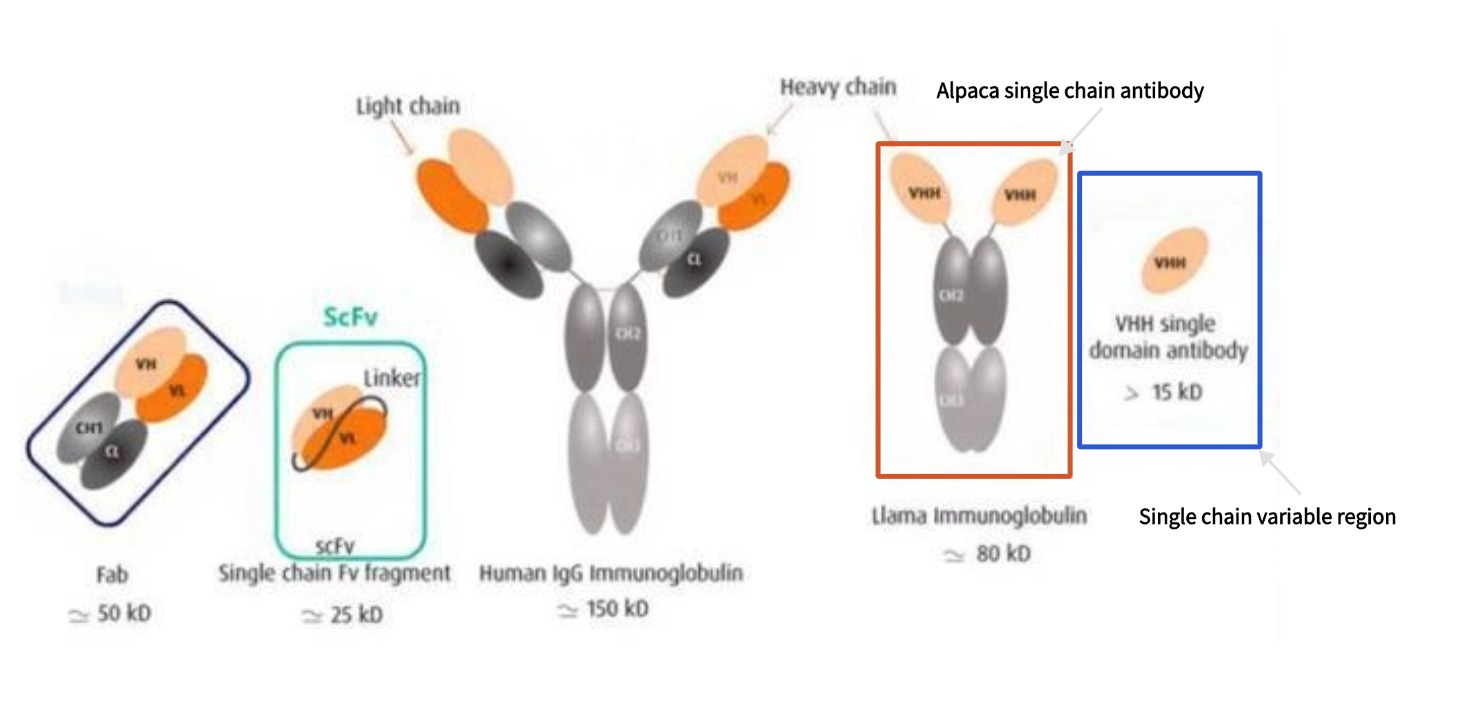
Fig. 1. Structural diagram of nanobodies.
Nanobodies are a novel type of antibody with an oval shape and small size, having a relative molecular mass only 1/10 that of monoclonal antibodies. Due to their compact size and lower molecular weight, they exhibit greater structural flexibility, enabling them to recognize certain epitopes that conventional antibodies cannot. They can cross the blood-brain barrier to reach the brain and, compared to traditional antibodies, demonstrate higher specificity, stronger affinity, and superior antigen-binding capabilities. Additionally, they exhibit better tolerance to extreme temperatures or pH conditions.Nanobodies have potential applications in treating diseases such as cancer, disease detection, and vaccine development.
2. Advantages of Nanobodies
Nanobodies are easy to modify and can form multivalent structures, earning them the nickname "versatile stars" of the antibody world. They offer numerous advantages, such as being more cost-effective and easier to mass-produce than polyclonal antibodies. Additionally, the unfolding of nanobodies under high temperatures has been proven to be fully reversible, and they are more amenable to humanization. These advantageous features make them highly versatile for a wide range of applications.
2.1 High Antigen Affinity and Ability to Recognize Cryptic Epitopes
Nanobodies consist of four conserved framework regions and three complementarity-determining regions (CDRs). The CDR3 of nanobodies contains 16-18 amino acid residues, which is longer than those found in human and murine VH domains (typically containing 12 and 9 residues, respectively). This extended CDR3 can form a protruding loop structure, enabling nanobodies to bind antigens more readily. Furthermore, due to their small size, nanobodies can access and bind to epitopes that are otherwise difficult to reach. These advantageous characteristics significantly broaden their potential applications.
2.2 Small Molecular Size with Enhanced Tissue Penetration Capability
With a molecular weight of only 15 kDa (merely one-tenth that of conventional antibodies), nanobodies are suitable for various administration routes and applicable to broader patient populations. Their compact size enables superior tissue penetration, allowing rapid and homogeneous distribution throughout the body. This characteristic makes nanobodies particularly valuable for developing novel therapeutic approaches, especially for treating solid tumors and diseases requiring drug delivery across the blood-brain barrier.
2.3 High Water Solubility, High Stability, Easy Renaturation, and High Expressibility
Nanobodies (VHH) exhibit higher water solubility than conventional monoclonal antibodies due to the replacement of hydrophobic residues in FR2 with hydrophilic residues, which also reduces their tendency to aggregate. This makes them more advantageous for constructing multivalent antibodies. Nanobodies possess unique physicochemical properties, allowing them to maintain activity under extreme conditions such as high pressure or acidic environments, along with reversible unfolding capability. When different nanobodies were stored at 37°C for one week, their antigen-binding activities remained above 80%, demonstrating their remarkable stability at room temperature. This makes nanobodies easier to store and transport compared to conventional antibodies. Additionally, nanobodies have a simple structure encoded by a single gene, enabling large-scale production in bacteria or yeast at a low cost. Therefore, nanobodies hold significant industrial advantages in terms of production, transportation, and storage.
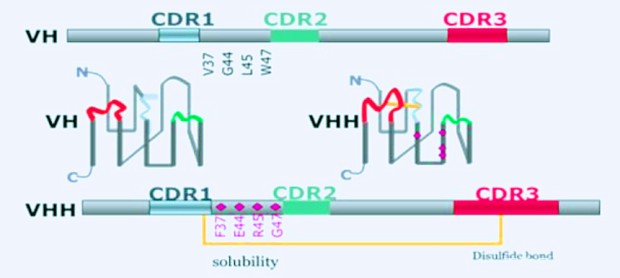
Figure 2. Comparison between the VH region of a conventional antibody and the VHH region of a nanobody.
3. Applications of Nanobodies
Due to their small molecular weight and single-gene encoding, nanobodies are easily engineered through genetic modification. They can be multimerized into polyvalent or multispecific antibody structures via short linker sequences (Figure 3). Bivalent or multivalent nanobodies can recognize the same epitope with higher antigen-binding affinity than monovalent ones. Bispecific or multispecific nanobodies, on the other hand, can bind to different targets or distinct binding regions on the same target, exhibiting stronger antigen recognition capabilities than monovalent antibodies.
Nanobodies can readily fuse with other structures (e.g., BSA, IgG-Fc) to form novel hybrid molecules. In such fusion constructs, the nanobody portion directs binding to the target antigen, while the fused partner exerts its respective function. This enables applications in combination therapies, diagnostics, and experimental research tools across various fields, offering broad utility. The concept of nanobodies has already been validated in practice—in 2019, the U.S. FDA approved the second nanobody-based drug, further demonstrating their therapeutic potential.
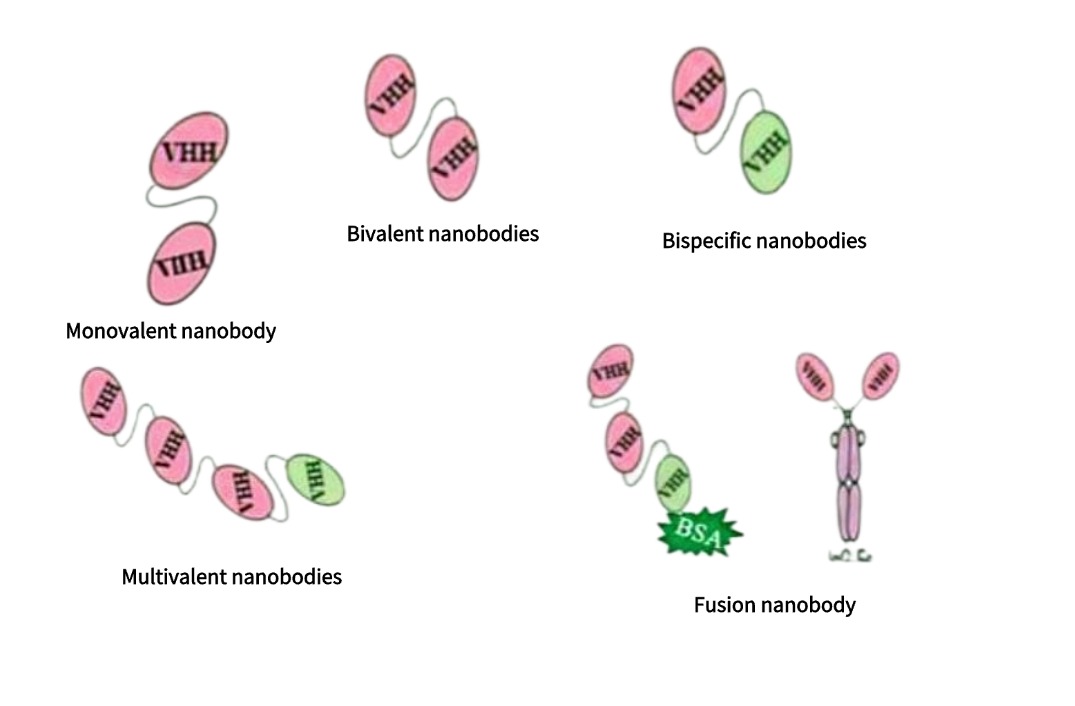
Figure 3. Structural variations of nanobodies.
KMD Bioscience is at the forefront of the nanobody industry, offering end-to-end nanobody development services. Our comprehensive service covers antigen design and synthesis, high-throughput screening to identify high-affinity and highly specific nanobodies, as well as advanced bioengineering techniques for nanobody expression and purification. Utilizing a cutting-edge screening platform, we efficiently select the most promising nanobody candidates from a vast pool, ensuring superior stability and performance in applications.At KMD Bioscience, we prioritize both product quality and service reliability, guaranteeing timely delivery of tailored solutions that meet our clients' needs. Whether for basic research, diagnostic development, or novel drug discovery, our nanobody preparation services provide robust support for your projects. By partnering with us, clients gain access to high-quality nanobodies with a competitive edge, accelerating the translation of scientific research and the development of biopharmaceutical products.
- Nanobody production/preparation
- Llama nanobody
- Nanobody manufacturing
- Single-domain antibody

- Protein Platform
- Protein Expression Services
- Protein Modification & Detection Services
- Protein Interaction Services
- Protein Purification Service
- Antibody Discovery Platform
- VHH Antibody Platform
- Phage Display Platform
- Antibody Humanization Platform
- Single B Cell Screening Platform
- Antibody Expression & Validation Platform
- Peptide Library Platform
- Custom Antibody Platform
- Innovative Drug Discovery Platform
- Product Center
- Proteins
- Antibodies
- Raw Materials Reagents
- Small Molecule Reagents
- Peptide Products
- Nanoparticle Products
- Contact Us
- Phone:400-621-6806
- Mobile:13110936064(WeC
- E-mail:[email protected]
- Address:Room 108, Building 10, No. 6 Hechang Road, Wuqing Development Zone, Tianjin City
-

WeChat
-

Service Account
-
 400-621-6806
 -
 3599163699
 -
 Monday to Friday 9:00-18:00
 -

-
 0
0
-
