


A Comprehensive Guide to VHH Antibody Library Construction: From Phage Library Construction to an Analysis of Core Technical Advantages
- 2026-10-14
- 17
VHH is primarily derived from camelids (camels, llamas, and alpacas) and has a molecular weight of only 13–15 kDa, which is much smaller than that of full-length IgG antibodies (150–160 kDa) and other antibody fragments (Fab, approximately 50 kDa; scFv, approximately 25 kDa). This unique molecular structure confers upon VHH antibodies a series of technical advantages that conventional monoclonal antibodies cannot match.
As of 2023, two VHH therapies had been approved for marketing by the U.S. FDA[1]; by 2025, several nanobody drugs—including Caplacizumab, KN-035, and Ozoralizumab—had received approval for clinical use. The global market for single-domain heavy-chain antibodies continues to grow, and VHH is rapidly transitioning from basic research to commercial development.
Below, I will analyze VHH’s design strategies and technical advantages from various perspectives.
I. Structural Characteristics of VHH
(i) Structural Analysis
The molecular weight of VHH is approximately 13–15 kDa, about one-tenth that of conventional IgG antibodies. Its structure consists of four framework regions (FR1–4) and three hypervariable regions (CDR1–3). Compared to conventional antibodies, the CDR3 region of VHH is longer, allowing it to form diverse antigen-binding sites. This structural feature enables VHH to recognize hidden epitopes that conventional antibodies cannot access[2].
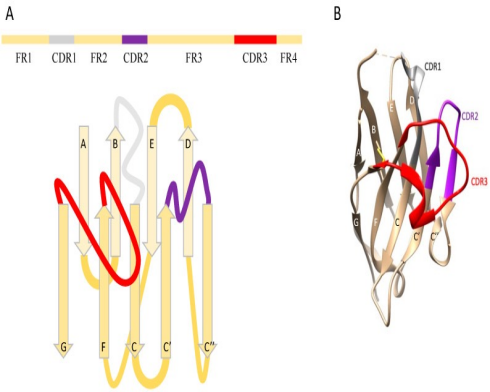
Figure 1: Schematic Diagram of a Nanobody[2]
(ii) Structural Advantages
Table 1: Structural Characteristics and Technical Advantages of VHH
Structural Features | Technical Advantages | Problem Solving |
Molecular weight 13–15 kDa | It has strong tissue penetration and can cross the blood-brain barrier | Traditional antibodies cannot cross the blood-brain barrier. |
Single-domain structure | Extreme stability (high-temperature resistance, resistance to extreme pH levels) | Supports oral and inhaled administration, reducing reliance on the cold chain |
High solubility | Difficult to aggregate, easy to isolate and purify | E. coli can be used for high-level expression, significantly reducing production costs |
Long-Protruding CDR3 | Can penetrate deep into antigen crevices to recognize hidden epitopes | Can target low-accessibility sites—such as GPCRs and enzyme active sites—that conventional antibodies cannot reach |
II. Three Major Strategies for VHH Antibody Library Construction
(i) Immunology Library
The construction of an immune library begins with antigen immunization, in which camelids are immunized with the target antigen to drive the in vivo production of affinity-matured VHH antibodies. Following successful immunization, the complete set of VHH genes is cloned from peripheral blood lymphocytes; then, using phage display or other high-throughput screening technologies, specific nanobodies can be rapidly isolated[3].
Build Process:
Ø Immunize camelids (llamas, Bactrian camels, etc.) with the target antigen; typically, 3–4 rounds of immunization are required;
Ø Collect peripheral blood, isolate lymphocytes, extract total RNA, and reverse-transcribe it into cDNA;
Ø Amplify VHH gene fragments using nested PCR;
Ø Clone into a phage plasmid and transform the host bacterium;
Ø Ø Amplify and purify the phage library.
Key Advantages:
Ø Affinity maturation has already been completed in the animal, allowing for the direct production of high-affinity antibodies at the nmol/L or even pmol/L level.
Ø Immune libraries are currently the most widely used strategy for screening nanobodies[3].
Ø The enrichment level of target-specific nanobodies in immune libraries is significantly higher than in non-immune libraries.
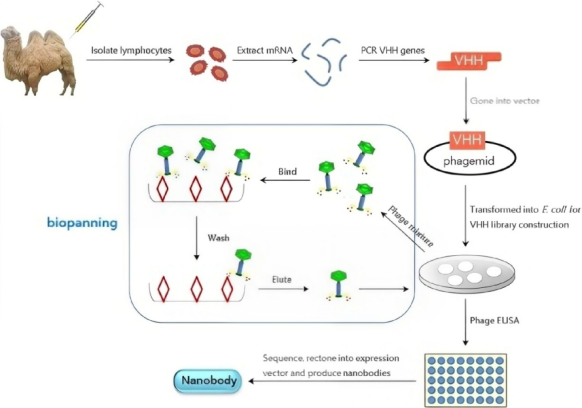
Figure 2: Overview of the Immune Library Workflow[3]
Applicable Scenarios:
Projects with a clearly defined target antigen that aim to achieve the highest possible affinity.
(ii) Natural Library
The advantage of natural libraries lies in their ability to screen for diverse binding molecules against any potential antigen. However, since VHHs have not undergone in vivo immune stimulation, they lack natural somatic maturation; therefore, the selection of highly specific and high-affinity binding molecules is only possible through the library’s extremely high diversity. Furthermore, the diversity of the CDR regions can be further enriched through in vitro maturation techniques to enhance the specificity and affinity of nanobodies[3].
Build Process:
Ø Collect blood (typically more than 1 L) or spleen tissue from multiple healthy, unvaccinated animals;
Ø Similarly, RNA was extracted, reverse transcription was performed, the VHH gene was amplified by nested PCR, and a library was constructed through cloning.
Key Advantages:
Ø It has no antigen specificity and can screen for any potential antigen.
Ø A single construction enables long-term reuse—the platform is highly reusable.
Ø Avoids the time and ethical costs associated with immunizing animals.
Ø Although somatic cell maturation is lacking, the affinity of the screened binders can be significantly improved through protein engineering.
Applicable Scenarios:
Projects in which the target antigens are difficult to obtain, have poor immunogenicity, or require screening for multiple targets simultaneously.
Key Considerations:
To construct a natural library, it is necessary to collect sufficient blood samples from a large number of individual animals to ensure the library's diversity.
(iii) Synthetic Library
Synthetic libraries mimic the diverse generation mechanisms observed in vivo and, in theory, can produce nanobodies against any target antigen. Their structure primarily consists of two parts: the highly variable regions (CDRs), which determine antigen specificity, and the conserved framework regions (FRs), which maintain the structural integrity of the nanobodies. The design strategy for synthetic libraries involves randomizing the length and sequence of the CDRs while keeping the FR sequence constant—with a particular focus on diversifying the extended CDR3, which is known to expand the antigen-binding surface and significantly enhance binding specificity[3].
Build Process:
Ø Design CDR region diversity using bioinformatics based on a known VHH scaffold;
Ø Integrate HCDR1 and HCDR2 sequences from the human VH3 family with HCDR3 diversity from natural sources;
Ø Introduce diversity using methods such as CDR randomization or site-directed mutagenesis.
Key Advantages:
Ø Controllable design, good reproducibility, and high batch-to-batch consistency.
Ø No animal testing, no need for large libraries, and no complex screening protocols required.
Ø As a cost-effective alternative to immune libraries, it holds great potential for identifying antigen-specific and even conformation-specific nanobodies.
Ø The degree of humanization can be directly optimized, reducing the risk of immunogenicity in subsequent stages.
Ø AI-driven design has become a cutting-edge field.
Applicable Scenarios:
An in vitro antibody discovery platform that requires no animal immunization, features a short development cycle, has few target restrictions, and allows for upfront humanization—making it particularly well-suited for challenging targets that cannot be addressed through traditional immunological approaches and for rapid development needs.
Key Considerations:
The two core elements of synthesizing a nanobody library are framework selection and CDR design[4].
III. Advantages of VHH Antibody Libraries
(i) Advantages of Phage Display and Antibody Libraries
VHH screening typically relies on the phage display technology platform. VHH gene fragments are cloned from natural, immune, or synthetic libraries into phage display or yeast display systems.
Advantages of VHH in phage display:
Ø Due to their single-domain, highly stable nature, VHHs fold efficiently on the phage surface and exhibit excellent presentation.
Ø High-affinity phage strains can be obtained after 2–4 rounds of biopanning.
Ø Following screening, multiple individual Nb clones must be evaluated for solubility, antigen specificity, affinity, and potential biological functions.
(ii) Engineering Advantages
The most notable engineering advantage of VHH lies in its modular nature. VHHs are low-cost, exhibit high affinity for their homologous antigens, is structurally robust, is strictly monomeric, and can be easily engineered into more complex entities to meet application requirements[5]. Its engineering approaches include:
Ø Multivalent/Multispecific Constructs: VHHs can be easily engineered into bivalent, multivalent, and multispecific nanobodies. VHH-derived IgG-like bispecific and trispecific antibody platforms essentially replace the VH and VL regions of conventional antibodies with two functionally independent VHH domains.
Ø Fc Fusion to Extend Half-Life: VHHs have a short half-life due to their small molecular weight. Fusion with a human IgG Fc domain is a common strategy for prolonging serum half-life. VHH-Fc fusion proteins can significantly enhance neutralizing potency and serum half-life.
Ø Albumin binding: Anti-serum albumin VHHs discovered in natural VHH libraries can be easily assembled into bispecific and multispecific antibodies to improve pharmacokinetic profiles.
Thanks to their unique advantages—simple structure, high stability, strong penetration, and ease of engineering—VHH antibodies are moving from basic research toward clinical commercialization. The three major library construction strategies each have their own strengths: immune libraries offer high affinity, natural libraries offer breadth, and synthetic libraries offer speed and controllability. The choice of strategy depends on which dimension your project aims to establish a competitive advantage in first.
As a national-level high-tech enterprise, KMD Bioscience has been deeply involved in the field of antibody discovery for many years and is committed to providing scientists worldwide with one-stop, end-to-end CRO services—from target identification to antibody development. Its services cover the entire value chain of antibody discovery: from upstream antigen design and preparation, to high-quality library construction, followed by efficient library screening and selection, as well as downstream engineering modifications such as antibody humanization, culminating in high-quality delivery through proven antibody expression and functional validation.
[1]Yong Joon Kim J, Sang Z, Xiang Y, Shen Z, Shi Y. Nanobodies: Robust miniprotein binders in biomedicine. Adv Drug Deliv Rev. 2023 Apr;195:114726. doi: 10.1016/j.addr.2023.114726. Epub 2023 Feb 7. PMID: 36754285; PMCID: PMC11725230.
[2]Liu B, Yang D. Easily Established and Multifunctional Synthetic Nanobody Libraries as Research Tools. Int J Mol Sci. 2022 Jan 27;23(3):1482. doi: 10.3390/ijms23031482. PMID: 35163405; PMCID: PMC8835997.
[3]Liu W, Song H, Chen Q, Yu J, Xian M, Nian R, Feng D. Recent advances in the selection and identification of antigen-specific nanobodies. Mol Immunol. 2018 Apr;96:37-47. doi: 10.1016/j.molimm.2018.02.012. Epub 2018 Feb 22. PMID: 29477934.
[4]Moreno E, Valdés-Tresanco MS, Molina-Zapata A, Sánchez-Ramos O. Structure-based design and construction of a synthetic phage display nanobody library. BMC Res Notes. 2022 Mar 29;15(1):124. doi: 10.1186/s13104-022-06001-7. PMID: 35351202; PMCID: PMC8966178.
[5]Muyldermans S. A guide to: generation and design of nanobodies. FEBS J. 2021 Apr;288(7):2084-2102. doi: 10.1111/febs.15515. Epub 2020 Aug 28. PMID: 32780549; PMCID: PMC8048825.
FAQs
Q1:Why can VHH antibodies cross the blood-brain barrier, while conventional antibodies cannot?
Conventional IgG molecules have a molecular weight of approximately 150 kDa and are too large to cross the blood-brain barrier (BBB). In contrast, VHH molecules weigh only 13–15 kDa and measure approximately 2.5 nm × 4 nm, making them significantly smaller than conventional antibodies. As a result, they can cross the BBB naturally or have their crossing ability enhanced through simple modifications, offering unique value in the diagnosis and treatment of central nervous system diseases.
Q2: If my target is a GPCR or an ion channel, which library should I choose?
GPCRs and ion channels are typically challenging targets—it is difficult to obtain stable, soluble antigens from transmembrane proteins, and their high conservation across species limits the effectiveness of traditional immunological approaches. While natural libraries can circumvent the need for immunological approaches, they require sufficient diversity to cover the screening of such targets; synthetic libraries, on the other hand, have already demonstrated success (such as the screening of nanobodies against the AT1R receptor). It is recommended to prioritize synthetic libraries or high-quality natural libraries.
Q3: How is diversity achieved in the synthetic library?
Synthetic libraries are based on known VHH scaffolds and are designed using bioinformatics. While preserving the conserved framework region (FR) unchanged, the length and amino acid sequences of the CDR regions—particularly the extended CDR3—are systematically randomized to generate diverse antigen-binding sites. Some platforms can also incorporate sequences from the human VH3 family to reduce immunogenicity.
Q4: The VHH has a short half-life. How can this be addressed?
Due to its low molecular weight (below the glomerular filtration threshold), VHH has a plasma half-life of only about 10 minutes. There are two main strategies for prolonging its half-life:
Ø Fc fusion: Fusion with the human IgG Fc domain significantly enhances neutralizing potency and extends the serum half-life (to 2–3 weeks).
Ø Albumin binding: Fusion with anti-serum albumin VHH to assemble bispecific or multispecific antibodies, thereby extending pharmacokinetic characteristics.
Q5: In what ways does VHH demonstrate flexibility in engineering?
The modular nature of VHH makes it easy to engineer bivalent, multivalent, or multispecific nanobodies. The VHH-derived IgG-like bispecific and trispecific antibody platforms essentially replace the VH and VL regions of conventional antibodies with two functionally independent VHH domains, thereby circumventing the CMC challenges associated with light-heavy chain mismatches in conventional bispecific antibodies. This “plug-and-play” feature is difficult to achieve with conventional antibodies.
- VHH antibody library construction strategies
- nanobody blood-brain barrier penetration
- VHH Fc fusion half-life extension

- Protein Platform
- Protein Expression Services
- Protein Modification & Detection Services
- Protein Interaction Services
- Protein Purification Service
- Antibody Discovery Platform
- VHH Antibody Platform
- Phage Display Platform
- Antibody Humanization Platform
- Single B Cell Screening Platform
- Antibody Expression & Validation Platform
- Peptide Library Platform
- Custom Antibody Platform
- Innovative Drug Discovery Platform
- Product Center
- Proteins
- Antibodies
- Raw Materials Reagents
- Small Molecule Reagents
- Peptide Products
- Nanoparticle Products
- Contact Us
- Phone:400-621-6806
- Mobile:13110936064(WeC
- E-mail:[email protected]
- Address:Room 108, Building 10, No. 6 Hechang Road, Wuqing Development Zone, Tianjin City
-

WeChat
-

Service Account
-
 400-621-6806
 -
 3599163699
 -
 Monday to Friday 9:00-18:00
 -

-
 0
0
-
