


Introduction to Nucleic Acid Aptamer Screening
- 2026-05-14
- 462
1.Introduction to Nucleic Acid Aptamer Screening
Aptamers are single-stranded nucleic acids (DNA or RNA) capable of binding to predetermined targets with high affinity and specificity. They can be considered "artificial antibodies" and have been widely applied in various fields, including fundamental life science research, clinical diagnostics, and drug development.
SELEX (Systematic Evolution of Ligands by Exponential Enrichment) is an in vitro method extensively used to select single-stranded DNA or RNA oligonucleotides (known as aptamers) that specifically bind to target ligands from random single-stranded nucleic acid sequence libraries.
2. Principles of Aptamer Selection
The SELEX (Systematic Evolution of Ligands by Exponential Enrichment) technique is the fundamental method for in vitro aptamer screening. It is entirely a combinatorial chemistry approach conducted in vitro, independent of biological systems. Although the interaction modes between aptamers (selected via SELEX) and target molecules of varying sizes may differ, their binding principles are similar. Single-stranded oligonucleotides can form diverse spatial conformations—such as hairpins, pseudoknots, and G-quadruplexes—due to interactions between their bases. Through spatial conformation matching, base stacking, electrostatic interactions between charged groups, or hydrogen bonding, aptamers achieve high-affinity and highly specific binding to their target molecules.
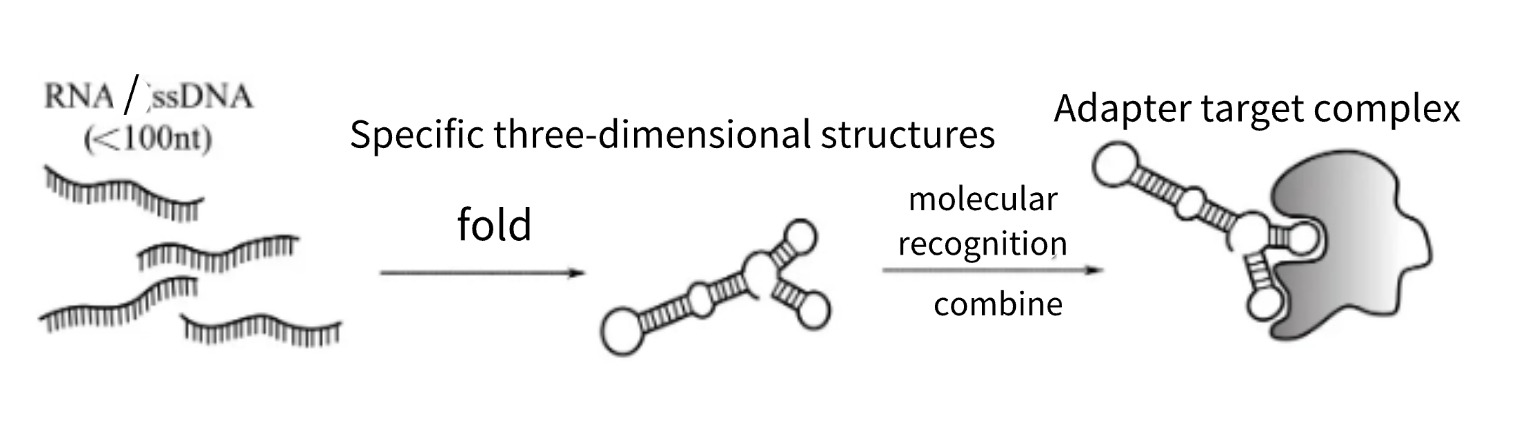
Figure 1: Schematic diagram of the interaction between nucleic acid aptamers and macromolecular targets
The basic procedure of the SELEX technique mainly includes:
1)In vitro chemical synthesis of a single-stranded oligonucleotide library;
2) Incubating the randomized library with the target ligand to allow oligonucleotide-target binding;
3) Washing away unbound nucleic acid molecules;
4) Eluting the bound aptamers;
5) Amplifying the bound aptamers via PCR to generate a secondary library for the next round of selection;
6)Repeating steps (2)-(5) to obtain aptamers with high affinity and specificity for the target ligand.
KMD Bioscience offers aptamer in vitro screening technology, which enables rapid screening of candidate target molecules in experiments involving aptamer selection for proteins (cells, small-molecule peptides, etc.)
Utilizing the SELEX method, the scientists at KMD Bioscience provide clients with aptamer in vitro screening services, such as protein aptamer screening (cell aptamer screening, etc.). Clients only need to supply the target protein, related sequence, or sequence ID. KMD Bioscience will then perform SDS-PAGE detection on the target protein, followed by the construction of a protein library and target protein screening. Subsequently, the selected aptamers are dissociated, and repeated elution screening is conducted. After PCR amplification and NGS sequencing, the final aptamers are synthesized.Additionally, KMD Bioscience provides clients with one-stop services, ranging from gene analysis and synthesis → protein expression and purification → aptamer in vitro screening, offering strong support for clients' experiments.
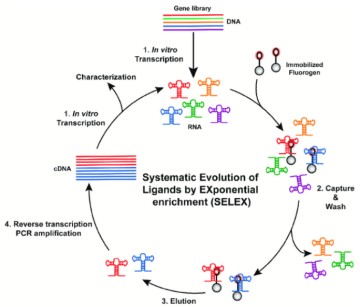
Figure 2: The typical procedure of the SELEX method
- Nucleic Acid Aptamer Screening
- SELEX

- Protein Platform
- Protein Expression Services
- Protein Modification & Detection Services
- Protein Interaction Services
- Protein Purification Service
- Antibody Discovery Platform
- VHH Antibody Platform
- Phage Display Platform
- Antibody Humanization Platform
- Single B Cell Screening Platform
- Antibody Expression & Validation Platform
- Peptide Library Platform
- Custom Antibody Platform
- Innovative Drug Discovery Platform
- Product Center
- Proteins
- Antibodies
- Raw Materials Reagents
- Small Molecule Reagents
- Peptide Products
- Nanoparticle Products
- Contact Us
- Phone:400-621-6806
- Mobile:13110936064(WeC
- E-mail:[email protected]
- Address:Room 108, Building 10, No. 6 Hechang Road, Wuqing Development Zone, Tianjin City
-

WeChat
-

Service Account
-
 400-621-6806
 -
 3599163699
 -
 Monday to Friday 9:00-18:00
 -

-
 0
0
-
