


Sharing Common Issues in ELISA Experiments
- 2026-07-10
- 418
ELISA (Enzyme-Linked Immunosorbent Assay) refers to an immunological method that binds soluble antigens or antibodies to a solid-phase carrier (such as polystyrene) and utilizes the specificity of antigen-antibody binding for qualitative and quantitative detection. ELISA is a common qualitative and quantitative assay in laboratories. This article will explore and discuss two key aspects: the use of negative and positive controls in ELISA experiments, as well as factors influencing ELISA experimental results.
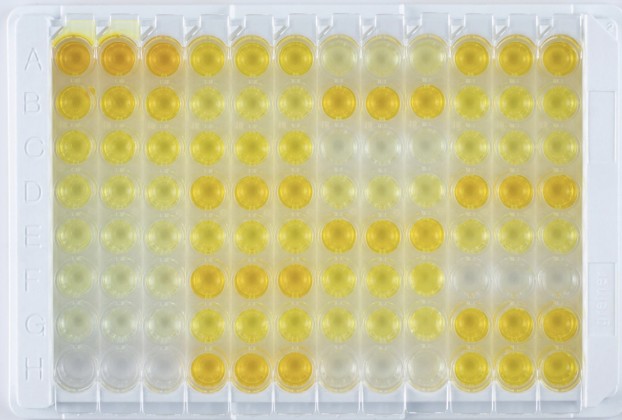
Fig. 1 ELISA assay
I. The Role of Setting Blank, Negative, and Positive Controls in ELISA
1. Blank Control: Reflects the background noise of the experiment. Only the diluent is used instead of the test sample to observe the "baseline" color development of the final reaction and to allow the microplate reader to eliminate or subtract the "background." That is, the absorbance (A) values of the positive control wells, negative control wells, and sample test wells are read with the baseline set as "zero."
2. Negative Control: Used to exclude false positives and provide a reference value for negative results. The negative control is a sample used in the detection test that shares homology and homogeneity with the test substance but does not contain the target analyte. It serves as an objective comparison to distinguish the differences between experimental factors (such as specific antigen-antibody reactions in serological immunoassays).
3. Positive Control: Used to exclude false negatives and provide a reference value for positive results. The positive control consists of "carefully selected" samples containing the target analyte. The term "carefully selected" means that collected positive human serum is screened through multiple tests, and sera containing "interfering substances" are excluded to avoid "false positives" that could interfere with the test results.
II. Factors Affecting ELISA Experimental Results
1. Sample: The sample is the foundation of detection, and its quality directly impacts experimental results. ELISA can detect various sample types—such as serum, whole blood, saliva, and urine—depending on the assay, though serum remains the most common. For serum samples, hemolysis should be avoided, as it may increase nonspecific color development and introduce errors. Repeated freeze-thaw cycles can reduce antibody titers in serum; thus, samples requiring multiple tests should be stored at 4°C if analyzed within 5 days or aliquoted and frozen for long-term use. Bacterial contamination or degradation of samples may lead to false positives.
2. Temperature and Time: Antigen-antibody reactions require appropriate temperature and incubation time, which are critical for ELISA. Temperature control involves pre-warming reagents for about 30 minutes before use to reach working temperature, and preheating the incubator to the reaction temperature to ensure consistent kinetics. Under stable temperature conditions, precise timing—especially for substrate color development—is essential. Insufficient or excessive reaction times can invalidate results, making interpretation impossible.
3. Operator Technique: While commercial ELISA kits simplify testing by providing standardized protocols, manual handling introduces variability. Minor procedural deviations may lead to experimental errors.
(1) Coating: Some ELISA plates require manual coating treatment. Failure to coat, or using a coating solution different from the test item, will lead to experimental failure. During coating, lack of agitation or incomplete coverage of the well bottom by the coating solution may cause deviations in test results.
(2) Reagent dilution: Using incorrect dilution buffers or incorrect dilution ratios will result in experimental failure or inaccurate results.
(3) Plate washing: During manual washing, improper disposal of wash buffer may cause cross-contamination between wells, leading to false positives; insufficient wash buffer volume or inadequate washing cycles result in incomplete washing. Failure to tap the plate dry or incomplete drying after washing will affect experimental results.
(4) Others: Improper sealing with plate sealers or liquid evaporation/leakage when opening may cause cross-contamination between wells; touching the bottom of the ELISA plate during operation alters light permeability, affecting microplate reader measurements; failure to notice pipette tip clogging or leakage during sample addition leads to inaccurate liquid volumes; not changing tips when adding different reagents, etc.
4. Equipment: Instruments and equipment are the foundation of ELISA experiments. Commonly used equipment includes pipettes, microplate readers, plate washers, and incubators. All equipment must be inspected and calibrated to ensure accuracy and precision. When using pipettes, it is advisable to select a volume close to the maximum range for the required liquid transfer and operate them correctly to minimize experimental errors. Microplate readers should be turned on in advance for preheating to ensure stable light sources. Plate washers should be checked to ensure that the dispensing nozzles are unobstructed and that the correct volume is dispensed. Incubators should be turned on ahead of time, and doors should be opened and closed quickly to maintain the required reaction temperature.
5. Reagents: Reagents and kits should be stored according to the specified requirements and used within their expiration dates. Before use, they should be equilibrated to room temperature. Newly purchased kits should be validated to confirm experimental reliability. Different kits or reagents from different lot numbers should not be mixed.
KMD Bioscience has been committed to immunoassay product and technology research for many years. Leveraging our high-quality ELISA kits and related products from renowned brands, we provide customers with superior ELISA technical services. Our products cover common species such as humans, mice, and rats, offering a comprehensive selection to meet various research needs. All our ELISA kits undergo rigorous validation to ensure reliable results across different sample types.
- ELISA assay
- Enzyme-Linked Immunosorbent Assay
- ELISA technical services

- Protein Platform
- Protein Expression Services
- Protein Modification & Detection Services
- Protein Interaction Services
- Protein Purification Service
- Antibody Discovery Platform
- VHH Antibody Platform
- Phage Display Platform
- Antibody Humanization Platform
- Single B Cell Screening Platform
- Antibody Expression & Validation Platform
- Peptide Library Platform
- Custom Antibody Platform
- Innovative Drug Discovery Platform
- Product Center
- Proteins
- Antibodies
- Raw Materials Reagents
- Small Molecule Reagents
- Peptide Products
- Nanoparticle Products
- Contact Us
- Phone:400-621-6806
- Mobile:13110936064(WeC
- E-mail:[email protected]
- Address:Room 108, Building 10, No. 6 Hechang Road, Wuqing Development Zone, Tianjin City
-

WeChat
-

Service Account
-
 400-621-6806
 -
 3599163699
 -
 Monday to Friday 9:00-18:00
 -

-
 0
0
-
