


Introduction to qPCR Experiments
- 2026-07-10
- 412
Quantitative PCR (qPCR) is an advanced molecular biology technique that builds upon conventional PCR by incorporating fluorescent dyes (SYBR Green I or TaqMan probes), enabling higher efficiency and precision. Based on the fundamental principles of PCR, qPCR allows real-time monitoring of amplification products after each thermal cycle, facilitating continuous observation of the PCR process.
In qPCR experiments, both SYBR dye chemistry and TaqMan probe methods serve as critical components. Both SYBR Green I and TaqMan probes generate fluorescent signals during the amplification process.
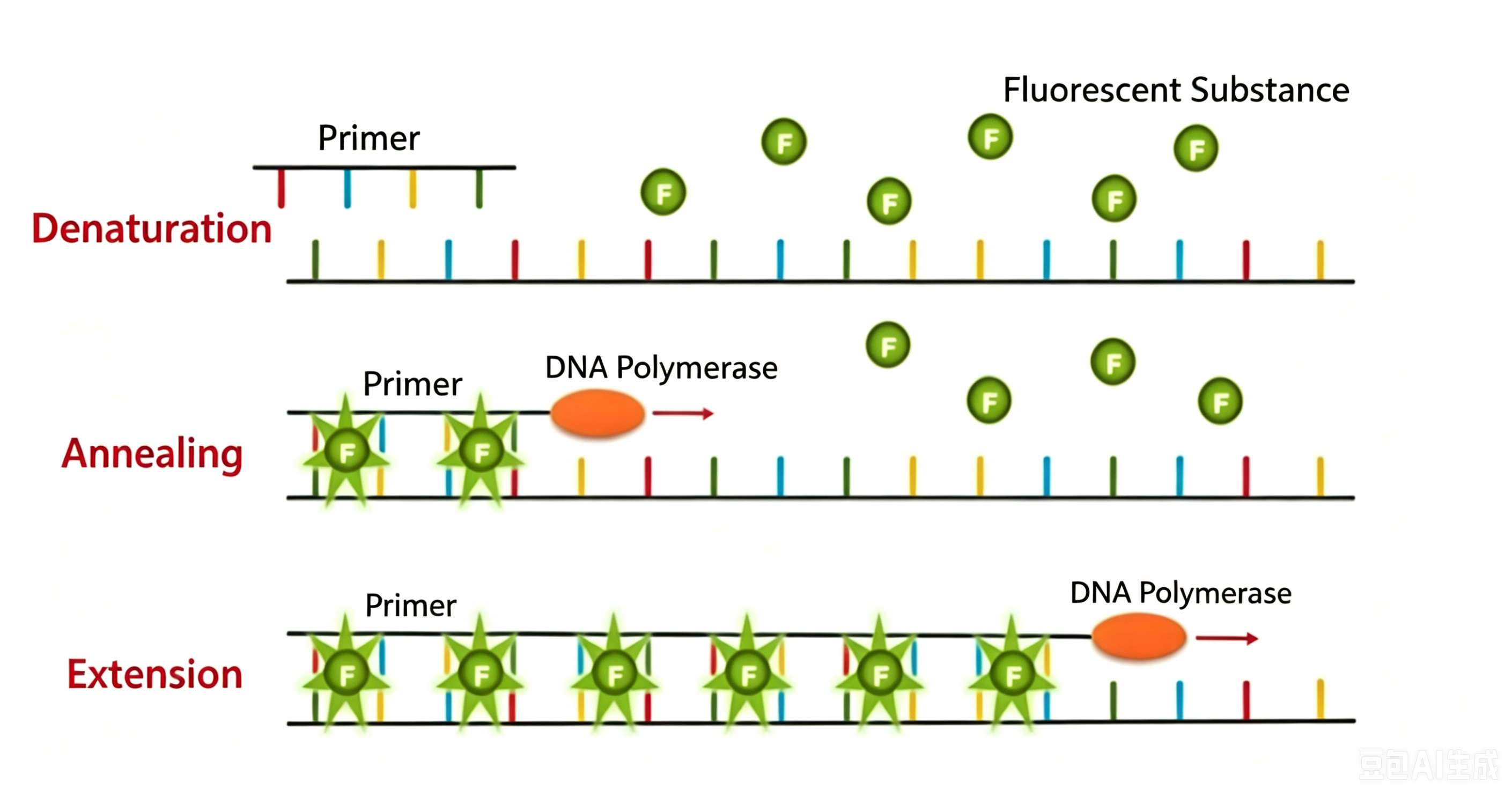
The SYBR Green I method utilizes the unique property of SYBR Green I molecules which emit weak fluorescence in their free state but produce strong fluorescence when intercalated into the minor groove of double-stranded DNA. This characteristic enables the fluorescent signal to increase proportionally with the accumulation of PCR products throughout the amplification cycles.
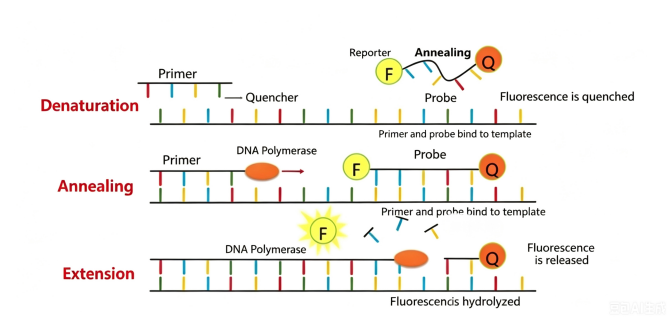
The TaqMan probe method operates on the principle that intact TaqMan probes emit fluorescent signals. During strand extension, the Taq polymerase exhibits 5'-3' exonuclease activity to hydrolyze the probe, allowing detection of amplification products in each cycle as the quenching group becomes inactive. Consequently, qPCR technology not only inherits the rapidity and sensitivity of conventional PCR, but also demonstrates superior specificity, real-time monitoring capability, and precise reproducibility.
The applications of qPCR are extensive, including gene expression quantification, methylation analysis, and differential gene expression analysis. However, the success of qPCR depends on the primers used. Several factors must be considered in primer design, such as GC content, primer dimer formation, or secondary structures. A well-designed primer is the foundation of success. First, identify the target gene sequence, then use software like Primer to design the primers. The primer length typically ranges between 18-30 nt—too short primers may lead to nonspecific amplification, while excessively long primers may form "hairpin structures." When designing primers, it is advisable to span introns to reduce the likelihood of nonspecific amplification, and the GC content should ideally be maintained between 40%-60%. After design, specificity validation is necessary; a single peak in the melting curve and a Tm > 80°C indicate good amplification specificity. A well-designed primer can achieve an amplification efficiency of 90%-110%.
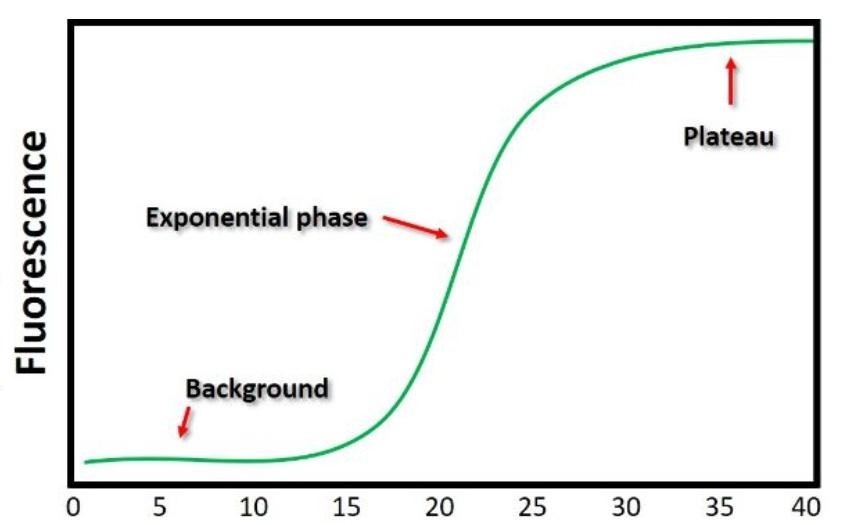
qPCR works by monitoring the real-time fluorescence signal changes of PCR amplification products in each cycle, recording the exponential or S-shaped growth pattern of the products until the fluorescence reaches a plateau. The cycle threshold (Ct) value represents the number of cycles required for the fluorescence signal in each reaction well to exceed the set threshold. A lower Ct value indicates fewer cycles needed to reach the plateau phase, corresponding to a higher initial concentration of the target gene, as illustrated in the figure.
KMD Bioscience can provide professional qPCR experimental services. Clients only need to supply the experimental samples and requirements, while KMD Bioscience handles the experimental design, execution, and analysis, ultimately delivering a comprehensive experimental analysis report tailored to the client's project.
- qPCR
- Real-time fluorescence quantification
- Primer design
- SYBR Green I

- Protein Platform
- Protein Expression Services
- Protein Modification & Detection Services
- Protein Interaction Services
- Protein Purification Service
- Antibody Discovery Platform
- VHH Antibody Platform
- Phage Display Platform
- Antibody Humanization Platform
- Single B Cell Screening Platform
- Antibody Expression & Validation Platform
- Peptide Library Platform
- Custom Antibody Platform
- Innovative Drug Discovery Platform
- Product Center
- Proteins
- Antibodies
- Raw Materials Reagents
- Small Molecule Reagents
- Peptide Products
- Nanoparticle Products
- Contact Us
- Phone:400-621-6806
- Mobile:13110936064(WeC
- E-mail:[email protected]
- Address:Room 108, Building 10, No. 6 Hechang Road, Wuqing Development Zone, Tianjin City
-

WeChat
-

Service Account
-
 400-621-6806
 -
 3599163699
 -
 Monday to Friday 9:00-18:00
 -

-
 0
0
-
