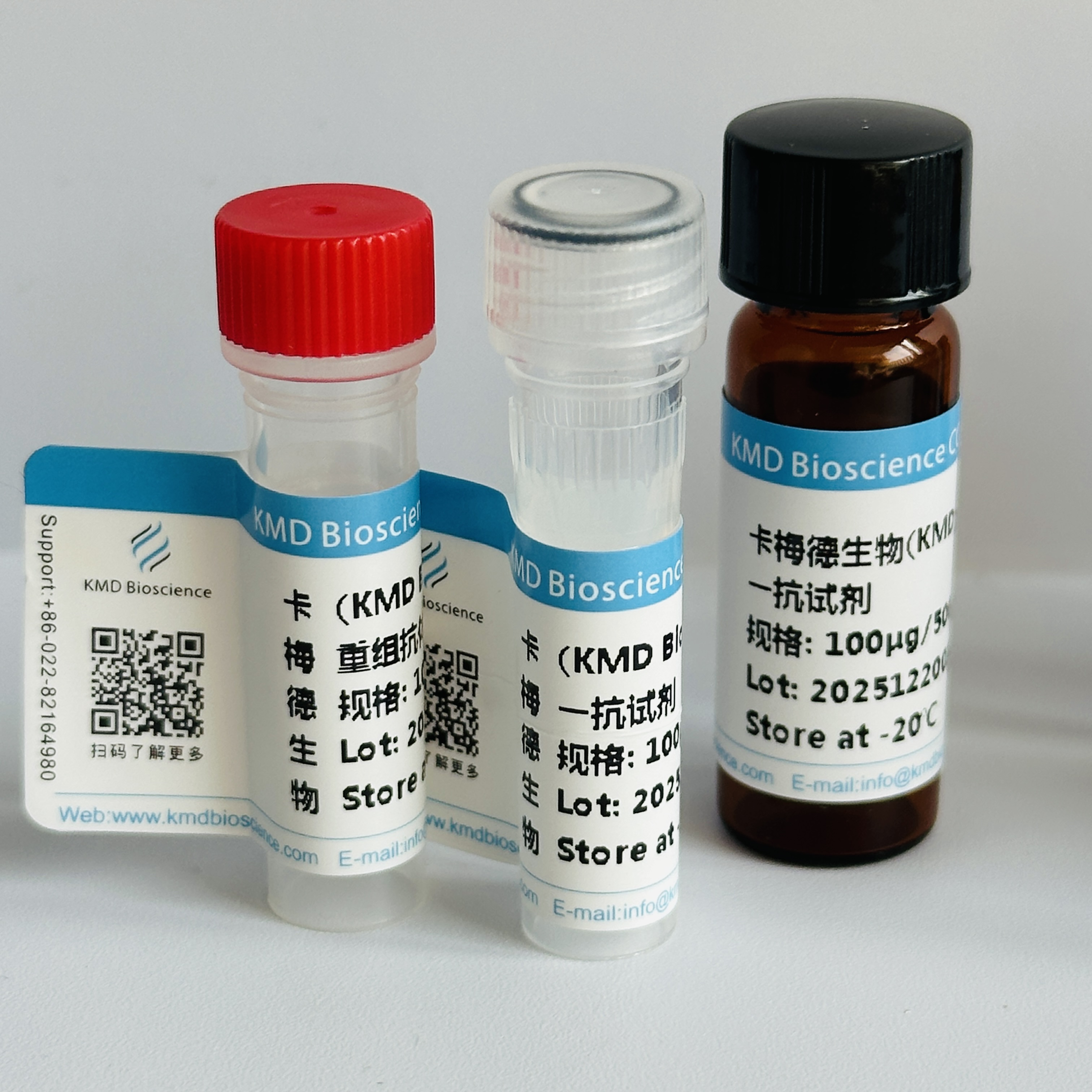
HIV (group M, subtype C, strain 92BR025) gp140 Protein, Fc Tag
-
Product Number
KMP4806
-
Alias
人类免疫缺陷病毒包膜蛋白gp140, HIV gp140, Envelope Protein gp140, HIV gp140 Protein
-
Specifications
- 50ug
- 100ug
- 200ug
KMP4806
人类免疫缺陷病毒包膜蛋白gp140, HIV gp140, Envelope Protein gp140, HIV gp140 Protein
| Alias | 人类免疫缺陷病毒包膜蛋白gp140, HIV gp140, Envelope Protein gp140, HIV gp140 Protein |
| Catalog Number | KMP4806 |
| Product Description | The HIV (group M, subtype C, strain 92BR025) gp140 Protein(KMP4806) is produced in HEK293 Cells. A DNA sequence encoding the Human immunodeficiency virus 1 (HIV1) (group M, subtype C, strain 92BR025) GP140 (AAB61124.1) (Asn32-Ile677) was expressed with the Fc region of human IgG1 at the C-terminus. |
| Molecular Name | HIV gp140 |
| Species | HIV |
| Host | HEK293 Cells |
| Size | 50ug, 100ug, 200ug |
| Purity | >95% as determined by SDS-PAGE |
| Purification | Affinity purification |
| Endotoxin | <1.0 EU/ug determined by the LAL method |
| Formulation | PBS, pH7.4 |
| Background | The influenza viral Hemagglutinin (HA) protein is a homotrimer with a receptor binding pocket on the globular head of each monomer.HA has at least 18 different antigens. These subtypes are named H1 through H18.HA has two functions. Firstly, it allows the recognition of target vertebrate cells, accomplished through the binding to these cells' sialic acid-containing receptors. Secondly, once bound it facilitates the entry of the viral genome into the target cells by causing the fusion of the host endosomal membrane with the viral membrane. The influenza virus Hemagglutinin (HA) protein is translated in cells as a single protein, HA, or hemagglutinin precursor protein. For viral activation, hemagglutinin precursor protein (HA) must be cleaved by a trypsin-like serine endoprotease at a specific site, normally coded for by a single basic amino acid (usually arginine) between the HA1 and HA2 domains of the protein. After cleavage, the two disulfide-bonded protein domains produce the mature form of the protein subunits as a prerequisite for the conformational change necessary for fusion and hence viral infectivity. |
| Storage Condition | Aliquot and store at -20℃ to -80℃. Avoid repeated freezing and thawing cycles. |
| Shipping Condition | In general, recombinant proteins are provided as lyophilized powder which are shipped at ambient temperature. If supplied as liquid, the proteins will be shipped with dry ice. |



Service Account


 0
0