Home
>>
Technical Platform
>>
Detection Platform
>>
BLI Affinity Measurement Service
Download Center
Quick Inquiry & Consultation
BLI Affinity Measurement Service

Bio-Layer Interferometry (BLI) is an advanced optical technology used for real-time monitoring of interactions between unlabeled biomolecules, enabling comprehensive quantitative analysis and protein concentration determination. This technology employs probe-based biosensors to directly detect samples, measuring the binding and dissociation of biomolecules on the sensor surface by tracking shifts in the interference spectrum. Compared with traditional molecular interaction techniques (e.g., immunoprecipitation, pull-down, EMSA, ELISA, etc), BLI affinity measurement enables quantitative assessment.

KMD Bioscience has established a comprehensive Octet Platform based on bio-layer interferometry technology. The platform offers a wide range of sensor types with high flexibility and sensitivity, supporting broad research applications. Our scientists, with years of experience in biomolecular interaction studies, leverage this expertise in combination with the Octet System to provide customers with precise and rapid BLI Affinity Measurement Services, ensuring accurate, objective, and reliable results.
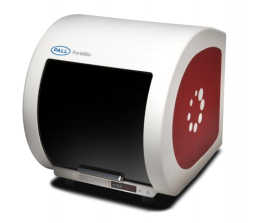
ForteBio Octet平台图-卡梅德科技.jpg

Figure 1 ForteBio Octet Platform

Bio-Layer Interferometry (BLI)

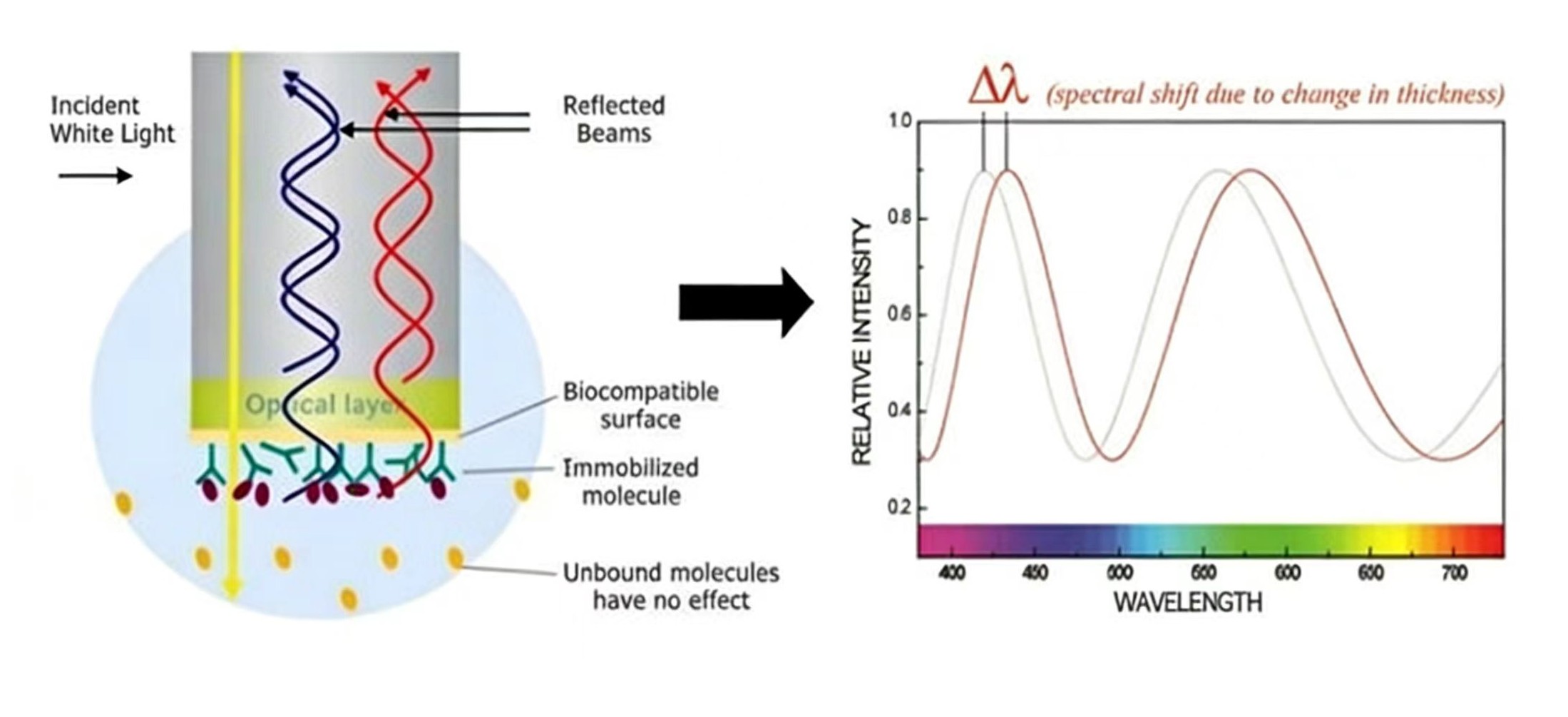
Bio-layer interferometry is a label-free, real-time optical detection technology primarily used for comprehensive quantitative analysis of biomolecular interactions and protein concentration measurements. This technique utilizes probe-based biosensors for direct sample detection. By monitoring the spectral shifts in interference patterns, it reveals the binding and dissociation dynamics between biomolecules interacting on the sensor surface. When a ligand binds to the end of the sensor, it forms a biological layer. Upon binding of the analyte to the ligand, the molecular weight at the sensor tip changes, leading to a change in the thickness of the biological layer. As light passes through this biological layer, it undergoes transmission and reflection to form interference waves. Changes in the layer’s thickness cause relative shifts in the interference pattern, which are displayed in real time as nanometer (nm) displacements on the interference spectrum.

e357210c7146d986c1f35f220e0680d0.jpg

Figure 2 BLI Principle Diagram

BLI technology can detect various sample types, including proteins, nucleic acids, polysaccharides, lipids, small-molecule drugs, antibodies, viruses, bacteria, and cells. It is now widely applied in life science research fields such as protein structure target analysis, drug development and screening, immunology, gene regulation, signaling pathways, genetics, microbiomics, virology, nanoparticle and liposome research, as well as analysis of traditional Chinese medicine extracts and natural products.

Service scope

We provide label-free molecular interaction studies based on BLI: including protein–protein affinity measurement, antigen–antibody affinity measurement, protein–small-molecule drug affinity measurement; protein–DNA affinity measurement; antibody subtype analysis, antibody pairing, hybridoma screening, as well as affinity measurement of receptor-containing low-molecular-weight compounds and many other compounds, and high-throughput affinity ranking services according to customer requirements.

Depending on experimental objectives and sample types, we can select suitable sensors for each experiment. With more than ten types of sensors available, we are able to meet diverse sample requirements.

Sensor Type

Sensor Name

General Sensors

* Streptavidin(SA)

* Super Streptavidin(SSA)

* High Precision Streptavidin(SAX)

* Amine Reactive 2nd Generation(AR2G)

* Aminopropylsilane(APS)

Capture Sensors

* Anti-Penta-HIS(HIS)

* Ni-NTA(HIS)

* Anti-GST

Antibody-Specific Sensors

* Anti-Human IgG Fc(AHQ)

* Anti-Human IgG Fc(AHC)

* Anti-Murine IgG Fv(AMQ)

* Anti-Murine IgG Fc(AMC)

* Anti Human IgG Fab(FAB2G)

* Protein A

* Protein G

* Protein L

Sample requirements

Customer-provided Samples

Requirements

Customers may provide antibodies, proteins, peptides, or small-molecule compounds

* Buffer: PBS, HEPPS, and other buffers free of organic reagents; must not contain Tris, EDTA or DDT with amino groups; preferably free of glycerol, imidazole, trehalose, or other salts.

* Proteins: >100 µg with tag, >200 µg without tag; concentration >0.5 mg/ml; purity >90%; avoid particulate matter or flocculent precipitates.

* Antibodies: >200 µg; concentration >0.5 mg/ml; purity >90%; avoid particulate matter or flocculent precipitates.

* Polypeptide: >200 µg with biotin label, >2 mg without biotin label; concentration >0.1 mg/ml; purity >90%; avoid particulate matter or flocculent precipitates.

* Small molecules (powder or liquid; liquid should be dissolved in water or DMSO): >1 mg; concentration >1 mg/ml; purity >90%; dissolved in 100% DMSO or water.

Service content

-- Affinity and kinetic measurements.

-- Screening of small-molecule compounds (antibodies).

-- Antibody characterization.

-- Consistency evaluation and quality control measurements.

Service advantages

-- Professional technical team with extensive experience.

-- High measurement efficiency, label-free and real-time monitoring.

-- Advanced instrumentation.

-- Broad application range: suitable for protein, nucleic acid, peptide, and nanomaterial interaction analysis.

-- One-stop service: providing integrated solutions from affinity measurement to molecular interaction studies.

Login

Don’t have an account?Sign Up Now

Register

Already have an account?Log In Now