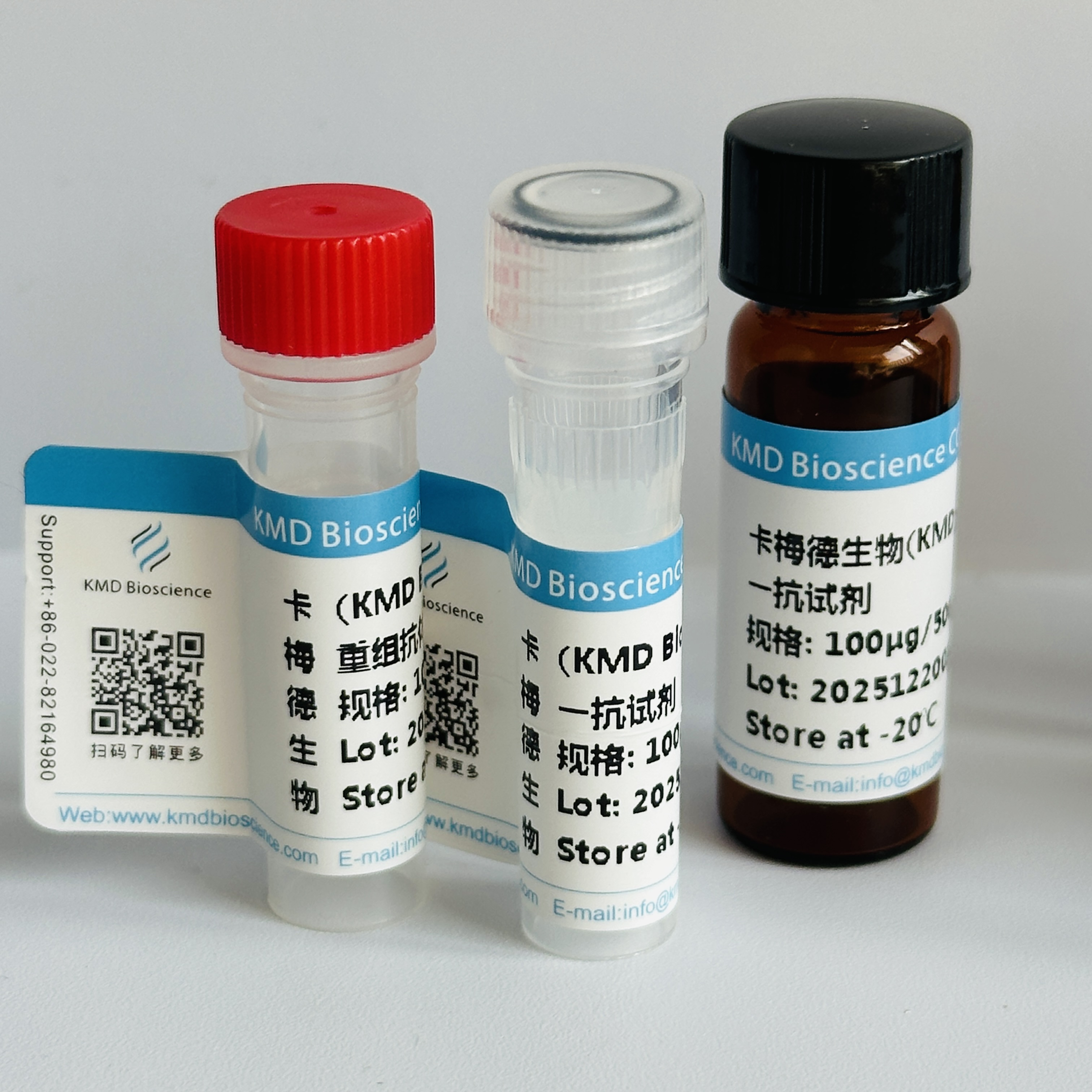
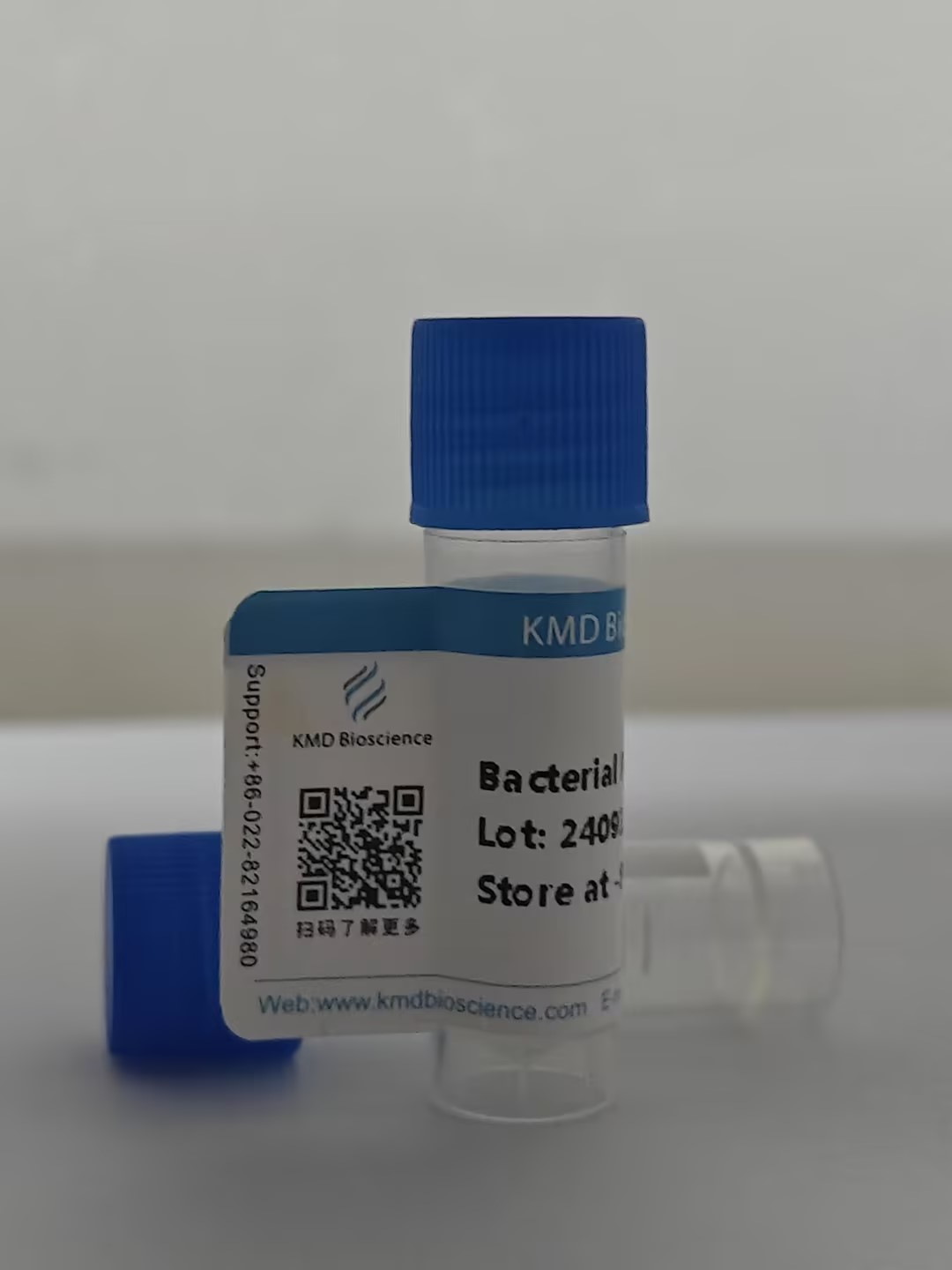
Recombinant Human FLT3LG Protein, His Tag
-
Product Number
KRP699
-
Alias
P36888, Flt-3 Ligand, CD135, FLK-2, FLK2, STK1
-
Specifications
- 100ug
- 500ug
- 1mg
KRP699
P36888, Flt-3 Ligand, CD135, FLK-2, FLK2, STK1
| Alias | P36888, Flt-3 Ligand, CD135, FLK-2, FLK2, STK1 |
| Catalog Number | KRP699 |
| Product Introduction | Recombinant human Flt-3 ligand is a key growth factor for the development of dendritic cells and hematopoietic stem cells. Mainly used for in vitro generation of dendritic cells, immunotherapy research, and hematopoietic expansion experiments. |
| Molecular Name | FLT3LG |
| Species | Human |
| Host | Sf9 Cells |
| Size | 100ug,500ug,1mg |
| Purity | >95%, determined by SDS-PAGE. |
| Concentration | Contact the sales manager to obtain the concentration of the latest batch. |
| Purification | Affinity Purification |
| Endotoxin | <0.1 EU/μg, determined by LAL method. |
| Background | A ligand for Flt-3 receptor (CD135), important for proliferation and differentiation of hematopoietic stem cells and dendritic cell precursors, studied as a mobilizer of dendritic cells in immunotherapy. |
| Application | WB, ELISA |
| Predicted Molecular Weight | 17.5 kDa |
| Reconstitution | It is recommended that the lyophilized human Flt-3 Ligand protein be dissolved in PBS at a concentration of 100-200 μg/ml for further dilution as the working concentration. |
| Storage Condition | Samples are stable for up to twelve months from date of receipt at -20℃ to -103℃. Avoid repeated freeze-thaw cycles. |
| Shipping Condition | This product is shipped on ice packs or dry ice. |
| Stability | Repeated freezing and thawing is not recommended. |
| Molecular Weight | 1730 kDa, |
| Uniprot ID | P49771 |
| References | 1. WodnarFilipowicz, A. (2003) News Physiol. Sci. 18:247. 2. Dong, J. et al. (2002) Cancer Biol. Ther. 1:486. 3. Gilliland, D.G. and J.D. Griffin (2002) Blood 100:1532. 4. Hannum, C. et al. (1994) Nature 368:643. 5. Lyman, S.D. et al. (1994) Blood 83:2795. 6. Lyman, S.D. et al. (1993) Cell 75:1157. 7. Savvides, S.N. et al. (2000) Nat. Struct. Biol. 7:486. 8. McClanahan, T. et al. (1996) Blood 88:3371. 9. Diener, K.R. et al. (2008) Exp. Hematol. 36:51. 10. Farag, S.S. and M.A. Caligiuri (2006) Blood Rev. 20:123. 11. Edwan, J.H. et al. (2004) J. Immunol. 172:5016.1. WodnarFilipowicz, A. (2003) News Physiol. Sci. 18:247. 2. Dong, J. et al. (2002) Cancer Biol. Ther. 1:486. 3. Gilliland, D.G. and J.D. Griffin (2002) Blood 100:1532. 4. Hannum, C. et al. (1994) Nature 368:643. 5. Lyman, S.D. et al. (1994) Blood 83:2795. 6. Lyman, S.D. et al. (1993) Cell 75:1157. 7. Savvides, S.N. et al. (2000) Nat. Struct. Biol. 7:486. 8. McClanahan, T. et al. (1996) Blood 88:3371. 9. Diener, K.R. et al. (2008) Exp. Hematol. 36:51. 10. Farag, S.S. and M.A. Caligiuri (2006) Blood Rev. 20:123. 11. Edwan, J.H. et al. (2004) J. Immunol. 172:5016. |
| Function | Recombinant Human Flt-3 Ligand is a key growth factor for the development of dendritic cells and hematopoietic stem cells. It is primarily used for the in vitro generation of dendritic cells, research on immunotherapy, and hematopoietic expansion experiments. |
| Product Declaration | This product is for research use only and must not be used directly on the human body or for injection. |
| Temperature Range | Store the product under sterile conditions after opening at -80℃ for 12 months. Store the lyophilized powder at -43℃. Avoid repeated freeze-thaw cycles. |
| Product Full Name | Recombinant Human Flt-3 Ligand Protein |
| Target | Flt-3 |
It acts on hematopoietic stem/progenitor cells expressing the Flt3 receptor (CD135), which is crucial for their proliferation and survival.
Because it specifically supports the most primitive hematopoietic stem/progenitor cells, and the combination of SCF and TPO is the golden combination for the in vitro efficient expansion of hematopoietic stem cells and progenitor cells.



Service Account


 0
0