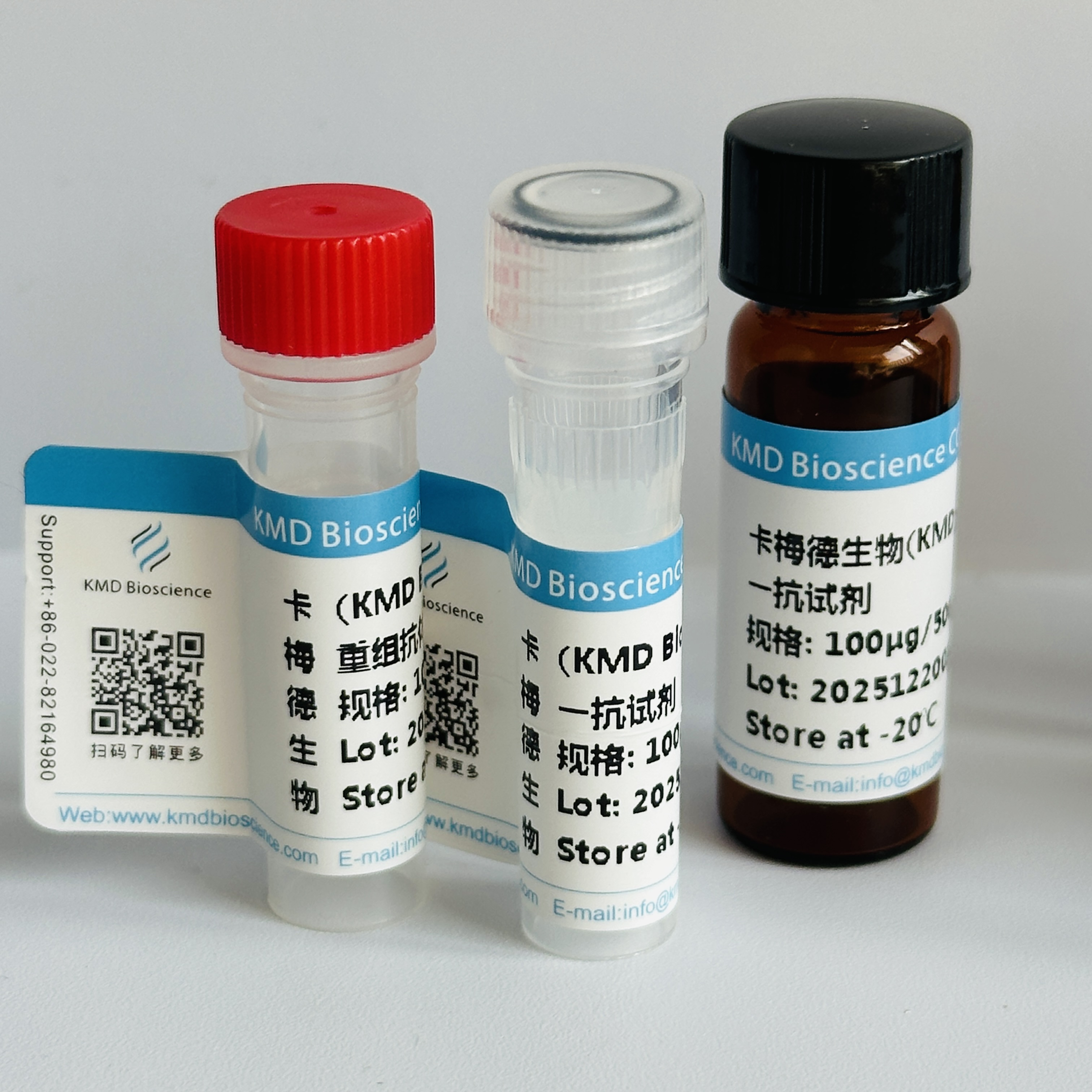
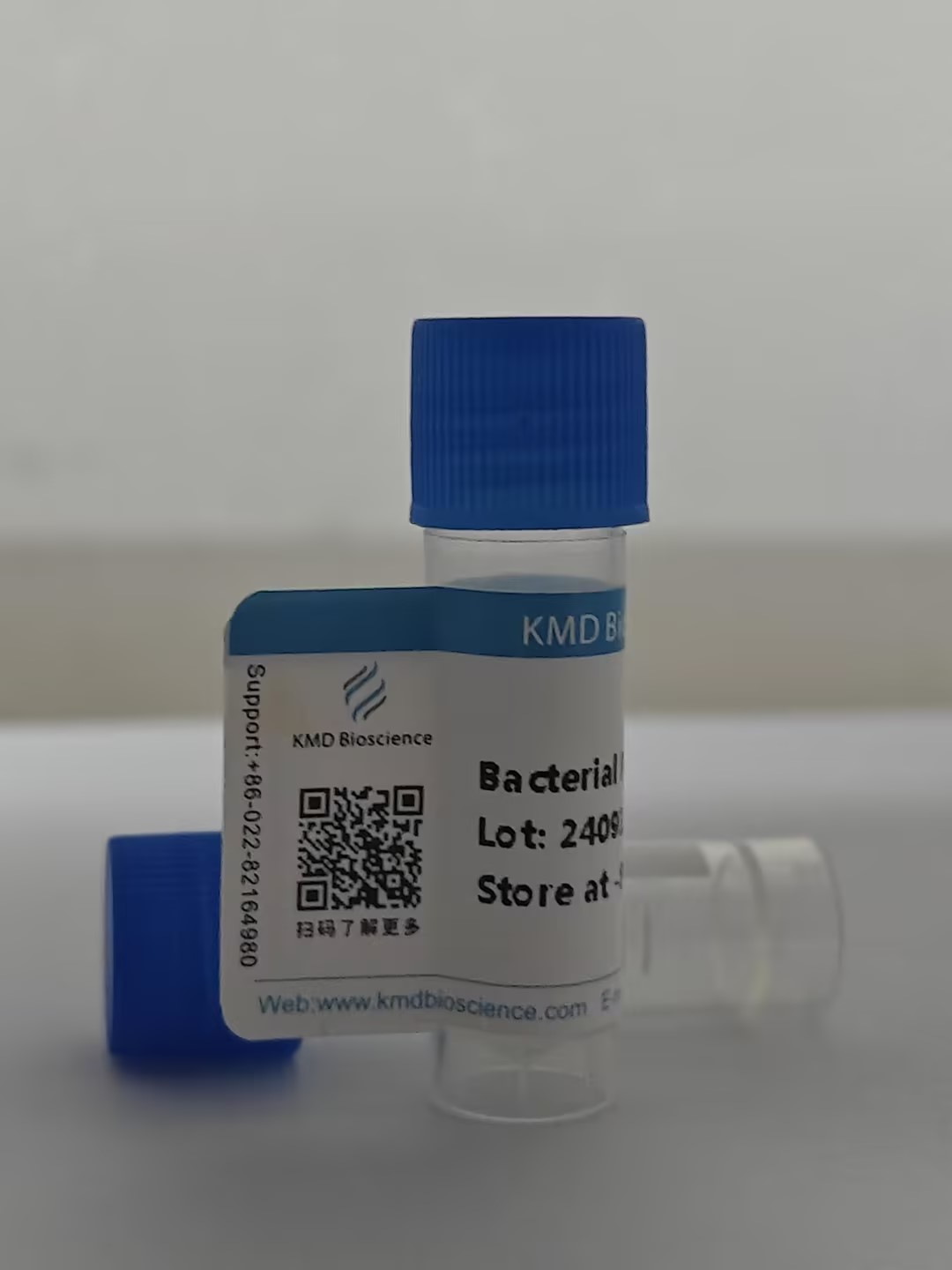
Recombinant Human TNF-alpha Protein, His Tag
-
Product Number
KRP685
-
Alias
TNFA, TNFSF2, TNF, Tumor necrosis factor
-
Specifications
- 100ug
- 500ug
- 1mg
KRP685
TNFA, TNFSF2, TNF, Tumor necrosis factor
| Alias | TNFA, TNFSF2, TNF, Tumor necrosis factor |
| Catalog Number | KRP685 |
| Product Introduction | Recombinant human tumor necrosis factor alpha is a core cytokine that mediates inflammatory response and cell apoptosis. Widely used in inflammation signaling pathway research, tumor cell toxicity experiments, and autoimmune disease models. |
| Molecular Name | TNF |
| Species | Human |
| Host | E.coli |
| Size | 100ug,500ug,1mg |
| Purity | >97%, determined by SDS-PAGE. |
| Concentration | Contact the sales manager to obtain the concentration of the latest batch. |
| Purification | Affinity Purification |
| Endotoxin | <0.01 EU/μg, determined by LAL method. |
| Background | A key pro-inflammatory cytokine mainly produced by macrophages and T cells, playing a central role in systemic inflammation, immune regulation, and cell survival/death, and is an important therapeutic target for autoimmune diseases such as rheumatoid arthritis and psoriasis. |
| Application | WB, ELISA |
| Predicted Molecular Weight | 17 kDa |
| Reconstitution | It is recommended that the lyophilized human TNF-a protein be dissolved in sterile deionized water at a concentration of 0.1-1 mg/mL for further dilution as the working concentration. |
| Storage Condition | Samples are stable for up to twelve months from date of receipt at -20℃ to -89℃. Avoid repeated freeze-thaw cycles. |
| Shipping Condition | This product is shipped on ice packs or dry ice. |
| Stability | Repeated freezing and thawing is not recommended. |
| Molecular Weight | 17 kDa |
| Uniprot ID | P01375 |
| References | 1. Zelova, H. and J. Hosek (2013) Inflamm. Res. 62:641. 2. Juhasz, K. et al. (2013) Expert Rev. Clin. Immunol. 9:335. 3. Pennica, D. et al. (1984) Nature 312:724. 4. Tang, P. et al. (1996) Biochemistry 35:8216. 5. Perez, C. et al. (1990) Cell 63:251. 6. Black, R.A. et al. (1997) Nature 385:729. 7. Moss, M.L. et al. (1997) Nature 385:733. 8. Gearing, A.J.H. et al. (1994) Nature 370:555. 9. Schall, T.J. et al. (1990) Cell 61:361. 10. Loetscher, H. et al. (1990) Cell 61:351. 11. Dembic, Z. et al. (1990) Cytokine 2:231. 12. Smith, C.A. et al. (1990) Science 248:1019. 13. Loetscher, H. et al. (1991) J. Biol. Chem. 266:18324. 14. Pinckard, J.K. et al. (1997) J. Biol. Chem. 272:10784. 15. Engelmann, H. et al. (1990) J. Biol. Chem. 265:1531. |
| Function | Recombinant Human Tumor Necrosis Factor-α is a core cytokine that mediates inflammatory responses and cellular apoptosis. It is widely used in research on inflammatory signaling pathways, cytotoxicity experiments on tumor cells, and models of autoimmune diseases. |
| Product Declaration | This product is for research use only and must not be used directly on the human body or for injection. |
| Temperature Range | Store the product under sterile conditions after opening at -80℃ for 12 months. Store the lyophilized powder at -29℃. Avoid repeated freeze-thaw cycles. |
| Product Full Name | Recombinant Human TNF-a Protein |
| Target | TNF-a |
It is a key pro-inflammatory cytokine that plays a central role in acute inflammation, immune regulation, and induction of cell apoptosis.
It is typically not used as a growth factor, but rather as a conditional signal. It is often used for 'inflammatory preconditioning' of mesenchymal stem cells to enhance their immunosuppressive function and chemotactic ability; it is also used to mimic the inflammatory microenvironment of diseases.



Service Account


 0
0