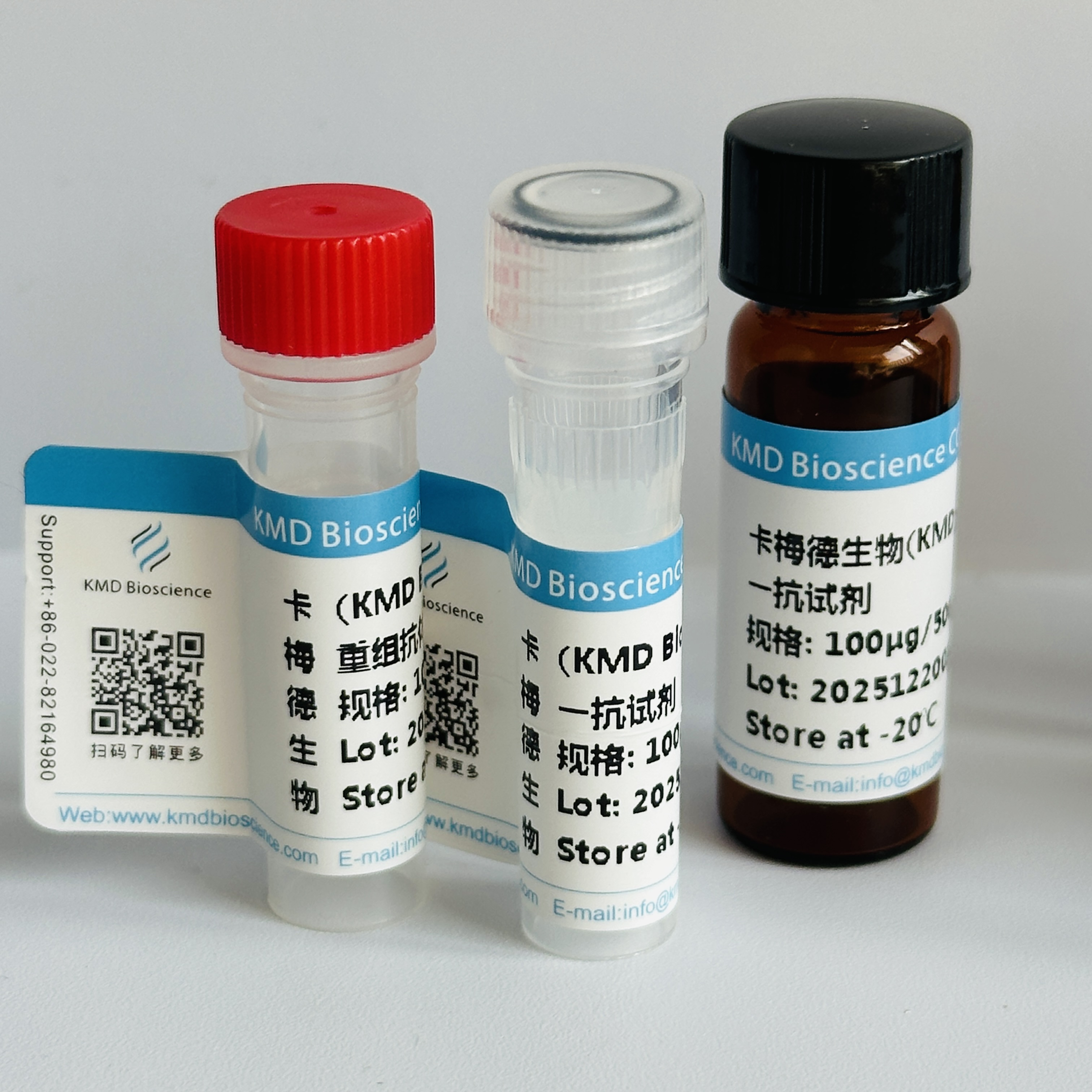
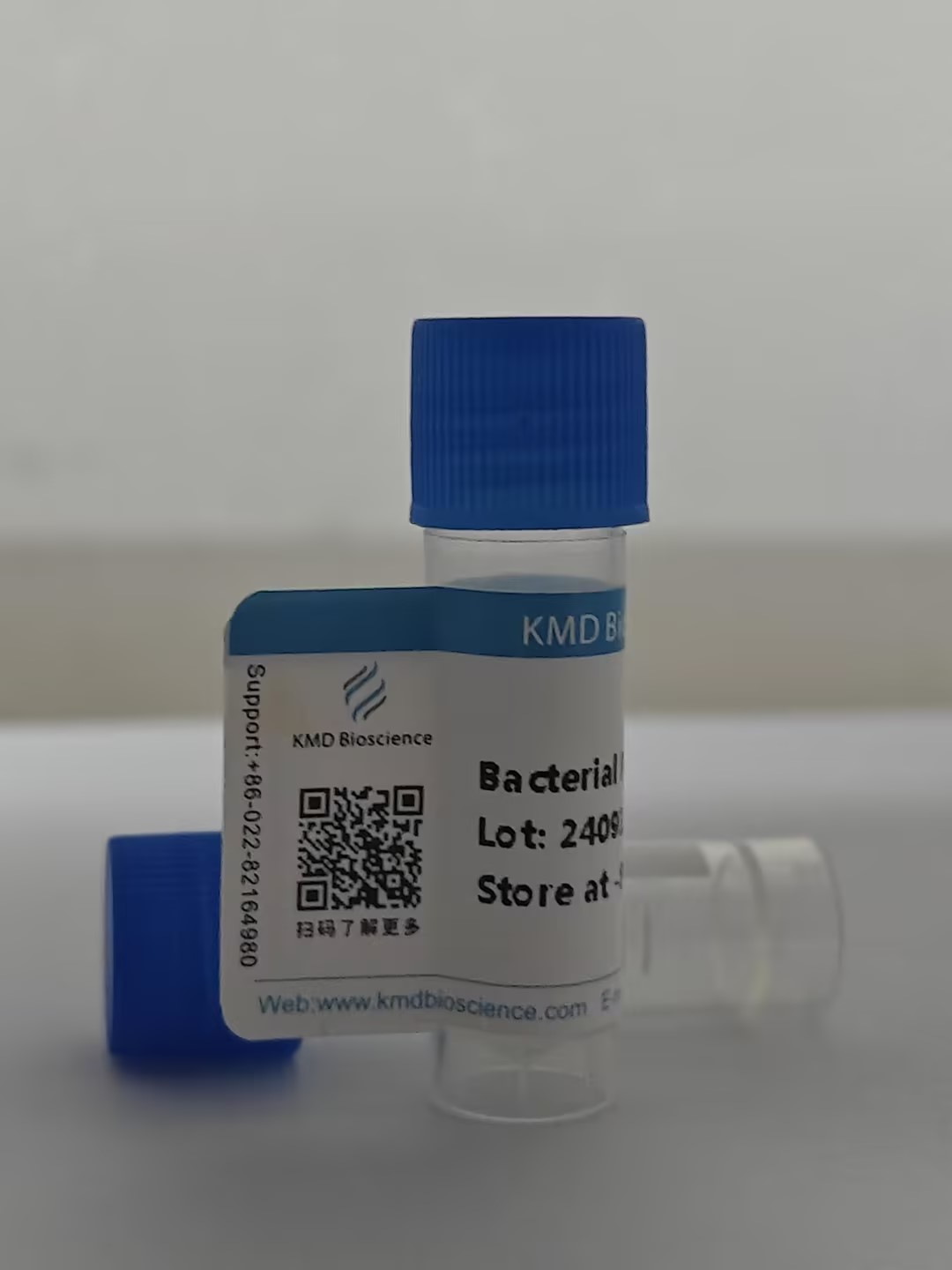
Recombinant Human LR3 IGF-I Protein
-
Product Number
KRP683
-
Alias
Long R3 IGF-I, LR3 Insulin-like growth factor I, Insulin-like growth factor 1, IGF-I LR3, IGFI,
-
Specifications
- 100ug
- 500ug
- 1mg
KRP683
Long R3 IGF-I, LR3 Insulin-like growth factor I, Insulin-like growth factor 1, IGF-I LR3, IGFI,
| Alias | Long R3 IGF-I, LR3 Insulin-like growth factor I, Insulin-like growth factor 1, IGF-I LR3, IGFI, |
| Catalog Number | KRP683 |
| Product Introduction | Recombinant human long-acting IGF-1 variant (LR3 IGF-1) has enhanced stability and biological activity. Suitable for long-term cell proliferation research, muscle regeneration experiments, and exploration of metabolic disease-related mechanisms. |
| Molecular Name | IGF1 |
| Species | Human |
| Host | E.coli |
| Size | 100ug,500ug,1mg |
| Purity | >97%, determined by SDS-PAGE. |
| Concentration | Contact the sales manager to obtain the concentration of the latest batch. |
| Purification | Affinity Purification |
| Endotoxin | <0.01 EU/μg, determined by LAL method. |
| Background | A long-acting analogue of IGF-1, which through amino acid substitutions and N-terminal extension peptide reduces its affinity for binding proteins , thereby enhancing its bioactivity and stability, mainly used for scientific research. |
| Application | WB, ELISA |
| Predicted Molecular Weight | 9 kDa |
| Reconstitution | It is recommended that the lyophilized human LR3 IGF-I protein be dissolved in 100 mM Acetic Acid at a concentration of 100-200 μg/mL for further dilution as the working concentration. |
| Storage Condition | Samples are stable for up to twelve months from date of receipt at -20℃ to -87℃. Avoid repeated freeze-thaw cycles. |
| Shipping Condition | This product is shipped on ice packs or dry ice. |
| Stability | Repeated freezing and thawing is not recommended. |
| Molecular Weight | 8 kDa, |
| Uniprot ID | P05019 |
| References | 1. Philippou, A. et al. (2007) In Vivo 21:45. 2. Sandberg-Nordqvist, A.C. et al. (1992) Brain Res. Mol. Brain Res. 12:275. 3. Berryman, D.E. et al. (2013) Nat. Rev. Endocrinol. 9:346. 4. Guvakova, M.A. (2007) Int. J. Biochem. Cell Biol. 39:890. 5. Sadagurski, M. and M.F. White (2013) Endocrinol. Metab. Clin. North Am. 42:127. 6. Clemmons, D.R. (2006) Curr. Opin. Pharmacol. 6:620. 7. Bluher, S. et al. (2005) Best Pract. Res. Clin. Endocrinol. Metab. 19:577. 8. Garcia-Segura, L.M. et al. (2006) Neuroendocrinology 84:275. 9. Malemud, C.J. (2007) Clin. Chim. Acta 375:10. 10. Ling, P.R. et al. (1995) Am. J. Clin. Nutr. 61:116. 11. Sheng, M.H. et al. (2014) J. Bone Metab. 21:41. 12. Samani, A.A. et al. (2007) Endocrine Rev. 28:20. 13. Gallagher, E.J. et al. (2010) Endocr. Pract. 16:864. 14. LeRoith, D. and S. Yakar (2007) Nat. Clin. Pract. Endocrinol. Metab. 3:302. 15. Denley, A. et al. (2005) Cytokine Growth Factor Rev. 16:421. 16. Duan, C. and Q. Xu (2005) Gen. Comp. Endocrinol. 142:44. 17. Francis, G.L. et al. (1992) J. Mol. Endocrinol. 8:213. 18. Voorhamme, D. and C.A. Yandell (2006) Mol. Biotechnol. 34:201. 19. Tomas, F.M. et al. (1993) Biochem. J. 291:781. 20. Tomas, F.M. et al. (1996) J. Endocrinol. 150:77. 21. Tomas, F.M. et al. (1997) J. Endocrinol. 155:377. 22. von der Thüsen, J.H. et al. (2011) Am. J. Pathol. 178:924 |
| Function | Recombinant human long-acting IGF-1 variant (LR3 IGF-1) has enhanced stability and bioactivity. It is suitable for long-term cell proliferation research, muscle regeneration experiments, and exploration of mechanisms related to metabolic diseases. |
| Product Declaration | This product is for research use only and must not be used directly on the human body or for injection. |
| Temperature Range | Store the product under sterile conditions after opening at -80℃ for 12 months. Store the lyophilized powder at -27℃. Avoid repeated freeze-thaw cycles. |
| Product Full Name | Recombinant Human LR3 IGF-I Protein |
| Target | LR3 IGF-I |
It is an analog of IGF-1, with stronger binding affinity to the IGF-1 receptor, and its half-life in the body is significantly prolonged.
When a stronger and more durable growth-promoting and anti-apoptotic signal is needed, such as during high-density stem cell expansion or when cells are under stress conditions.



Service Account


 0
0