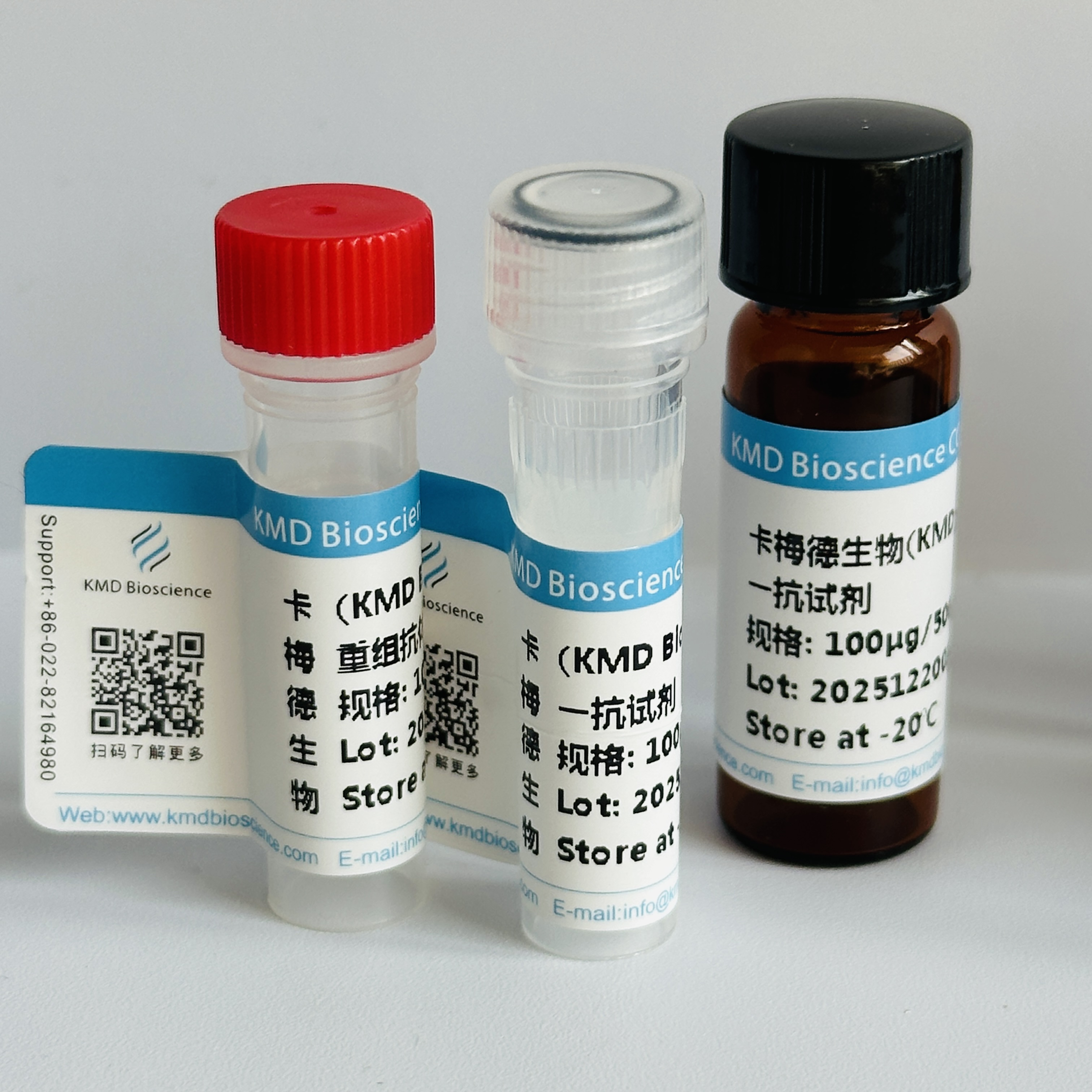
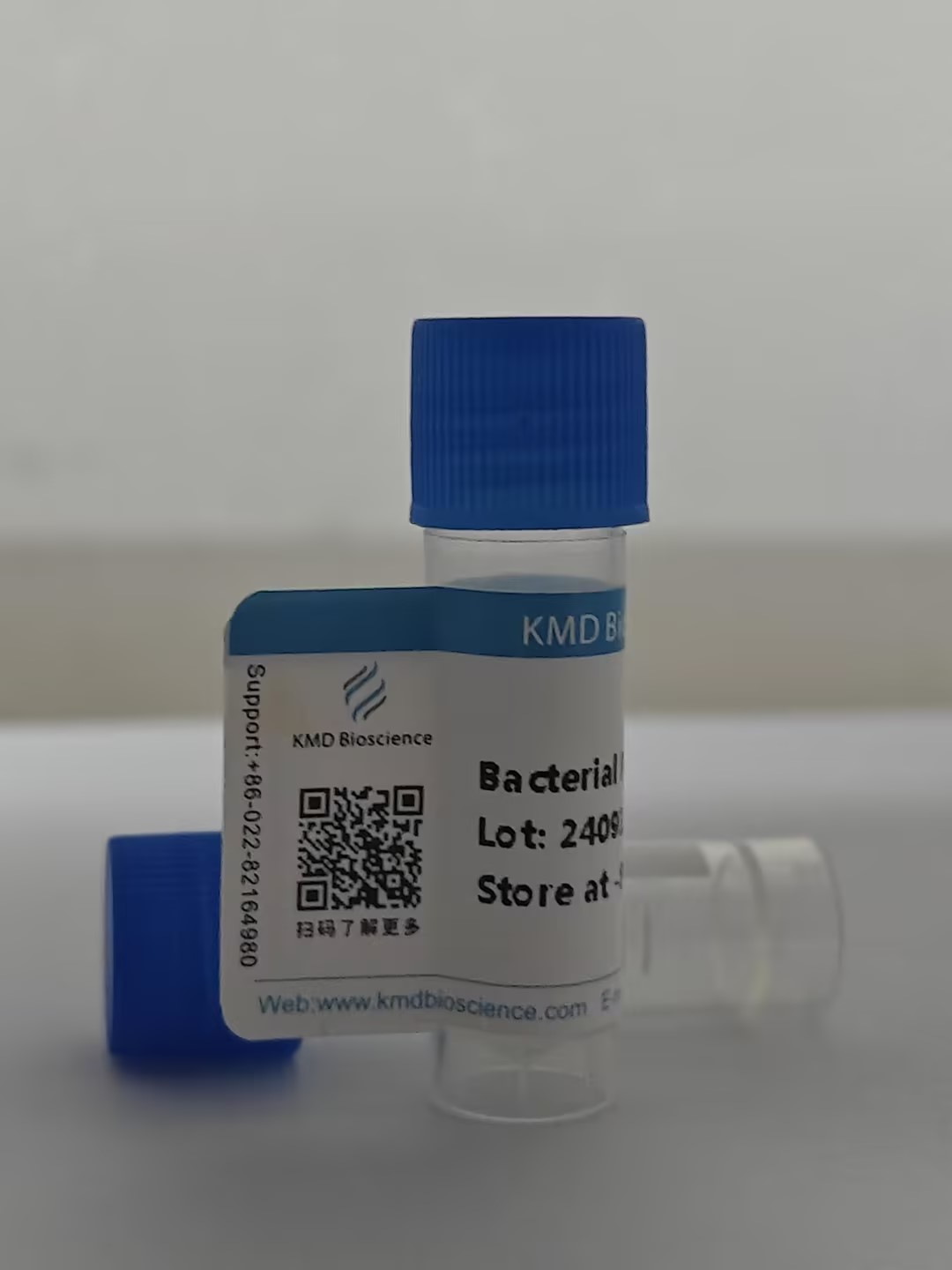
Recombinant Human IL-6 Protein
-
Product Number
KRP674
-
Alias
Interleukin-6,BSF2,HSF,IFNB2
-
Specifications
- 100ug
- 500ug
- 1mg
KRP674
Interleukin-6,BSF2,HSF,IFNB2
| Alias | Interleukin-6,BSF2,HSF,IFNB2 |
| Catalog Number | KRP674 |
| Product Introduction | Recombinant human IL-6 protein is a high-purity cytokine produced using the Escherichia coli expression system, and its amino acid sequence and biological activity are highly consistent with natural human interleukin-6. This product has ultra-high specific activity (ED ₅₀<1 ng/mL) and excellent purity (>95%), with extremely low endotoxin content, ensuring the reliability and reproducibility of experimental results. As a core messenger molecule in immune and inflammatory responses, it is a key tool for studying immune regulation, hematopoietic development, tumor microenvironment, and autoimmune diseases. Widely used in in vitro cell culture expansion, exploration of signaling pathway mechanisms, and drug screening and development, it is an ideal core reagent for promoting basic research in life sciences and the development of translational medicine. |
| Molecular Name | IL6 |
| Species | Human |
| Host | E.coli |
| Size | 100ug,500ug,1mg |
| Purity | >97%, determined by SDS-PAGE. |
| Concentration | Contact the sales manager to obtain the concentration of the latest batch. |
| Purification | Affinity Purification |
| Endotoxin | <0.1EU/μg, determined by LAL method. |
| Background | IL-6 is a key cytokine that plays a significant role in immune defense, acute inflammation, and hematopoiesis. Antibody drugs targeting IL-6 or its receptor have become important targeted therapies for the treatment of diseases such as rheumatoid arthritis and cytokine storms. |
| Application | WB, ELISA |
| Predicted Molecular Weight | 20.9 kDa |
| Reconstitution | It is recommended that the lyophilized human IL-6 protein be dissolved in PBS at a concentration of 100-200 μg/ml for further dilution as the working concentration. |
| Storage Condition | Samples are stable for up to twelve months from date of receipt at -20℃ to -80℃. Avoid repeated freeze-thaw cycles. |
| Shipping Condition | This product is shipped on ice packs or dry ice. |
| Stability | Repeated freezing and thawing is not recommended. |
| Molecular Weight | 20-21 kDa |
| Uniprot ID | P05231 |
| References | 1. Mansell, A. and B.J. Jenkins (2013) Cytokine Growth Factor Rev. 24:249.. Schuett, H. et al. (2009) Thromb. Haemost. 102:215.. Erta, M. et al. (2012) Int. J. Biol. Sci. 8:1254.. Garbers, C. et al. (2012) Cytokine Growth Factor Rev. 23:85.. Mihara, M. et al. (2012) Clin. Sci. (Lond.) 122:143.. Hirano, T. et al. (1986) Nature 324:73.. Kestler, D.P. et al. (1995) Blood 86:4559.. Kestler, D.P. et al. (1999) Am. J. Hematol. 61:169.. Bihl, M.P. et al. (2002) Am. J. Respir. Cell Mol. Biol. 27:48.0. Alberti, L. et al. (2005) Cancer Res. 65:2.1. Murakami, M. et al. (1993) Science 260:1808.2. Muller-Newen, G. (2003) Sci. STKE 2003:PE40.3. Mitsuyama, K. et al. (2006) Clin. Exp. Immunol. 143:125.4. Cerutti, A. et al. (1998) J. Immunol. 160:2145. |
| Function | A key tool for studying immunomodulation, hematopoietic development, tumor microenvironment, and autoimmune diseases, widely used in in vitro cell culture expansion, exploration of signal pathways, and drug screening and development, is the ideal core reagent for advancing basic life science research and translational medical development. |
| Product Declaration | This product is for research use only and must not be used directly on the human body or for injection. |
| Temperature Range | Store the product under sterile conditions after opening at -80℃ for 12 months. Store the lyophilized powder at -20℃. Avoid repeated freeze-thaw cycles. |
| Product Full Name | Recombinant Human IL-6 Protein |
| Target | IL6 |
Proteins can be stored at -80°C for long-term preservation. They should be aliquoted and freezing and thawing cycles should be avoided to maintain protein stability.
Yes. IL-6 has a dual role of promoting proliferation/differentiation and inflammation/aging, and it is necessary to control the concentration and duration of action based on the experimental purpose. Long-term high concentrations of IL-6 may lead to stem cell exhaustion or abnormal differentiation.



Service Account


 0
0