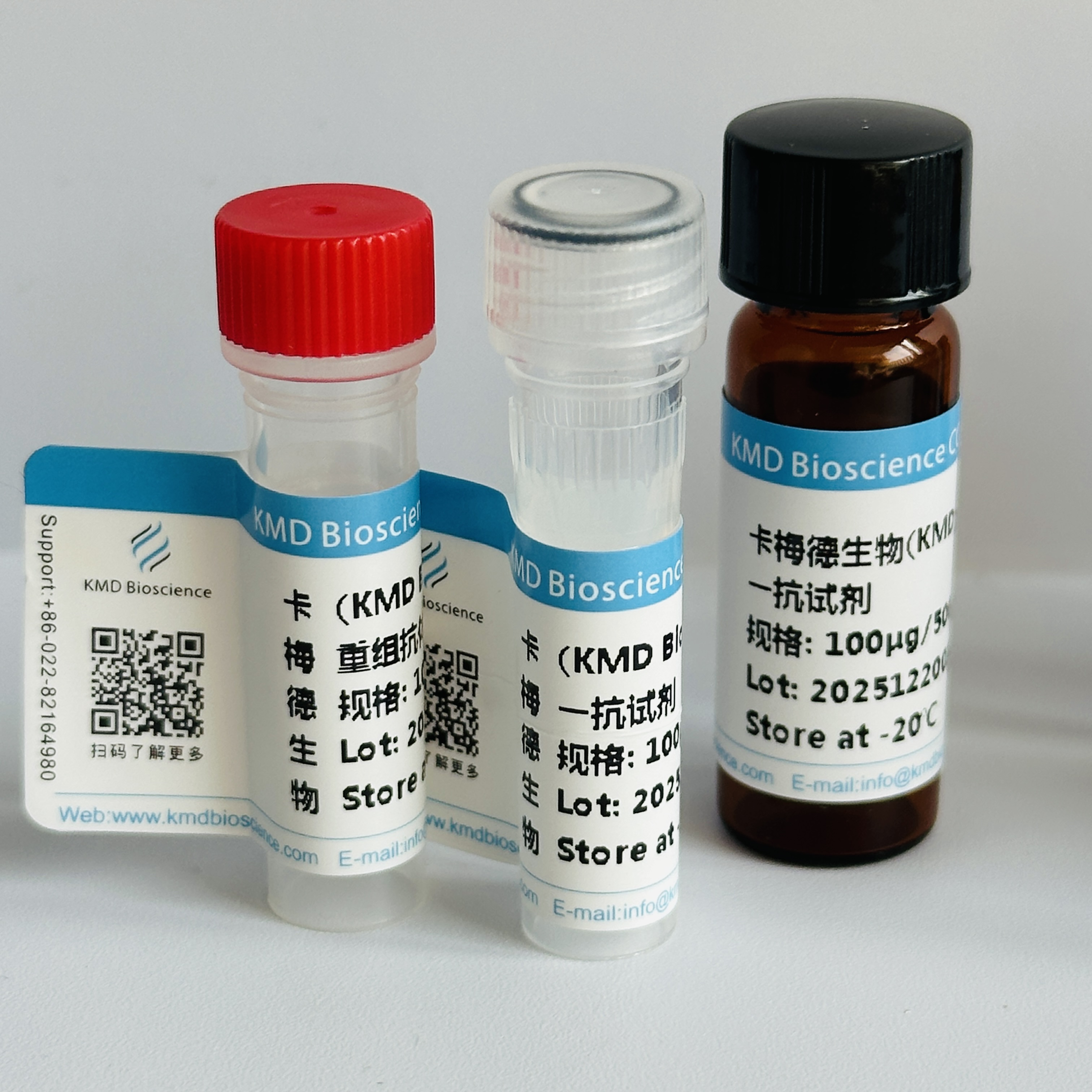
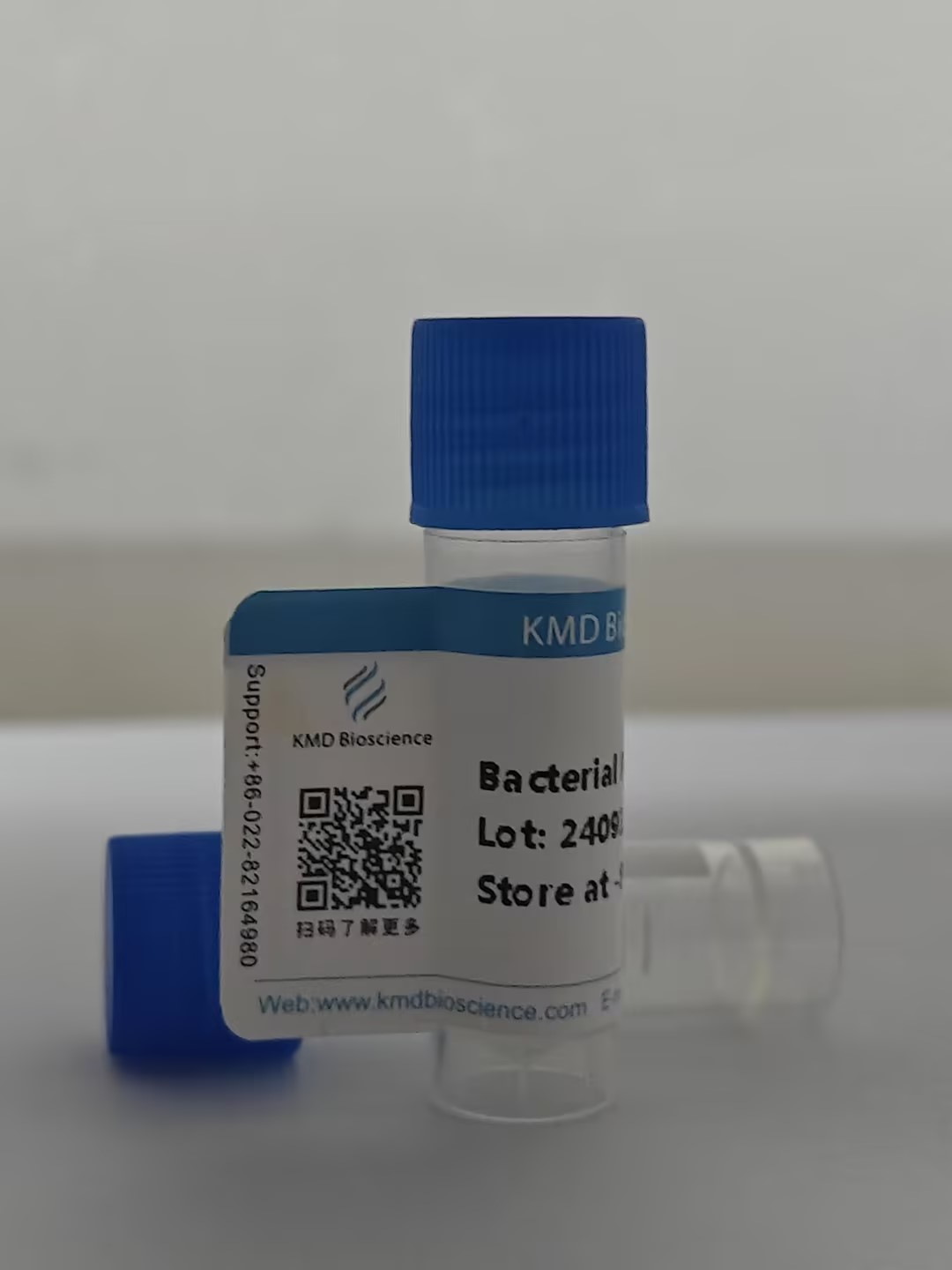
Human CD40L Protein, His Tag
-
Product Number
KMP2284
-
Alias
肿瘤坏死因子相关激活蛋白, Tumor Necrosis Factor Ligand Superfamily Member 5, CD154
-
Specifications
- 50ug
- 100ug
- 200ug
KMP2284
肿瘤坏死因子相关激活蛋白, Tumor Necrosis Factor Ligand Superfamily Member 5, CD154
| Alias | 肿瘤坏死因子相关激活蛋白, Tumor Necrosis Factor Ligand Superfamily Member 5, CD154 |
| Catalog Number | KMP2284 |
| Product Description | The Human CD40L Protein(KMP2284) is produced in HEK293 Cells and the target gene encoding Glu108-Leu261 is expressed with a 6His tag at the N-terminus. |
| Molecular Name | CD40L |
| Species | Human |
| Host | HEK293 Cells |
| Size | 50ug, 100ug, 200ug |
| Purity | >95% as determined by SDS-PAGE |
| Purification | Affinity purification |
| Endotoxin | <1.0 EU/ug determined by the LAL method |
| Formulation | PBS, 1mM EDTA, pH7.4 |
| Background | CD40 Ligand(CD40LG) is a type II transmembrane glycoprotein that belongs to the TNF superfamily. Like other TNF superfamily members, CD40LG exists as a trimer in membrane bound and soluble form, both of which are bioactive. CD40LG is a ligand for CD40; its ligation also initiates signal transduction in CD40LG expressing cells. CD40LG is a differentiation antigen that is expressed on the surface of T-cells. It stimulates B-cell proliferation and secretion of all immunoglobulin isotypes in the presence of cytokines. CD40LG has been shown to induce cytokine production and tumoricidal activity in peripheral blood monocytes. It also co-stimulates proliferation of activated T-cells and this is accompanied by the production of IFN-gamma, TNF-alpha, and IL2. |
| Predicted Molecular Weight | 17.62 kDa |
| Storage Condition | Aliquot and store at -20℃ to -80℃. Avoid repeated freezing and thawing cycles. |
| Shipping Condition | In general, the proteins are provided as lyophilized powder which are shipped at ambient temperature. They are shipped out in dry ice if supplied in liquid form. |
| Uniprot ID | P25942 |
| References | J. Immunol. 203:1383-1391 (2019) |
| Function | Receptor for TNFSF5/CD40LG (PubMed:31331973). Transduces TRAF6- and MAP3K8-mediated signals that activate ERK in macrophages and B cells, leading to induction of immunoglobulin secretion (By similarity). |



Service Account


 0
0