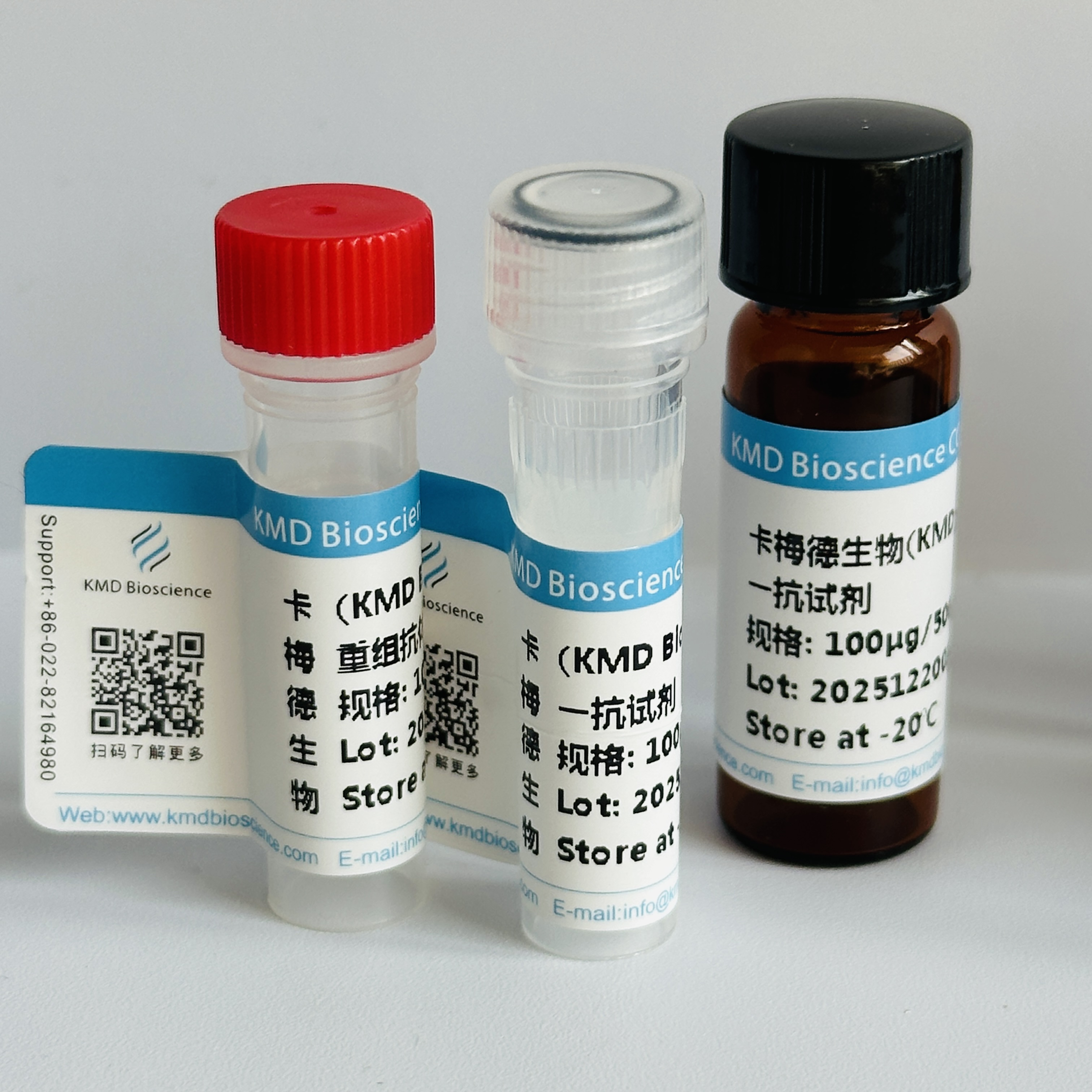
Human VCAM1 Protein, His Tag, Avi Tag
-
Product Number
KMP2491
-
Alias
血管细胞粘附分子1, Human VCAM1 Protein, His Tag, Avi Tag, VCAM1
-
Specifications
- 50ug
- 100ug
- 200ug

KMP2491
血管细胞粘附分子1, Human VCAM1 Protein, His Tag, Avi Tag, VCAM1
| Alias | 血管细胞粘附分子1, Human VCAM1 Protein, His Tag, Avi Tag, VCAM1 |
| Catalog Number | KMP2491 |
| Product Description | The Human VCAM1 Protein(KMP2491) is produced in HEK293 Cells. The target gene encoding the human VCAM1 (NP_001069.1) (Met1-Pro697) is expressed with a C-terminal polyhistidine tag followed by an Avi tag. The expressed protein is biotinylated in vivo by the Biotin-Protein ligase (BirA enzyme) which is co-expressed. |
| Molecular Name | VCAM1 |
| Species | Human |
| Host | HEK293 Cells |
| Size | 50ug, 100ug, 200ug |
| Purity | >95% as determined by SDS-PAGE |
| Purification | Affinity purification |
| Endotoxin | <1.0 EU/ug determined by the LAL method |
| Formulation | PBS, pH7.4 |
| Background | Vascular cell adhesion molecule 1 (VCAM-1), also known as CD106, is a cell surface sialoglycoprotein belonging to the immunoglobulin superfamily. Two forms of VCAM-1 with either six or seven extracellular Ig-like domains are generated by alternative splicing, with the longer form predominant. VCAM-1 is an endothelial ligand for very late antigen-4 (VLA-4) and α4ß7 integrin expressed on leukocytes, and thus mediates leukocyte-endothelial cell adhesion and signal transduction. VCAM-1 expression is induced on endothelial cells during inflammatory bowel disease, atherosclerosis, allograft rejection, infection, and asthmatic responses. During these responses, VCAM-1 forms a scaffold for leukocyte migration. VCAM-1 also activates signals within endothelial cells resulting in the opening of an "endothelial cell gate" through which leukocytes migrate. VCAM-1 has been identified as a potential anti-inflammatory therapeutic target, the hypothesis being that reduced expression of VCAM-1 will slow the development of atherosclerosis. In addition, VCAM-1-activated signals in endothelial cells are regulated by cytokines indicating that it is important to consider both endothelial cell adhesion molecule expression and function during inflammatory processes. |
| Storage Condition | Aliquot and store at -20℃ to -80℃. Avoid repeated freezing and thawing cycles. |
| Shipping Condition | In general, recombinant proteins are provided as lyophilized powder which are shipped at ambient temperature. If supplied as liquid, the proteins will be shipped with dry ice. |
| Molecular Weight | 77.36 kDa |



Service Account


 0
0