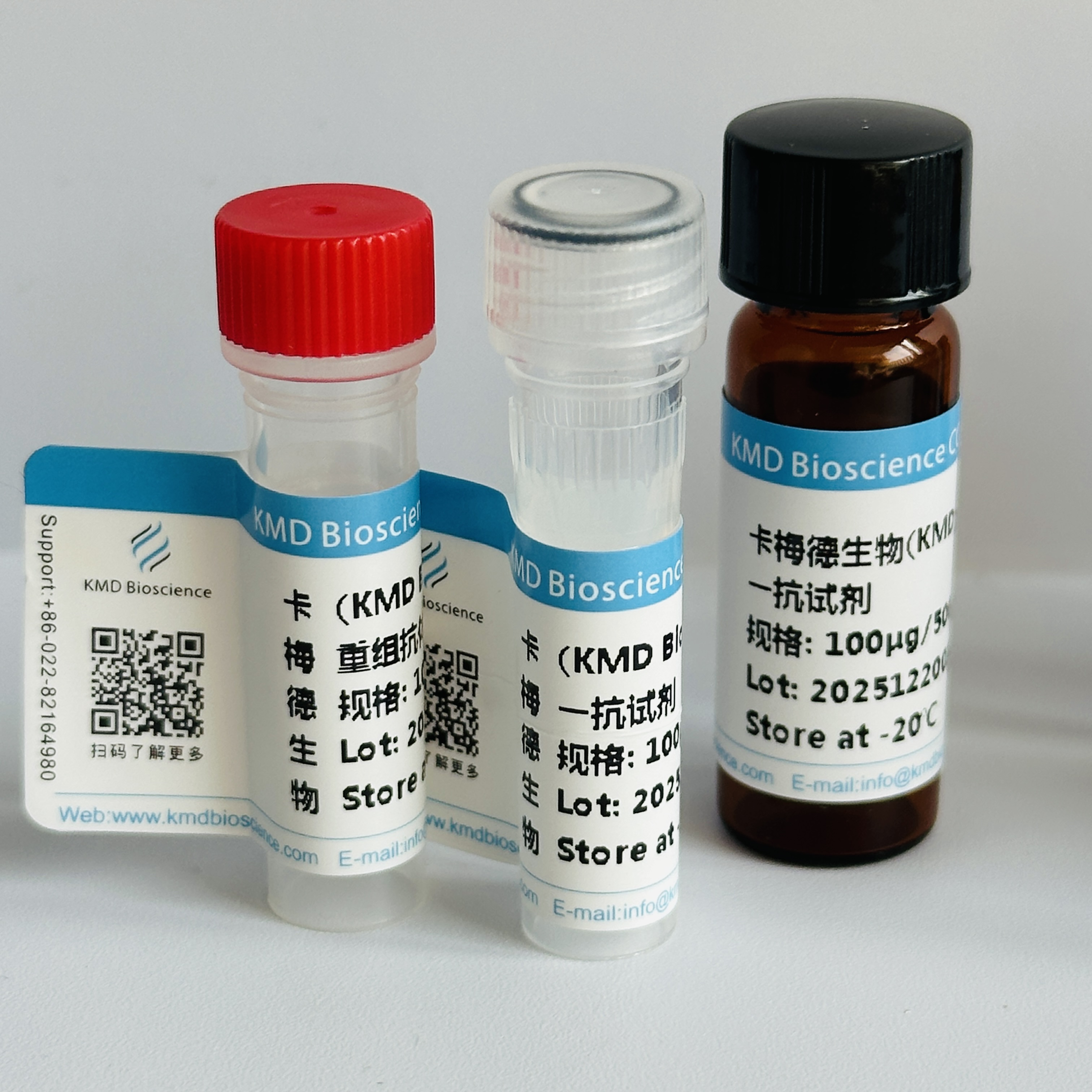
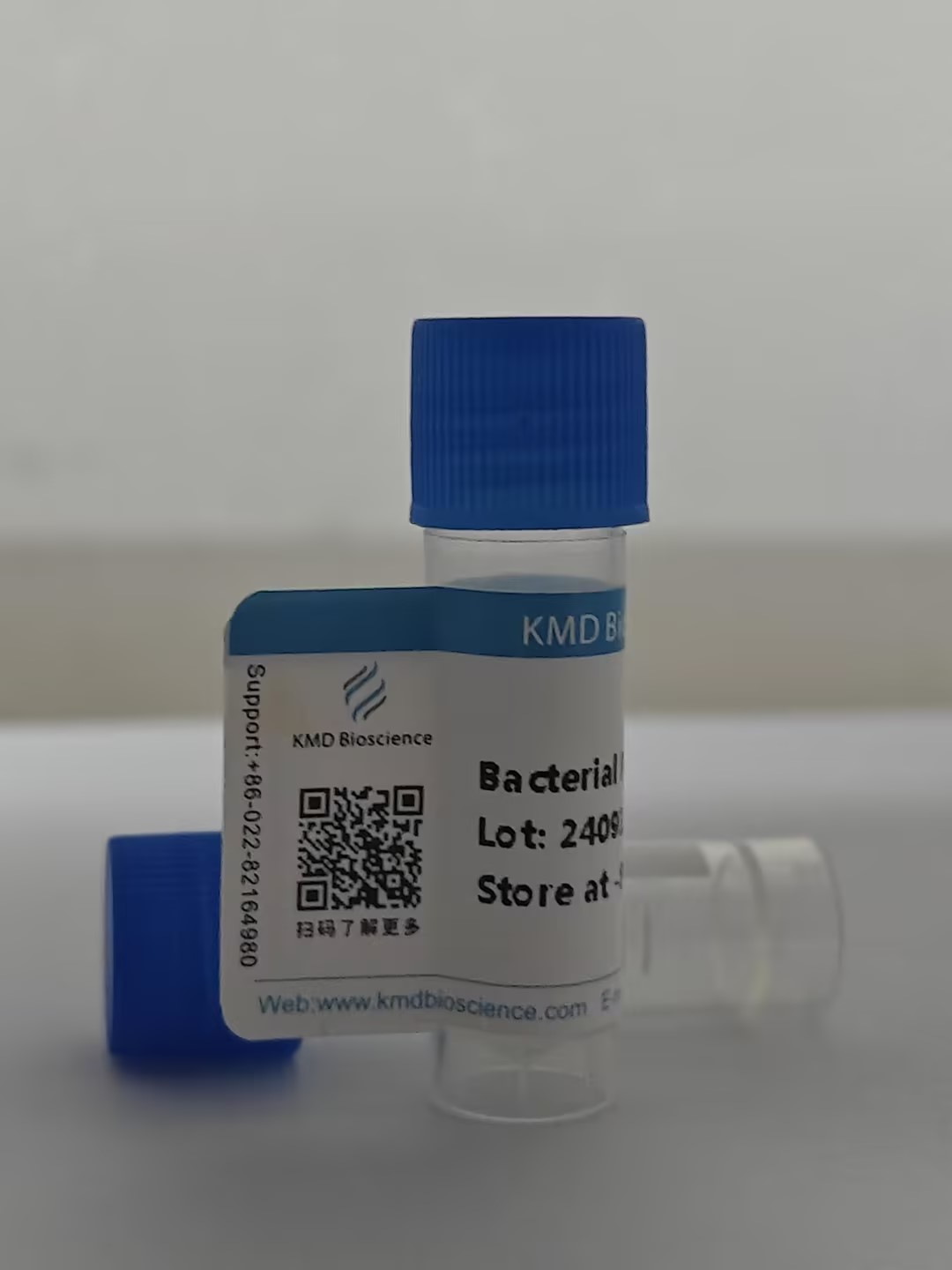
Recombinant Human TGF-β3 Protein
-
Product Number
KRP697
-
Alias
Transforming growth factor beta-3 proprotein, TGFB3
-
Specifications
- 100ug
- 500ug
- 1mg
KRP697
Transforming growth factor beta-3 proprotein, TGFB3
| Alias | Transforming growth factor beta-3 proprotein, TGFB3 |
| Catalog Number | KRP697 |
| Product Introduction | Recombinant human transforming growth factor - β 3 is a key regulatory factor involved in tissue repair and embryonic development, suitable for scar repair research, embryonic development models, and cartilage tissue engineering. |
| Molecular Name | TGF-β3 |
| Species | Human |
| Host | Sf9 Cells |
| Size | 100ug,500ug,1mg |
| Purity | >95%, determined by SDS-PAGE. |
| Concentration | Contact the sales manager to obtain the concentration of the latest batch. |
| Purification | Affinity Purification |
| Endotoxin | <0.1 EU/μg, determined by LAL method. |
| Background | Another member of the TGF-β family, with functions similar but also specific to TGF-β1. Studies suggest it plays an important role in embryonic development,wound healing,and immune regulation. |
| Application | WB, ELISA |
| Predicted Molecular Weight | 12.7 kDa |
| Reconstitution | It is recommended that the lyophilized human TGF-β3 protein be dissolved in 4 mM HCl at a concentration of 50-200 μg/ml for further dilution as the working concentration. |
| Storage Condition | Samples are stable for up to twelve months from date of receipt at -20℃ to -101℃. Avoid repeated freeze-thaw cycles. |
| Shipping Condition | This product is shipped on ice packs or dry ice. |
| Stability | Repeated freezing and thawing is not recommended. |
| Molecular Weight | 12 kDa |
| Uniprot ID | P10600 |
| References | 1. Barrio, M.C. et al. (2014) Cells Tissues Organs. [Epub ahead of print; PMID 24861080]. 2. Doetschman, T. et al. (2012) Genesis 50:59. 3. Mittl, P.R. et al. (1996) Protein Sci. 5:1261. 4. Sporn, M.B. (2006) Cytokine Growth Factor Rev. 17:3. 5. Wahl, S.M. et al. (2006) Immunol. Rev. 213:213. 6. Chang, H. et al. (2002) Endocr. Rev. 23:787. 7. Dunker, N. and K. Krieglstein (2000) Eur. J. Biochem. 267:6982. 8. Jin, J.Z. et al. (2014) Dev. Dyn. [Epub ahead of print; PMID 25104574]. 9. Tang, Q.O. et al. (2009) Expert Opin. Biol Ther. 9:689. 10. Derynck, R. et al. (1988) EMBO J. 7:3737. 11. Miyazono, K. et al. (1988) J. Biol. Chem. 263:6407. 12. Oklu, R. and R. Hesketh (2000) Biochem. J. 352 Pt 3:601. 13. Cui, X.M. and C.F. Shuler (2000) Int. J. Dev. Biol. 44:397. 14. de Caestecker, M. (2004) Cytokine Growth Factor Rev. 15:1. 15. Nakajima, A. et al. (2007) Dev. Dyn. 236:791. 16. Iwata, J. et al. (2012) J. Clin. Invest. 122:873. 17. Gatza, C.E. et al. (2010) Cell. Signal. 22:1163 |
| Function | Recombinant Human Transforming Growth Factor-β3 is a key regulatory factor involved in tissue repair and embryonic development. It is suitable for scar repair research, embryonic development models, and cartilage tissue engineering. |
| Product Declaration | This product is for research use only and must not be used directly on the human body or for injection. |
| Temperature Range | Store the product under sterile conditions after opening at -80℃ for 12 months. Store the lyophilized powder at -41℃. Avoid repeated freeze-thaw cycles. |
| Product Full Name | Recombinant Human TGF-β3 Protein |
| Target | TGF-β3 |
It has multiple, environment-dependent functions, including inhibition of cell proliferation, regulation of immunity, and strong induction of extracellular matrix production and mesenchymal differentiation.
Low concentrations of TGF-β1/β4 are the gold standard core factors for inducing mesenchymal stem cells to differentiate into chondrocytes. In addition, it is also used to induce pluripotent stem cells to differentiate into mesenchymal stem cells or regulatory T cells.



Service Account


 0
0