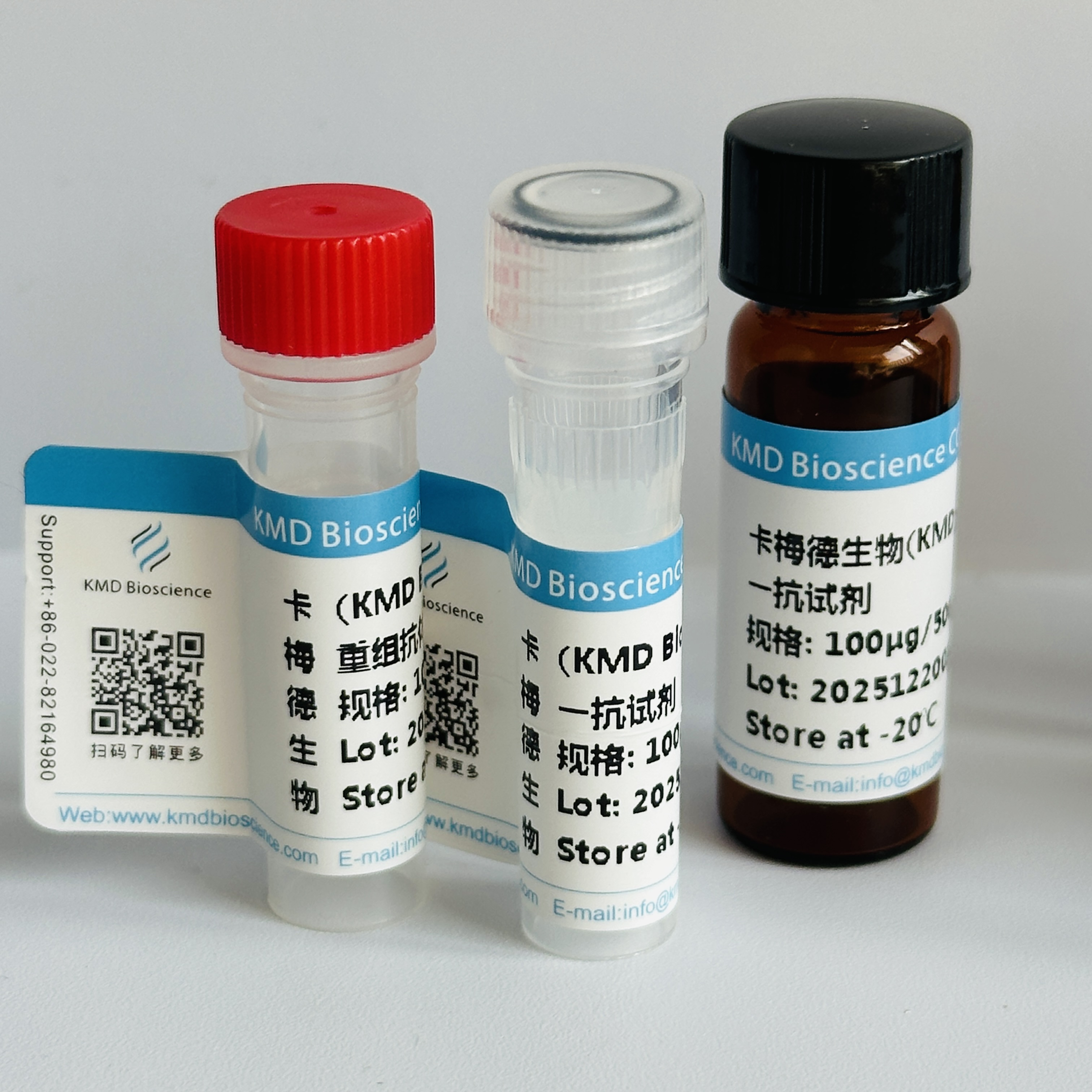
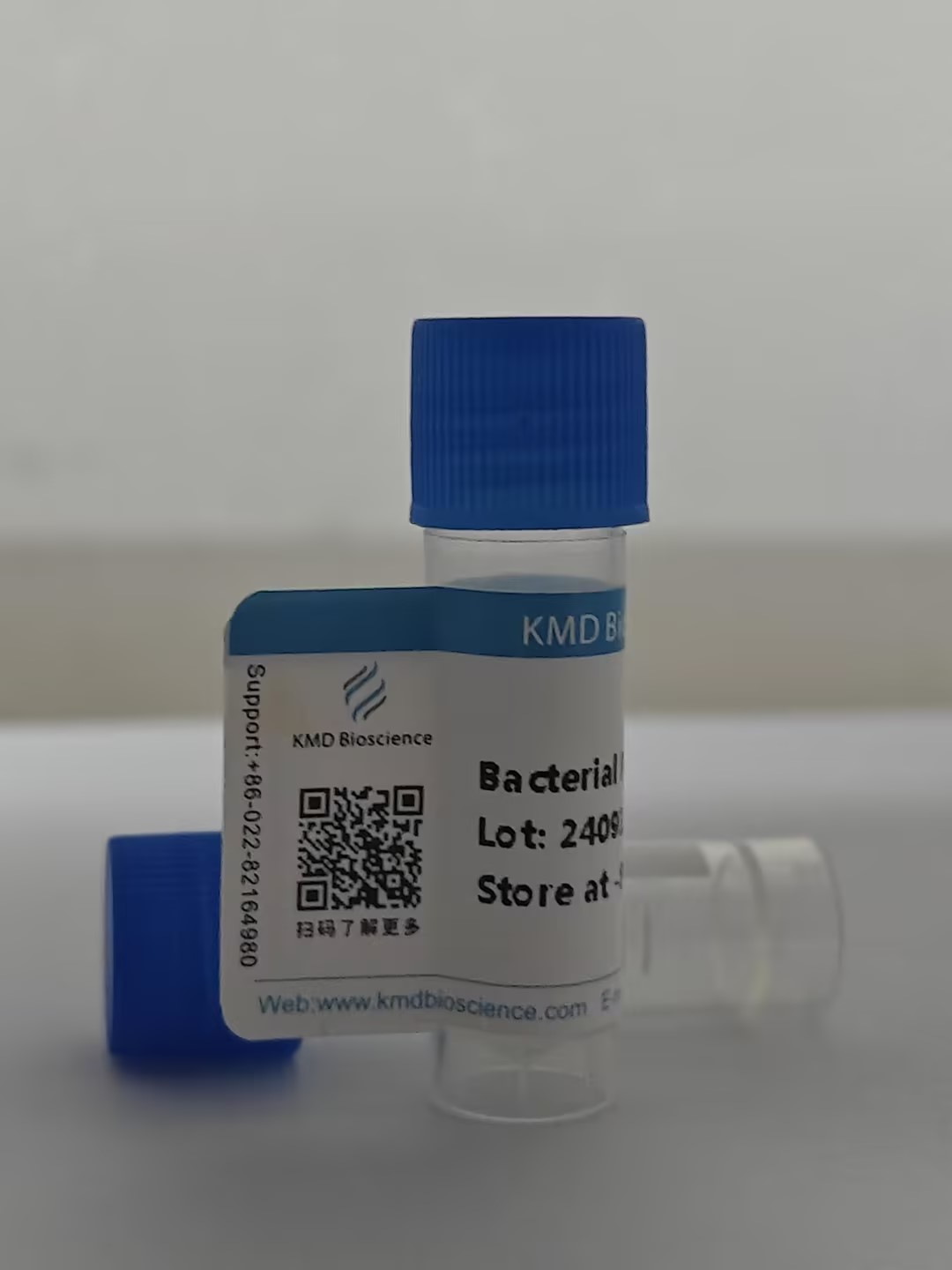
Human CD275 Protein, His Tag
-
Product Number
KMP2394
-
Alias
诱导性T细胞促刺激配体, B7 homolog 2, B7-H2
-
Specifications
- 50ug
- 100ug
- 200ug
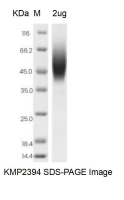
KMP2394
诱导性T细胞促刺激配体, B7 homolog 2, B7-H2
| Alias | 诱导性T细胞促刺激配体, B7 homolog 2, B7-H2 |
| Catalog Number | KMP2394 |
| Product Description | The Human CD275 Protein(KMP2394) is produced in HEK293 Cells and the target gene encoding Asp19-Ser258 is expressed with a 6His tag at the C-terminus. |
| Molecular Name | CD275 |
| Species | Human |
| Host | HEK293 Cells |
| Size | 50ug, 100ug, 200ug |
| Purity | >95% as determined by SDS-PAGE |
| Purification | Affinity purification |
| Endotoxin | <1.0 EU/ug determined by the LAL method |
| Formulation | 20mM PB, 150mM NaCl, 1mM EDTA, pH7.2 |
| Background | Inducible Co-Stimulator Ligand(ICOSLG) belongs to the immunoglobulin superfamily. ICOSLG contains Ig-like C2-type(immunoglobulin-like) domain and 1 Ig-like V-type(immunoglobulin-like) domain. ICOSLG acts as a costimulatory signal for T-cell proliferation and cytokine secretion, it also induces B-cell proliferation and differentiation into plasma cells. It could play an important role in mediating local tissue responses to inflammatory conditions, as well as in modulating the secondary immune response by co-stimulating memory T-cell function. ICOSLG is widely expressed lymph nodes, leukocytes and spleen, detected on activated monocytes and dendritic cells. |
| SDS-PAGE | |
| Predicted Molecular Weight | 27.51 kDa |
| Storage Condition | Aliquot and store at -20℃ to -80℃. Avoid repeated freezing and thawing cycles. |
| Shipping Condition | In general, the proteins are provided as lyophilized powder which are shipped at ambient temperature. They are shipped out in dry ice if supplied in liquid form. |
| Uniprot ID | O75144 |
| Function | Ligand for the T-cell-specific cell surface receptor ICOS. Acts as a costimulatory signal for T-cell proliferation and cytokine secretion; induces also B-cell proliferation and differentiation into plasma cells. Could play an important role in mediating local tissue responses to inflammatory conditions, as well as in modulating the secondary immune response by co-stimulating memory T-cell function (By similarity). |



Service Account


 0
0