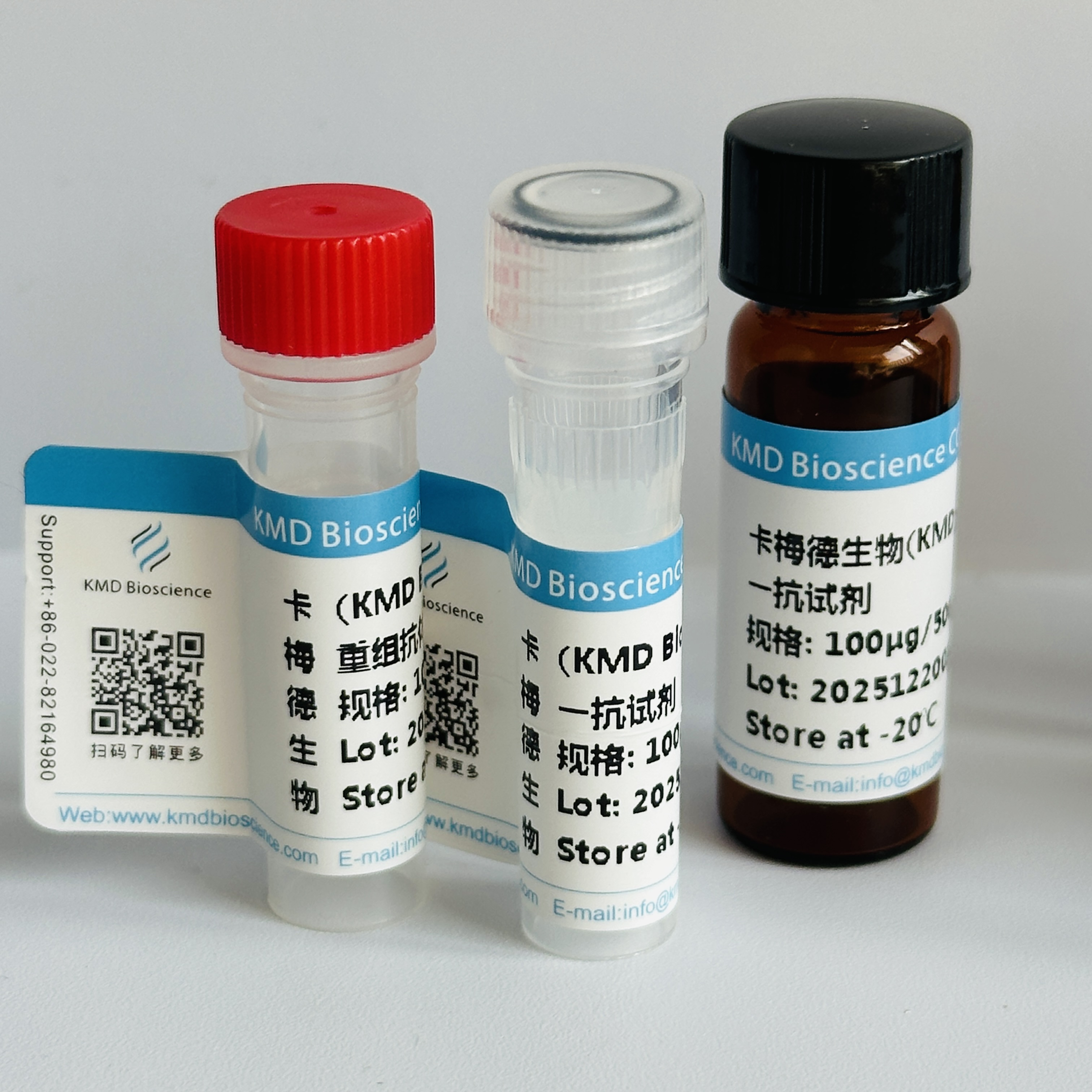
Human CD223 Protein, His Tag, Avi Tag
-
Product Number
KMP2247
-
Alias
淋巴细胞活化基因3, Lymphocyte activation gene 3 protein, LAG3
-
Specifications
- 50ug
- 100ug
- 200ug
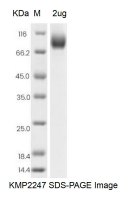
KMP2247
淋巴细胞活化基因3, Lymphocyte activation gene 3 protein, LAG3
| Alias | 淋巴细胞活化基因3, Lymphocyte activation gene 3 protein, LAG3 |
| Catalog Number | KMP2247 |
| Product Description | The Human CD233 Protein(KMP2247) is produced in HEK293 Cells and the target gene encoding Leu23-Leu450 is expressed with a 6His, Avi tag at the C-terminus. |
| Molecular Name | CD223 |
| Species | Human |
| Host | HEK293 Cells |
| Size | 50ug, 100ug, 200ug |
| Purity | >95% as determined by SDS-PAGE |
| Purification | Affinity purification |
| Endotoxin | <1.0 EU/ug determined by the LAL method |
| Formulation | PBS, pH7.4 |
| Background | Human Lymphocyte activation gene 3 protein( LAG3) is a member of immunoglobulin(Ig) superfamily. LAG3 contains 4 extracellular Ig-like domains. The LAG3 gene contains 8 exons. LAG3 is involved in lymphocyte activation and can bind to HLA class-II antigens. It is selectively expressed in activated T and NK cells. LAG3 has a negative regulatory function in T cells and acts as as a new marker of T cell induced B cell activation. As a soluble molecule, LAG3 activates antigen-presenting cells through MHC class II signaling. It can lead to increased antigen-specific T-cell responses in vivo. LAG-3 has higher affinity to MHC class II than CD4. |
| SDS-PAGE | |
| Predicted Molecular Weight | 47.02 kDa |
| Storage Condition | Aliquot and store at -20℃ to -80℃. Avoid repeated freezing and thawing cycles. |
| Shipping Condition | In general, the proteins are provided as lyophilized powder which are shipped at ambient temperature. They are shipped out in dry ice if supplied in liquid form. |
| Uniprot ID | P18627 |
| References | 1.J. Immunol. 184:6545-6551 (2010) 2.Eur. J. Immunol. 24:3216-3221 (1994) 3.Eur. J. Immunol. 26:1180-1186 (1996) |
| Function | Lymphocyte activation gene 3 protein: Inhibitory receptor on antigen activated T-cells (PubMed:7805750, PubMed:8647185, PubMed:20421648). Delivers inhibitory signals upon binding to ligands, such as FGL1 (By similarity). FGL1 constitutes a major ligand of LAG3 and is responsible for LAG3 T-cell inhibitory function (By similarity). Following TCR engagement, LAG3 associates with CD3-TCR in the immunological synapse and directly inhibits T-cell activation (By similarity). May inhibit antigen-specific T-cell activation in synergy with PDCD1/PD-1, possibly by acting as a coreceptor for PDCD1/PD-1 (By similarity). Negatively regulates the proliferation, activation, effector function and homeostasis of both CD8+ and CD4+ T-cells (PubMed:7805750, PubMed:8647185, PubMed:20421648). Also mediates immune tolerance: constitutively expressed on a subset of regulatory T-cells (Tregs) and contributes to their suppressive function (By similarity). Also acts as a negative regulator of plasmacytoid dendritic cell (pDCs) activation (By similarity). Binds MHC class II (MHC-II); the precise role of MHC-II-binding is however unclear (PubMed:8647185). |



Service Account


 0
0