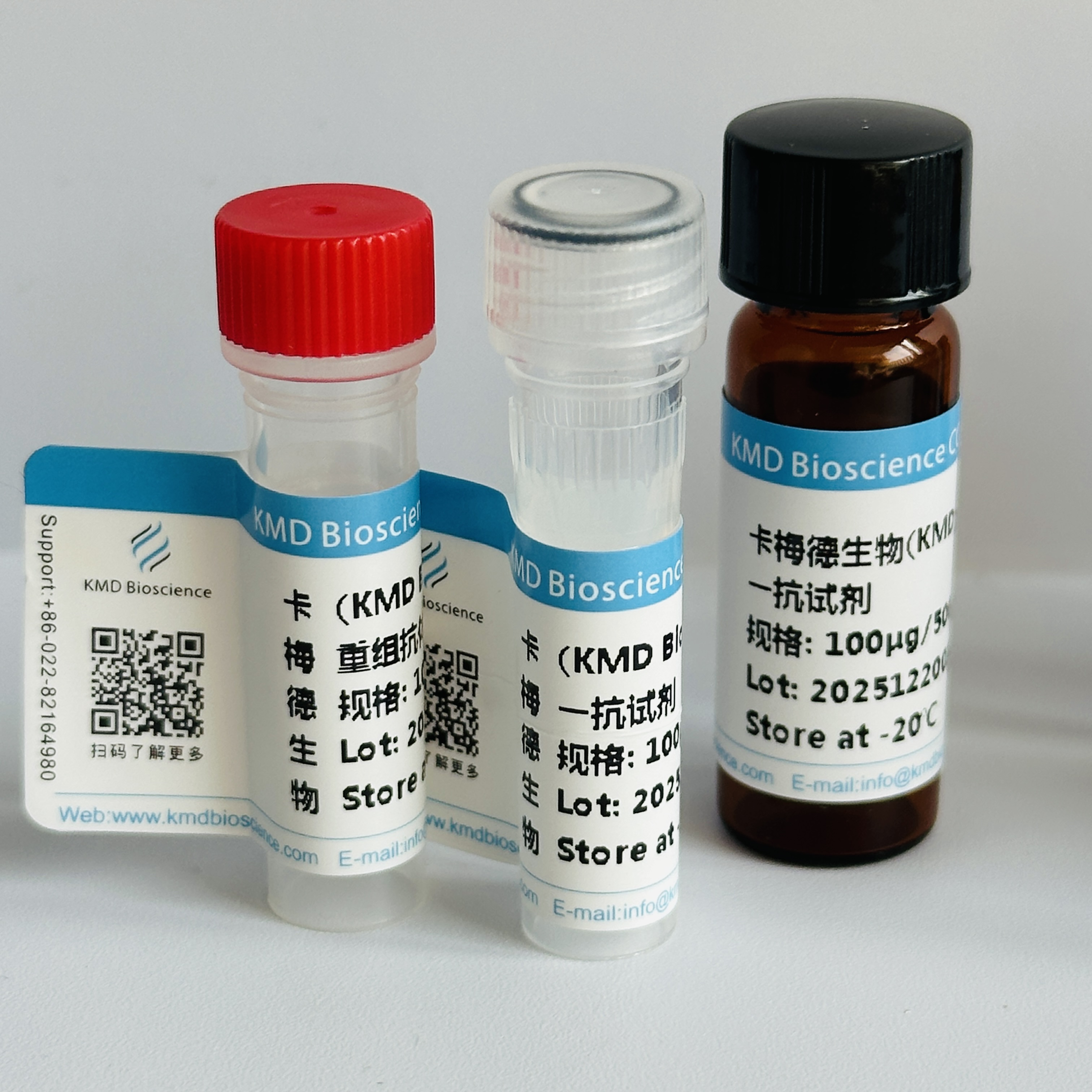
Rhesus CXCL9 Protein
-
Product Number
KMP4303
-
Alias
CXC 趋化因子配体9, CXCL9 Protein, Rhesus CXCL9 Protein
-
Specifications
- 50ug
- 100ug
- 200ug

KMP4303
CXC 趋化因子配体9, CXCL9 Protein, Rhesus CXCL9 Protein
| Alias | CXC 趋化因子配体9, CXCL9 Protein, Rhesus CXCL9 Protein |
| Catalog Number | KMP4303 |
| Product Description | The Rhesus CXCL9 Protein(KMP4303) is produced in E. coli. A DNA sequence encoding the Rhesus CXCL9 (NP_001028108.1) (Thr23-Thr125) is expressed and purified with an initial Met. |
| Molecular Name | CXCL9 |
| Species | Rhesus |
| Host | E. coli |
| Size | 50ug, 100ug, 200ug |
| Purity | >95% as determined by SDS-PAGE |
| Purification | Affinity purification |
| Endotoxin | <1.0 EU/ug determined by the LAL method |
| Formulation | PBS, pH7.4 |
| Background | Chemokine (C-X-C motif) ligand 9 (CXCL9), also known as Monokine induced by gamma interferon (MIG), is a small cytokine belonging to the CXC chemokine family. The function of this chemokine has not been specifically defined; however, it is thought to be involved in T cell trafficking. CXCL9/MIG functions as one of the three ligands of chemokine receptor CXCR3 which is a G protein-coupled receptor found predominantly on T cells. CXCL9/MIG, together with CXCL10 and CXCL11, may activate CXCR3 by binding to it. CXCL9 serves as a cytokine that affects the growth, movement, or activation state of cells that participate in immune and inflammatory response. It has been observed that tumour endothelial cells secrete high levels of CXCL9 in all, and CXCL10 in most melanoma metastases. Experiment data represent novel mechanisms by which tumour cells in melanoma metastases might use the chemokine-expressing endothelium to leave the tumour and eventually to form additional metastases at distinct sites. Experiment results also improved that CXCL9/MIG plays an important role in CD4+ T lymphocyte recruitment and development of CAV, MOMA-2+ macrophages are the predominant recipient-derived source of CXCL9/MIG, and recipient CD4 lymphocytes are necessary for sustained CXCL9/MIG production and CAV development in this model. Neutralization of the chemokine CXCL9/MIG may have therapeutic potential for the treatment of chronic rejection after heart transplantation. |
| Storage Condition | Aliquot and store at -20℃ to -80℃. Avoid repeated freezing and thawing cycles. |
| Shipping Condition | In general, recombinant proteins are provided as lyophilized powder which are shipped at ambient temperature. If supplied as liquid, the proteins will be shipped with dry ice. |
| Molecular Weight | 11.9 kDa |



Service Account


 0
0