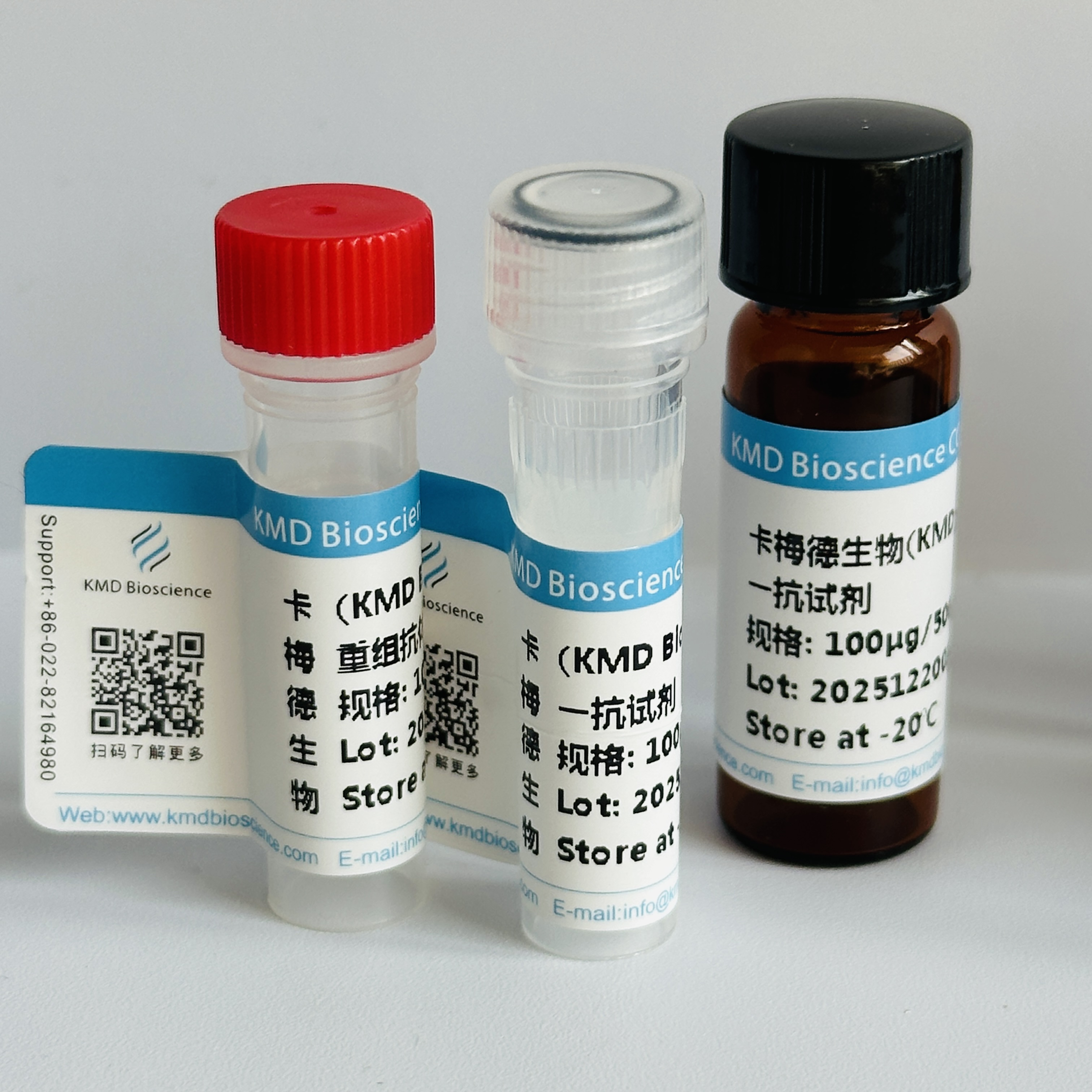
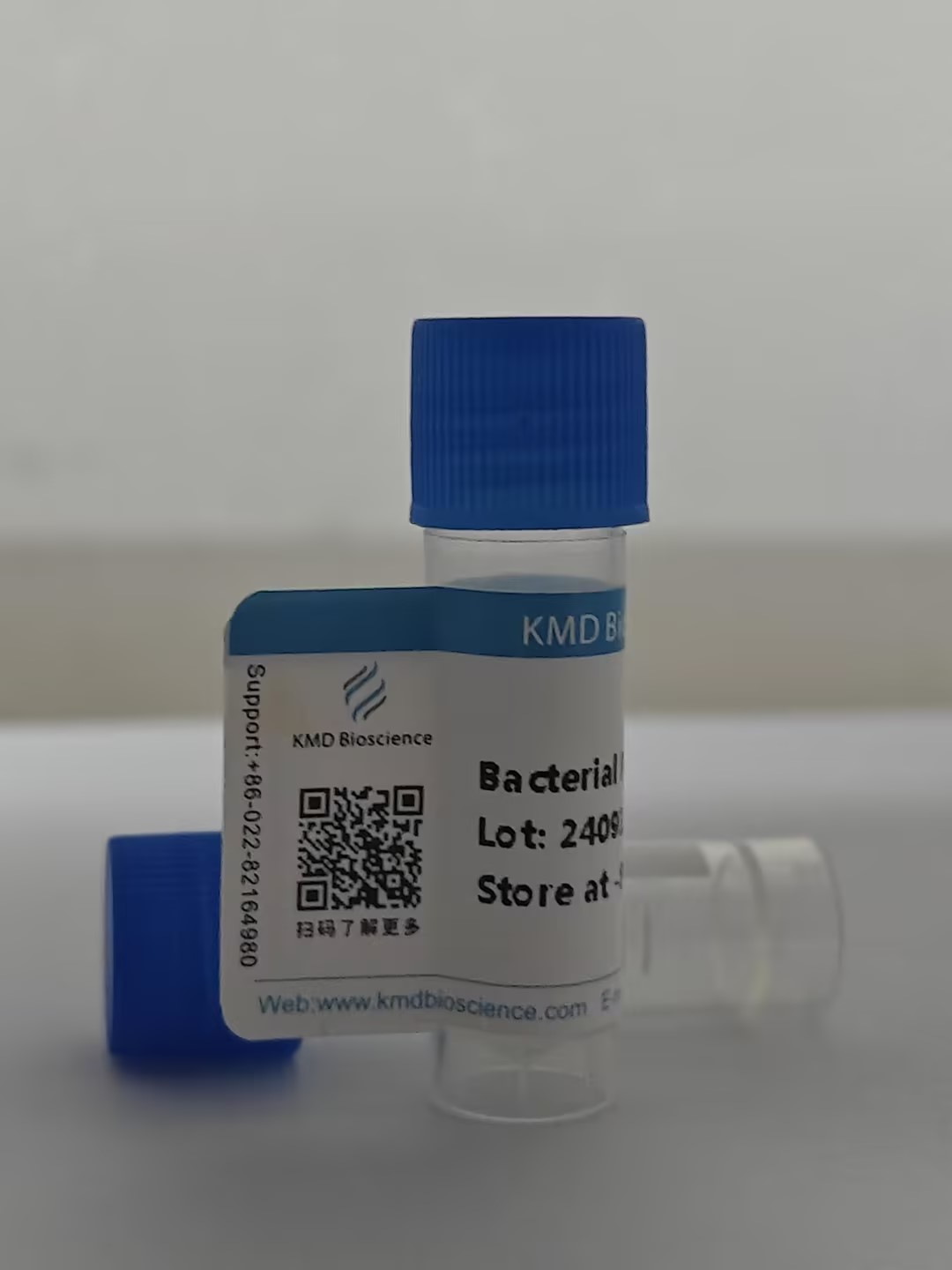
Mouse GAS6 Protein, His Tag
-
Product Number
KMP4115
-
Alias
生长停滞特异性蛋白6, GAS6 Protein, Mouse GAS6 Protein, His Tag
-
Specifications
- 50ug
- 100ug
- 200ug
KMP4115
生长停滞特异性蛋白6, GAS6 Protein, Mouse GAS6 Protein, His Tag
| Alias | 生长停滞特异性蛋白6, GAS6 Protein, Mouse GAS6 Protein, His Tag |
| Catalog Number | KMP4115 |
| Product Description | The Mouse GAS6 Protein(KMP4115) is produced in HEK293 Cells. A DNA sequence encoding the Mouse GAS6 (NP_062394.2) (Met1-Pro674) is expressed with a polyhistidine tag at the C-terminus. |
| Molecular Name | GAS6 |
| Species | Mouse |
| Host | HEK293 Cells |
| Size | 50ug, 100ug, 200ug |
| Purity | >95% as determined by SDS-PAGE |
| Purification | Affinity purification |
| Endotoxin | <1.0 EU/ug determined by the LAL method |
| Formulation | PBS, pH7.4 |
| Background | The growth arrest-specific 6 gene (GAS6) is a member of the family of plasma vitamin K-dependent proteins, which are able to bind to phospholipids using an N-terminal gamma-carboxyglutamic acid domain. GAS6 is a vitamin K-dependent protein, plays a role in the survival, proliferation, migration, differentiation, adhesion, and apoptosis of cells. The growth arrest-specific 6 (GAS6) has been implicated in systemic inflammation and coagulation. Growth arrest-specific 6 (GAS6), plays a role in tumor progression by regulating growth in many cancers. GAS6, expressed by osteoblasts in the bone marrow, plays a significant role in the regulation of PCa cell survival during chemotherapy, which will have important implications for targeting metastatic disease. The GAS6/TYRO3-AXL-MERTK (TAM) signaling pathway is essential for full and sustained platelet activation, as well as thrombus stabilization. Inhibition of this pathway decreases platelet aggregation, shape change, clot retraction, aggregate formation under flow conditions, and surface expression of activation markers. It had been show that GAS6 signaling regulates invasion, proliferation, chemotherapy-induced apoptosis of prostate cancer (PCa) cells, and GAS6 secreted from osteoblasts in the bone marrow environment plays a critical role in establishing prostate tumor cell dormancy. |
| Storage Condition | Aliquot and store at -20℃ to -80℃. Avoid repeated freezing and thawing cycles. |
| Shipping Condition | In general, recombinant proteins are provided as lyophilized powder which are shipped at ambient temperature. If supplied as liquid, the proteins will be shipped with dry ice. |
| Molecular Weight | 73.5 kDa |



Service Account


 0
0