


A Brief Introduction to the Influenza Virus
- 2026-07-09
- 283
I. Types and Nomenclature
The influenza virus, commonly known as the flu virus, is an RNA virus that causes influenza in humans and animals. It causes acute upper respiratory tract infections and spreads rapidly through the air, leading to periodic pandemics around the world. In elderly people, children, and patients with compromised immune systems, the influenza virus can cause more severe symptoms, such as pneumonia or cardiopulmonary failure.
The virus was first discovered in 1933 by the British scientist Wilson Smith, who designated it H1N1.
“H” stands for hemagglutinin; “N” stands for neuraminidase. The numbers represent different subtypes.
Types and Nomenclature
Based on the hosts they infect, influenza viruses can be classified into groups such as human influenza viruses, swine influenza viruses, equine influenza viruses, and avian influenza viruses. Among these, influenza viruses can be divided into four categories based on the antigenicity of their nucleoprotein:
Influenza A virus, also known as Type A influenza virus, is widely distributed among animals and can cause global influenza pandemics;
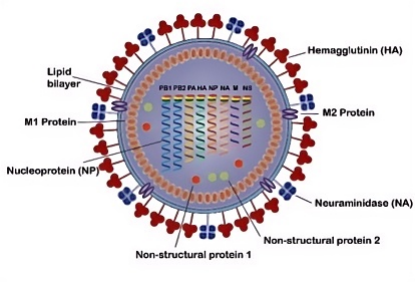
Figure 1: Structure of the influenza A virus
The influenza B virus, also known as the B-type influenza virus, is found only in humans and seals. It often causes localized outbreaks of influenza but does not lead to global influenza pandemics;
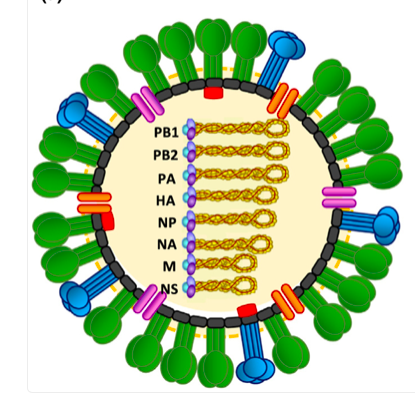
Figure 2: Structure of the influenza B virus
Influenza C virus, also known as the C-type influenza virus, is found only in humans and pigs. It occurs sporadically and generally does not cause epidemics.
Influenza D virus, also known as the D-type influenza virus, is found only in pigs and cattle; however, there have been no reported cases of human infection.
Morphology and Structure
Influenza viruses are spherical in shape, although newly isolated strains are often filamentous, with diameters ranging from 80 to 120 nm; filamentous influenza viruses can reach lengths of up to 400 nm.
From the outside in, the structure of an influenza virus can be divided into three parts: the envelope, the matrix proteins, and the core.
II. Morphology and Structure
Core
The viral core contains the genetic material that stores viral information, as well as the enzymes necessary for replicating that information. The genetic material of the influenza virus is single-stranded negative-sense RNA, abbreviated as ss-RNA. The ss-RNA binds to nucleoprotein (NP) and is coiled into ribonucleoprotein (RNP) complexes, which exist in a highly dense form. In addition to the ribonucleoprotein complex, there is also RNA polymerase, which is responsible for RNA transcription.
Matrix Protein
The matrix protein forms the skeletal framework of the viral envelope; in fact, this framework consists not only of the matrix protein (M1) but also of the membrane protein (M2). The matrix protein binds tightly to the outermost envelope of the virus, serving to protect the viral core and maintain the virus’s spatial structure.
Once the influenza virus has completed its replication within the host cell, the matrix protein is distributed on the inner surface of the host cell membrane. The formed viral core capsid can recognize the regions of the host cell membrane containing the matrix protein, bind to them to form a viral structure, and protrude outward through budding to release mature viruses.

Figure 3: Matrix Proteins
Envelope
The envelope is a phospholipid bilayer membrane that surrounds the matrix protein. This membrane originates from the host cell membrane. Mature influenza viruses bud from the host cell, envelop themselves in the host cell membrane, and then detach from the cell to infect their next target.
In addition to phospholipid molecules, the envelope contains two very important glycoproteins: hemagglutinin and neuraminidase. These two types of proteins protrude from the surface of the virus, measuring approximately 10–40 nm in length, and are referred to as spikes. Typically, the surface of an influenza virus features 500 hemagglutinin spikes and 100 neuraminidase spikes. In influenza A viruses, the antigenic properties of hemagglutinin and neuraminidase vary, which serves as the basis for distinguishing between viral subtypes.
Hemagglutinin (HA) has a columnar shape and can bind to receptors on the surface of red blood cells in humans, birds, pigs, guinea pigs, and other animals, causing hemagglutination; hence, it is called hemagglutinin. Upon proteolytic cleavage, the hemagglutinin protein is divided into a light chain and a heavy chain; the latter binds to sialic acid receptors on the host cell membrane, while the former facilitates the fusion of the viral envelope with the host cell membrane. Hemagglutinin plays a crucial role in the process of viral entry into host cells. Hemagglutinin is immunogenic, and anti-hemagglutinin antibodies can neutralize the influenza virus.

Figure 4: Hemagglutinin (HA)
Neuraminidase (NA) is a mushroom-shaped glycoprotein tetramer with the ability to hydrolyze sialic acid. After mature influenza viruses bud from host cells, the hemagglutinin on the viral surface remains bound to the host cell membrane via sialic acid; neuraminidase must hydrolyze the sialic acid to sever the final link between the virus and the host cell. Consequently, neuraminidase has become a target for influenza treatments, and oseltamivir—designed to target this enzyme—is one of the most well-known antiviral drugs for influenza.
III. Pathogenicity, Diagnosis, and Prevention and Control
Influenza viruses primarily target the epithelial cells of the respiratory tract mucosa; in rare cases where they infect the intestinal mucosa, they can cause gastrointestinal influenza.
Influenza virus infection leads to degeneration, necrosis, and even sloughing of host cells, resulting in mucosal congestion, edema, and increased secretions. This causes nasal congestion, runny nose, sore throat, dry cough, and other symptoms of upper respiratory tract infection. When the virus spreads to the lower respiratory tract, it may cause bronchiolitis and interstitial pneumonia.
Viral infection also induces the expression of interferon and modulates cellular immunity, triggering certain autoimmune reactions, including high fever, headache, and pain in the gastrocnemius and other muscles throughout the body. Toxin-like products of viral metabolism and substances released during cell necrosis can also cause and exacerbate these reactions.
Since influenza virus infection reduces the ability of respiratory mucosal epithelial cells to clear and adhere to foreign particles, it significantly weakens the body’s ability to defend against respiratory infections. Consequently, influenza often leads to secondary infections, and influenza-associated pneumonia is one of the leading causes of death from the disease.
Prevention and control of the influenza virus involve, on the one hand, strengthening surveillance of viral mutations to make as accurate forecasts as possible, thereby enabling targeted vaccination; on the other hand, interrupting the transmission of the virus within the population. Since the influenza virus spreads via respiratory droplets, early detection of patients and the use of chemical disinfectants for fumigation in public places can effectively suppress its transmission; For patients with influenza, medications such as interferon, amantadine, and oseltamivir can be used for treatment. Interferon is a cytokine that inhibits viral replication; amantadine acts on the influenza virus’s membrane proteins and hemagglutinin to prevent the virus from entering host cells; and oseltamivir inhibits neuraminidase activity, preventing mature viruses from leaving host cells. There are also indications that traditional Chinese medicines such as Banlangen and Daqingye may have antiviral activity against the influenza virus, but this has not been confirmed by experimental evidence. In addition to treatments targeting the influenza virus itself, most treatments are aimed at alleviating the symptoms caused by the virus, including nonsteroidal anti-inflammatory drugs (NSAIDs). While these medications can relieve flu symptoms, they do not shorten the duration of the illness.
- Influenza virus
- core matrix protein
- envelope
- viral proteins

- Protein Platform
- Protein Expression Services
- Protein Modification & Detection Services
- Protein Interaction Services
- Protein Purification Service
- Antibody Discovery Platform
- VHH Antibody Platform
- Phage Display Platform
- Antibody Humanization Platform
- Single B Cell Screening Platform
- Antibody Expression & Validation Platform
- Peptide Library Platform
- Custom Antibody Platform
- Innovative Drug Discovery Platform
- Product Center
- Proteins
- Antibodies
- Raw Materials Reagents
- Small Molecule Reagents
- Peptide Products
- Nanoparticle Products
- Contact Us
- Phone:400-621-6806
- Mobile:13110936064(WeC
- E-mail:[email protected]
- Address:Room 108, Building 10, No. 6 Hechang Road, Wuqing Development Zone, Tianjin City
-

WeChat
-

Service Account
-
 400-621-6806
 -
 3599163699
 -
 Monday to Friday 9:00-18:00
 -

-
 0
0
-
