


Introduction to Plant Genetic Transformation
- 2026-07-10
- 482
Plant genetic transformation refers to the technology of using plant organs, tissues, cells, or protoplasts as recipients, applying recombinant DNA techniques to introduce exogenous genes into the plant genome, thereby obtaining transgenic plants. Currently, the most widely used methods for plant genetic transformation are primarily Agrobacterium-mediated transformation and direct DNA transfer methods.
I.Common Methods of Plant Genetic Transformation
1. Agrobacterium-Mediated Transformation
Agrobacterium-mediated transformation is currently a standard method for gene transfer in dicotyledonous plants. It utilizes the T-DNA region from the Ti plasmid ofAgrobacterium tumefaciens or the Ri plasmid ofAgrobacterium rhizogenes. During the infection process in which Agrobacterium induces tumor formation in plants, the T-DNA can be transferred into plant cells and integrated into the chromosomal DNA. The transfer of foreign genes from Agrobacterium to the plant nuclear genome represents a highly efficient transformation approach. This method is currently the most extensively studied, best understood in terms of mechanism, and technically mature genetic transformation pathway. Three common techniques involving Agrobacterium for plant genetic transformation include whole-plant infection, leaf disc transformation, and protoplast transformation.
1.1 Whole-Plant Infection: This method typically uses seedling or tissue culture plantlets as explants. Wounds are created on the intact plant, and Agrobacterium is inoculated onto the wounded sites or injected into the plant tissues using a syringe to facilitate infection and transformation. This approach achieves a high transformation efficiency while bypassing the tissue culture process, making it a viable alternative for plant species that are difficult to regenerate. A notable limitation is that transformed cells are often mixed with non-transformed cells, making selection challenging.
1.2 Leaf Disc Transformation: The leaf disc transformation method expands the range of explants suitable for Agrobacterium-mediated foreign gene delivery. It allows the direct use of plant tissues such as cotyledons, stems, buds, hypocotyls, immature embryos, and even mature seeds for transformation. This technique is a simple and effective approach widely used in dicotyledonous plants.
1.3 Protoplast Transformation: Protoplast transformation introduces foreign genes into plant cells through fusion or endocytosis with plant protoplasts. A key advantage of this method is that the resulting transformants are generally non-chimeric. Using this approach, successful transformations have been achieved in various species within the genusNicotiana, as well as in petunia, carrot, and black nightshade, leading to the generation of transgenic plants.
2. Direct DNA Transfer Methods
Direct DNA transfer refers to techniques that utilize the biological characteristics of plant cells to introduce exogenous genes into recipient plant cells through physical or chemical means. To overcome the host limitations associated with vector-based methods, various direct gene transfer technologies have been developed, including gene gun (biolistics), electroporation, pollen tube pathway, microinjection, and polyethylene glycol (PEG)-mediated methods. These approaches are widely employed for genetic transformation in monocotyledonous plants as well as some dicotyledonous species.
II. Comparison of Advantages and Disadvantages of Transformation Methods
Agrobacterium-mediated Transformation | Direct DNA transfer method | |
advantage | High conversion efficiency, simple operation, low cost, low gene silencing rate, and the majority of integrated foreign genes are single copies, enabling directed expression. | Not restricted by the genotype of the host cell |
Disadvantages | Host cell genotype and plant material limitations | When introducing exogenous genes, issues such as high copy numbers and low transformation frequency arise. |
III. Critical Factors for Successful Experimentation
The successful acquisition of transgenic plants depends on the sensitivity of the starting material to Agrobacterium, the ability to select newly formed tissues from transformed cells, and the regenerative potential of the selected tissues. The sensitivity of explants to Agrobacterium is determined by various factors, with the two most critical being:
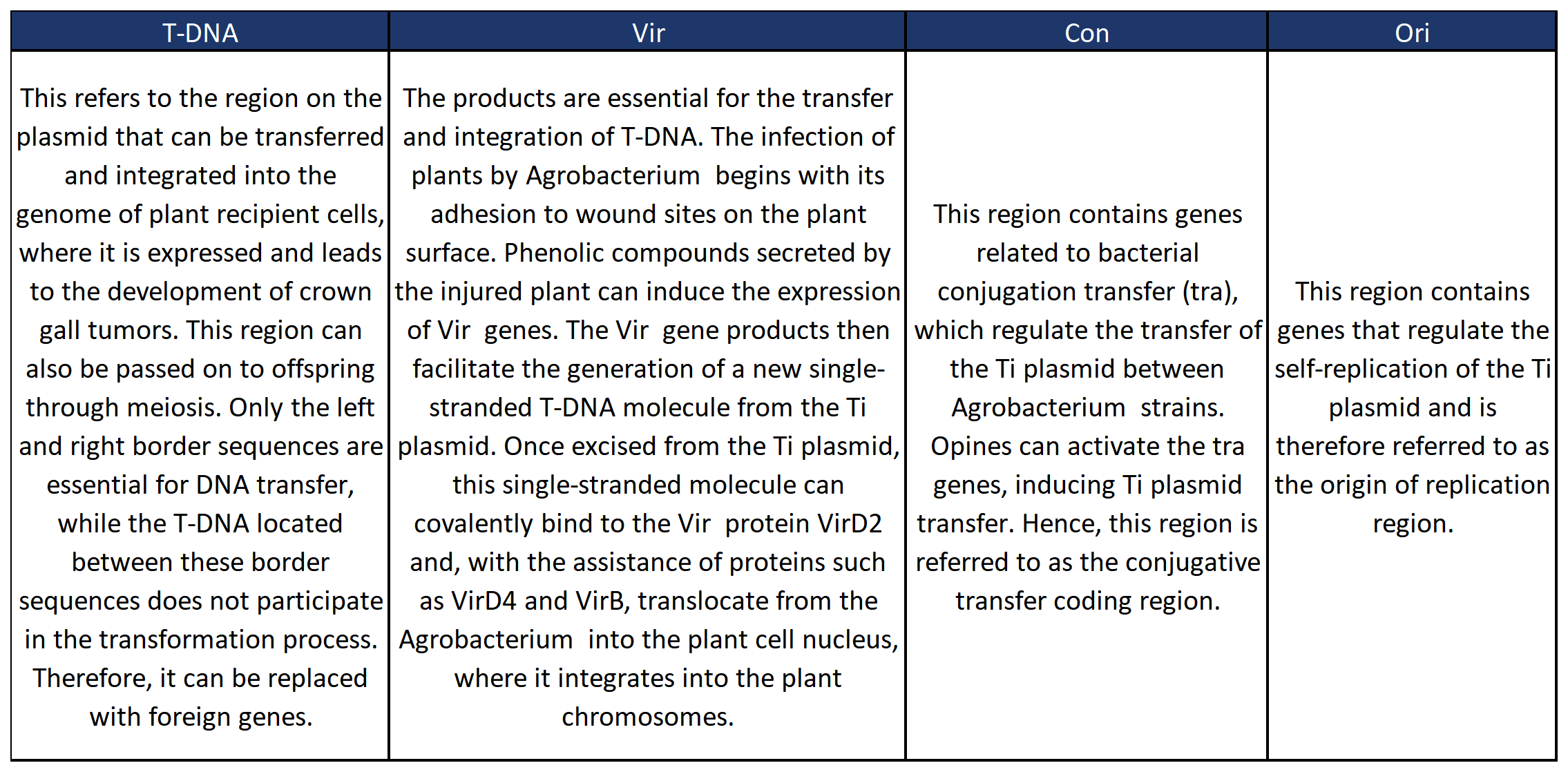
(1) The explant must release compounds capable of inducing the vir genes of Agrobacterium. The vir genes, located on the Ti plasmid of Agrobacterium, contain the information necessary to excise the T-DNA and transfer it as a single-stranded molecule from the bacteria into the plant cell and nucleus.
(2) The T-DNA strand must be capable of stably integrating into the plant genome. Sensitivity to Agrobacterium is generally not a limiting issue for most dicotyledonous plants.
IV. Experimental Procedure
1.Acquisition of the Target Gene: The target gene is excised using restriction enzymes.
2.Construction of the Gene Expression Vector: The target gene is ligated into a vector (most commonly a plasmid) using DNA ligase.
3.Introduction of the Target Gene into Host Cells: The recombinant plasmid containing the target gene is introduced into Agrobacterium (using Agrobacterium as the host cell).
4.Detection and Verification of the Target Gene: Verification is performed using methods such as DNA molecular hybridization, molecular hybridization, antigen-antibody hybridization, or phenotypic analysis at the organismal level.
5.Integration and Phenotypic Validation: Finally, the successfully transformed cells are used to regenerate whole plants, followed by phenotypic validation at the organismal level.
V. Ti Plasmid Vector System
KMD Bioscience boasts a professional technical team with years of experience in plant genetic transformation. Our plant genetic transformation platform features efficient experimental workflows, comprehensive pre- and post-sales technical support, and a well-equipped molecular biology laboratory. Plant genetic transformation is a technical system for establishing transgenic plants by introducing exogenous genes into plant cells through various methods. Currently, widely used transformation techniques include gene gun bombardment, Agrobacterium-mediated transformation, virus-mediated transformation, and electroporation. This approach to plant modification is particularly advantageous for studying the functions of target genes in traits such as salt-alkali tolerance, drought resistance, cold resistance, and disease resistance. Our scientists can provide one-on-one personalized protocol design tailored to clients' specific needs, offering both transient and stable transformation services across a variety of plant species to meet diverse research and application requirements.
- Genetic
- GeneticS
- Agrobacterium-Mediated Transformation
- Direct DNA Transfer Methods

- Protein Platform
- Protein Expression Services
- Protein Modification & Detection Services
- Protein Interaction Services
- Protein Purification Service
- Antibody Discovery Platform
- VHH Antibody Platform
- Phage Display Platform
- Antibody Humanization Platform
- Single B Cell Screening Platform
- Antibody Expression & Validation Platform
- Peptide Library Platform
- Custom Antibody Platform
- Innovative Drug Discovery Platform
- Product Center
- Proteins
- Antibodies
- Raw Materials Reagents
- Small Molecule Reagents
- Peptide Products
- Nanoparticle Products
- Contact Us
- Phone:400-621-6806
- Mobile:13110936064(WeC
- E-mail:[email protected]
- Address:Room 108, Building 10, No. 6 Hechang Road, Wuqing Development Zone, Tianjin City
-

WeChat
-

Service Account
-
 400-621-6806
 -
 3599163699
 -
 Monday to Friday 9:00-18:00
 -

-
 0
0
-
