


VHH from camelids or IgNAR from cartilaginous fish are currently the smallest antibodies, with a size of approximately 15 kDa. They offer advantages including small size, ease of production, high yield during preparation, excellent solubility, and strong stability. VHH exhibits low immunogenicity and broad tissue distribution within the body. It plays a significant role in disease diagnosis, therapy, and drug delivery. The diagnostic and therapeutic applications of VHH are not only widely used in human diseases but also extend to the diagnosis and treatment of animal diseases in livestock and aquaculture industries. Due to its small size, high stability and solubility, and maintained high binding affinity for its target antigen, VHH causes very low side effects when used as a drug.
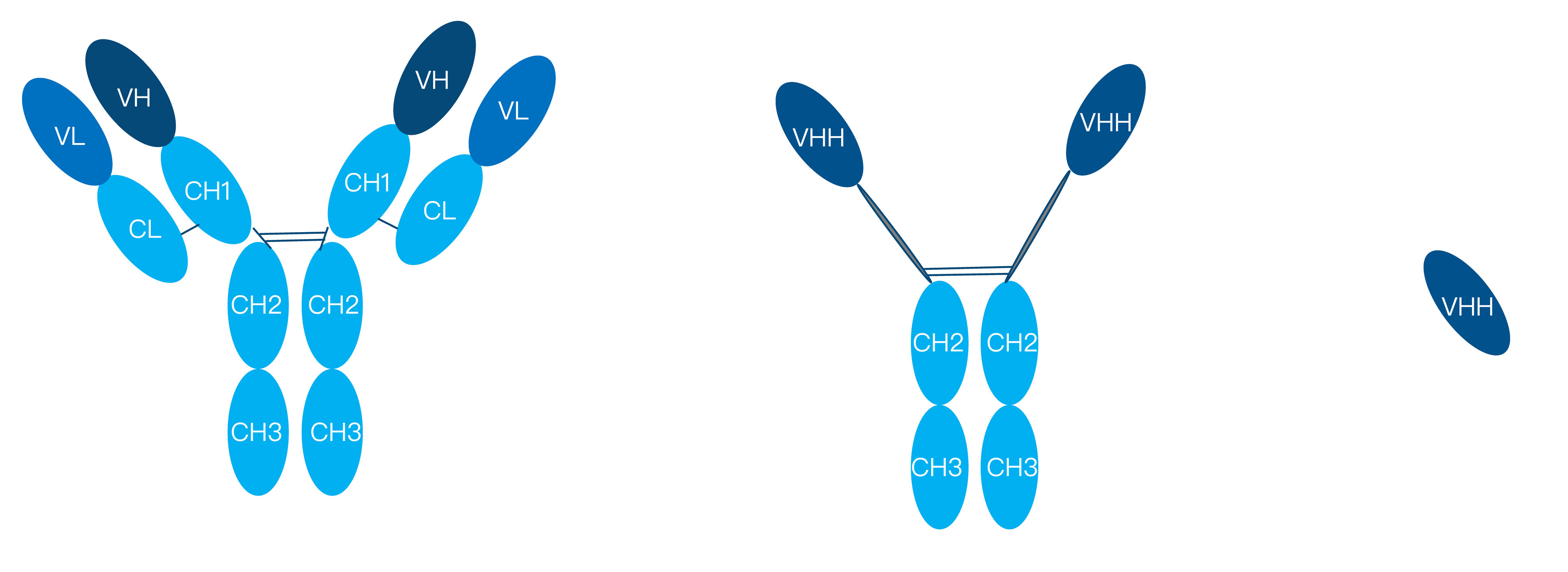
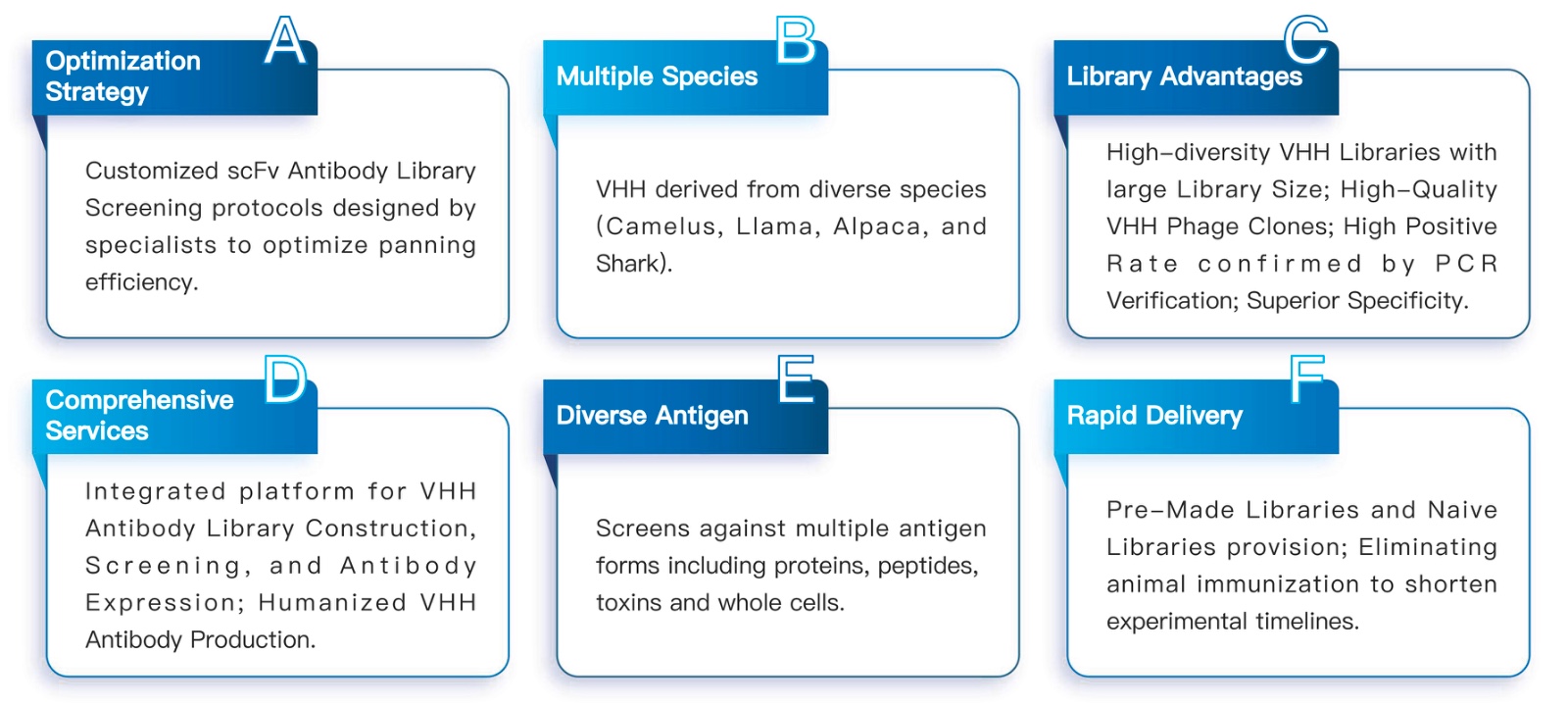
KMD Bioscience possesses a professional scientific research team with extensive industry experience in phage display library construction and screening, dedicated to meeting diverse client needs in recombinant antibody development projects. We are pleased to share our expertise in VHH phage screening to facilitate client project development and smooth progress. We have established comprehensive and efficient phage antibody screening strategies. Phage ELISA serves as our primary detection method for confirming positive clones. Our laboratory houses a pre-made natural VHH library with a capacity of 2×10¹⁰, exhibiting high diversity. Through 2-3 rounds of panning, VHH antibodies binding to various target antigens with high affinity can be isolated within 12 days, eliminating the need for animal immunization and significantly shortening VHH preparation time. Additionally, we perform VHH humanization to reduce immunogenicity levels. Our optimized phage display screening technology delivers high-quality, fully functional humanized recombinant VHH antibodies, facilitating the recognition of endogenous antigens for applications such as immunofluorescence and live-cell imaging. KMD Bioscience also maintains a mature yeast surface display platform. Screening via FACS enables the isolation of high-affinity VHH antibodies through specific binding to target antigens. Compared to phage display, FACS screening associated with yeast antibody display allows for effective control and quantification of the screening process.





 0
0
