


Introduction to Reverse Transcription PCR (RT-PCR) Experiment
- 2026-07-10
- 288
Reverse Transcription PCR (RT-PCR) is a technique that combines reverse transcription (RT) of RNA into complementary DNA (cDNA) with the polymerase chain reaction (PCR), allowing for the detection and quantification of RNA. It is widely used to study the expression, quantification, and function of RNA molecules. According to the central dogma of molecular biology, RT-PCR involves the reverse transcription of extracted mRNA into cDNA, followed by PCR amplification using the cDNA as a template to obtain the target gene.
The principle of RT-PCR is based on the action of reverse transcriptase, which transcribes an RNA template into a corresponding single-stranded DNA (cDNA). Subsequently, through PCR, this cDNA can be amplified into a sufficient number of copies for further analysis.Steps of RT-PCR:Reverse Transcription: This is the first step, where the RNA template is converted into single-stranded cDNA by the action of reverse transcriptase. This step is crucial in RT-PCR because it converts RNA information into DNA, making it suitable for PCR amplification.PCR Amplification: After reverse transcription, the cDNA serves as the template for PCR. Primers are used to specifically amplify the target gene fragment. Through repeated PCR cycles, the target DNA is exponentially amplified, yielding enough product for analysis.
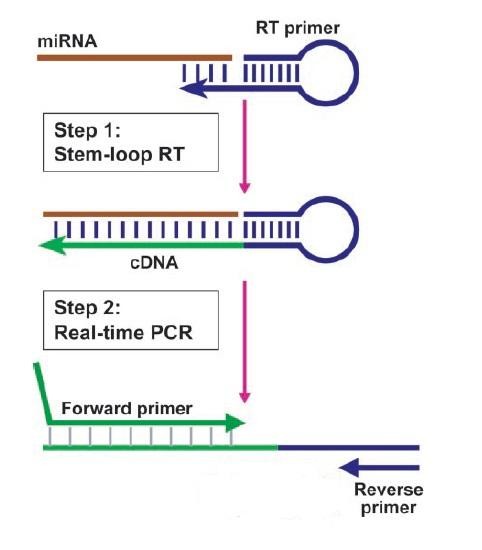
The success of RT-PCR depends on the extraction of high-purity, high-quality total RNA. RNA can be derived from animal cells, tissues, or various parts of plant tissues. Therefore, during RNA extraction, it is necessary to treat exogenous RNases in the environment with DEPC before the experiment to minimize the degradation of RNA by exogenous RNases. Additionally, RNA fragmentation must be avoided during the extraction process.Before the experiment, appropriate primers should be selected based on the specific requirements. Oligo dT Primer or a gene-specific downstream primer can be used as the reverse transcription primer. If a gene-specific downstream primer is chosen for reverse transcription, the primer must be designed and synthesized beforehand. First, the coding sequence (CDS) of the target gene should be retrieved from the Gene database in PubMed. Then, the primer can be designed using an online primer design tool.Next, the reverse transcription primer, dNTPs, and template RNA are mixed and incubated at 65°C for 5 minutes before being cooled to 4°C for storage. Afterward, the reverse transcription reaction mix is added to the system for long-fragment DNA amplification. Once the reaction is complete, gene-specific upstream and downstream primers are added to perform the PCR reaction. During the PCR process, precautions must be taken to avoid contamination from RNases and DNA.
To ensure the success of reverse transcription-PCR (RT-PCR) experiments, here are some optimization tips:
1. Primer Design:
① Select highly specific primers to avoid primer-dimer formation and self-aggregation.
② Ensure that the primers' Tm values match those of the reverse transcription products.
2. RNA Quality Control:
① Use high-quality RNA samples to prevent RNA degradation.
② Assess RNA quality and concentration using methods such as electrophoresis or NanoDrop.
3. Reverse Transcription Reaction Control:
① Use high-quality reverse transcriptase and primers.
② Optimize reaction temperature and duration to ensure efficient reverse transcription.
4. PCR Condition Optimization:
① Fine-tune PCR conditions, including temperature gradients, extension time, and cycle number.
② Include positive and negative controls to validate the PCR reaction.
RT-PCR has a wide range of applications:
1. Qualitative and Quantitative Detection: Compared to traditional detection methods, RT-PCR offers simpler procedures, lower sample consumption, and higher accuracy in analyzing RT-PCR products.
2. Plant Research: In plants, RT-PCR can be used not only to study the effects of environmental factors on gene expression but also to investigate differences in gene expression across various plant tissues under specific environmental conditions or growth stages.
3. Disease Detection and Research: RT-PCR is widely applied in detecting and studying diseases, such as genetic disorders and cancer.
KMD Bioscience provides professional RT-PCR experimental services. Clients only need to supply the experimental samples and target gene sequence information, while KMD Bioscience handles primer design, experimentation, and analysis, ultimately delivering a comprehensive experimental analysis report tailored to the client's project.
- Reverse Transcription PCR
- RT-PCR
- RT-PCR Experimental Services

- Protein Platform
- Protein Expression Services
- Protein Modification & Detection Services
- Protein Interaction Services
- Protein Purification Service
- Antibody Discovery Platform
- VHH Antibody Platform
- Phage Display Platform
- Antibody Humanization Platform
- Single B Cell Screening Platform
- Antibody Expression & Validation Platform
- Peptide Library Platform
- Custom Antibody Platform
- Innovative Drug Discovery Platform
- Product Center
- Proteins
- Antibodies
- Raw Materials Reagents
- Small Molecule Reagents
- Peptide Products
- Nanoparticle Products
- Contact Us
- Phone:400-621-6806
- Mobile:13110936064(WeC
- E-mail:[email protected]
- Address:Room 108, Building 10, No. 6 Hechang Road, Wuqing Development Zone, Tianjin City
-

WeChat
-

Service Account
-
 400-621-6806
 -
 3599163699
 -
 Monday to Friday 9:00-18:00
 -

-
 0
0
-
