


Research Progress in CAR-T Therapy
- 2026-07-10
- 219
CAR-T (Chimeric Antigen Receptor T-Cell Immunotherapy) therapy is a chimeric antigen receptor T-cell immunotherapy. It is a tumor-specific cell-based therapy that has achieved remarkable results in clinical oncology treatment in recent years through optimization and refinement. This innovative tumor immunotherapy approach is highly promising, offering precise, rapid, and efficient treatment with the potential to cure cancer. Since CAR-T cells recognize and eliminate tumor cells in vivo through an MHC-independent mechanism, they hold significant application prospects in cancer treatment.
Traditional CAR consists of an extracellular antigen-binding domain, a hinge region, a transmembrane domain, and an intracellular domain. The extracellular antigen-binding domain is typically a single-chain fragment variable (scFv) antibody, responsible for recognizing tumor cell surface antigens. The hinge and transmembrane regions serve as connectors, helping to stabilize the binding of scFv to target antigens and facilitating signal transduction. The intracellular domain primarily mediates intracellular signaling, and based on its structure, CARs can be broadly classified into four generations.First-generation CARs contain a single intracellular signaling domain derived from CD3ζ or FcRγ.Second- and third-generation CARs incorporate one or more co-stimulatory molecules (e.g., CD28, ICOS, CD244) proximal to the CD3ζ domain.Fourth-generation CAR-T cells, also known as T cells redirected for universal cytokine killing (TRUCK), are engineered from second-generation CARs with the addition of a cytokine gene (e.g., IL-12). Upon target antigen recognition, these CAR-T cells induce IL-12 expression, modulating the local immune microenvironment and recruiting effector immune cells to eliminate tumor cells that evade CAR-T recognition.
Nadia Anikeeva et al. [1] designed a specific CAR targeting HMW-MAA (high-molecular-weight melanoma-associated antigen) (Fig. 1) and evaluated the efficacy of CD8+ CAR-T cells in releasing cytolytic granules. The results demonstrated that CAR-T cells effectively killed melanoma cells expressing high levels of HMW-MAA, but did not eliminate those with lower HMW-MAA expression. These findings suggest that a higher density of target molecules is required to recruit sufficient CAR molecules, i.e., overexpressed cancer-associated antigens. This also provides a strong foundation for treating solid tumors through immunotherapy.
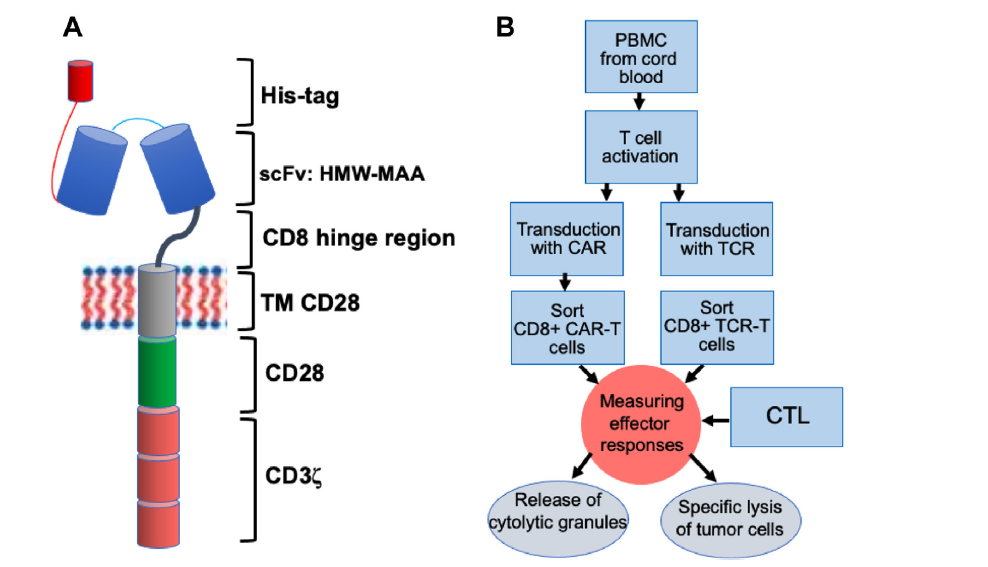
Fig. 1 Preparation and detection of high molecular weight melanoma-associated antigen-specific CD8+ CAR-T cells
Poor tumor infiltration, development of exhaustion, and antigen insufficiency represent common mechanisms limiting the efficacy of chimeric antigen receptor (CAR)-T cell therapy. The delivery of pattern recognition receptor agonists serves as one strategy to enhance immune function. Lexus R. Johnson et al. [2] identified an endogenous RNA - RN7SL1 - that activates RIG-I/MDA5 signaling to promote CAR-T cell expansion and effector memory differentiation (Fig. 2).Unlike other RNA agonists, RN7SL1 is encapsulated in extracellular vesicles and selectively transferred to immune cells. The transferred RN7SL1 restricts myeloid-derived suppressor cell (MDSC) development, reduces TGFB in myeloid cells, and promotes dendritic cell (DC) subsets with costimulatory capacity. Consequently, endogenous effector memory and tumor-specific T cells also expand, enabling rejection of CAR antigen-loss solid tumors.With this enhanced endogenous immunity, CAR-T cells can now be co-deployed with RN7SL1 and peptide antigens to improve therapeutic efficacy. This study demonstrates that RN7SL1 activates endogenous T cells to target immune-evading cancer cells, potentially improving cure rates for solid tumors.
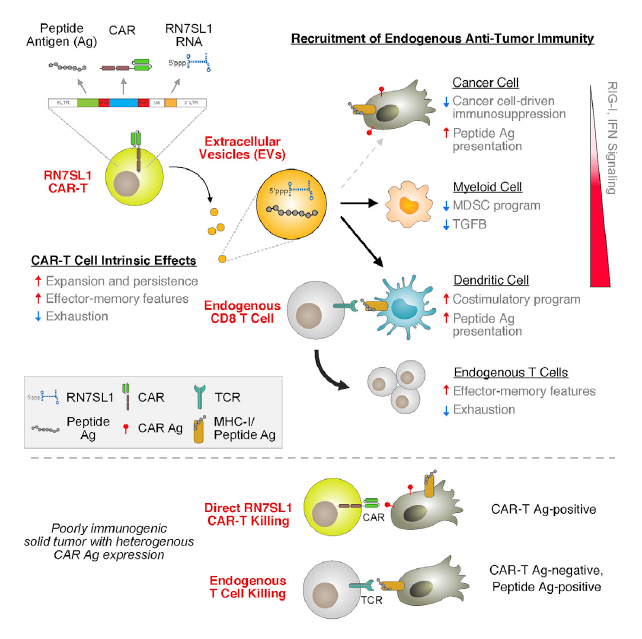
Fig. 2 RN7SL1 enhances CAR-T cell expansion and boosts endogenous immune function
The latest research from the Institute of Child Health at University College London [3] has developed a novel CAR molecule called CAR-19 for the treatment of acute lymphoblastic leukemia (Figure 3). Using a technique involving insertion site barcoding to track different CAR-T molecules in patients, the results demonstrated that CAR-19 exhibits robust expansion and persistence in both early (1 month) and late (>3 years) phases of leukemia treatment. Additionally, this technique revealed that T memory stem cells play a central role in mediating anti-leukemic responses and the long-term surveillance of CAR T cells.
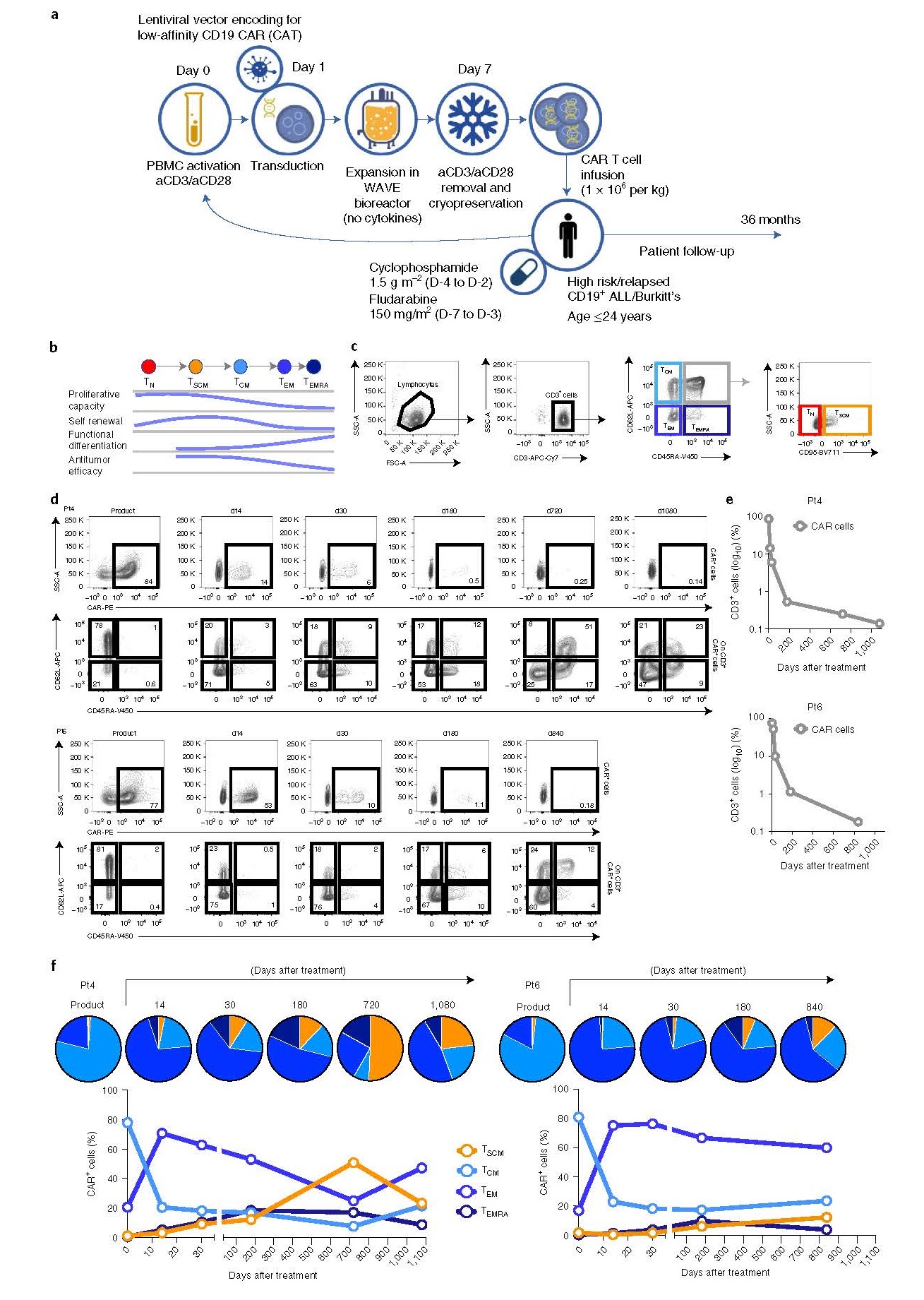
Figure 3 Phenotypic characteristics of long-lasting CAR T cells in the product and in patients post-infusion over time.
KMD Bioscience has established a comprehensive cell biology platform, offering foundational research services related to CAR-T cell therapy. As a National High-Tech Enterprise, we specialize in custom protein expression, monoclonal and polyclonal antibody development, phage library construction and screening, human scFv antibody discovery, camelid-derived VHH antibody discovery, and scFv antibody discovery services across multiple species.We warmly welcome clients to contact our team for personalized project solutions tailored to your specific needs.
[1] Na A , Sp A , Nwm A , et al. Efficient killing of tumor cells by CAR-T cells demands engagement of a larger number of CARs as opposed to TCRs. 2021.
[2] Johnson L R , Lee D Y , Eacret J S , et al. The immunostimulatory RNA RN7SL1 enables CAR-T cells to enhance autonomous and endogenous immune function. 2021.
[3] Biasco, L., Izotova, N., Rivat, C.,et al. Clonal expansion of T memory stem cells determines early anti-leukemic responses and long-term CAR T cell persistence in patients.2021.
- Research Advances in CAR-T Therapy
- Chimeric Antigen Receptor T-cell Immunotherapy CAR-T Therapy
- Cell Therapy

- Protein Platform
- Protein Expression Services
- Protein Modification & Detection Services
- Protein Interaction Services
- Protein Purification Service
- Antibody Discovery Platform
- VHH Antibody Platform
- Phage Display Platform
- Antibody Humanization Platform
- Single B Cell Screening Platform
- Antibody Expression & Validation Platform
- Peptide Library Platform
- Custom Antibody Platform
- Innovative Drug Discovery Platform
- Product Center
- Proteins
- Antibodies
- Raw Materials Reagents
- Small Molecule Reagents
- Peptide Products
- Nanoparticle Products
- Contact Us
- Phone:400-621-6806
- Mobile:13110936064(WeC
- E-mail:[email protected]
- Address:Room 108, Building 10, No. 6 Hechang Road, Wuqing Development Zone, Tianjin City
-

WeChat
-

Service Account
-
 400-621-6806
 -
 3599163699
 -
 Monday to Friday 9:00-18:00
 -

-
 0
0
-
